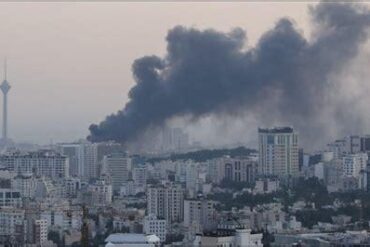
In a rapidly unfolding crisis that has drawn global attention, the United States has issued a travel warning for Pakistan following a drone attack by India targeting military infrastructure near Lahore. The drone strike, which India claimed was in retaliation for attempted strikes on its own military facilities, marks a sharp escalation in tensions between the nuclear-armed neighbors. The incident has already caused injuries to four Pakistani soldiers and led to civilian casualties, including one death in Sindh province.
Escalation Following Retaliatory Strikes
The Indian government asserted that the drone campaign was limited and tactical, specifically aimed at neutralizing Pakistani air defense and radar systems. According to Indian defense officials, the action was prompted by what they described as an attempted cross-border drone assault from Pakistan targeting Indian military sites. In an official statement, India confirmed the neutralization of at least one major radar installation in Lahore, emphasizing that their intent was defensive and not aimed at escalation—provided Pakistan refrains from further hostilities.
In contrast, Pakistan’s military has labeled the action a “serious provocation”, raising alarms over the potential for broader military engagement. Lieutenant General Ahmed Sharif Chaudhry, spokesperson for the Pakistan Armed Forces, confirmed that 12 Indian drones were intercepted and destroyed, but one breached defenses and partially struck a military target near Lahore, injuring personnel and damaging infrastructure. He also noted that civilian areas suffered collateral damage, with debris causing fatalities in the Sindh region.
US Issues Fresh Travel Advisory and Orders Shelter-in-Place for Diplomats
Reacting to the intensifying conflict, the U.S. State Department updated its travel advisory for Pakistan. A statement from the department emphasized that American citizens in areas of active conflict should evacuate only if it is safe to do so, otherwise they should shelter-in-place. The U.S. Consulate General in Lahore directed all personnel to remain indoors, citing the proximity of drone explosions and the heightened threat level.
“Due to reports of drone explosions, downed drones, and possible airspace incursions in and near Lahore, the U.S. Consulate General in Lahore has directed all consulate personnel to shelter-in-place,” read an official post from the State Department.
Authorities are reportedly evacuating neighborhoods around Lahore’s main airport, intensifying concerns that the zone may remain an active target in coming days. In a security alert sent to U.S. citizens, the U.S. Embassy and Consulates in Pakistan recommended the following:
- Seek immediate and secure shelter
- Prepare independent evacuation plans that do not depend on U.S. government aid
- Keep travel documents updated and accessible
- Monitor local media and news bulletins for real-time updates
- Carry valid identification and fully cooperate with local authorities
International Concerns Over Regional Stability
The airstrikes follow the Pahalgam massacre, where 26 Hindu pilgrims and tourists were brutally killed in a suspected terrorist attack in Indian-administered Kashmir. India has placed blame on Pakistan-based groups, further deepening mistrust. While Pakistan has strongly denied involvement, the event has inflamed nationalist sentiment in both countries, setting the stage for military responses.
The broader geopolitical implications are severe. The international community, including major players like the United States and China, has expressed concern that the growing hostility could spiral into a full-scale war. With both nations possessing nuclear capabilities, the margin for error is dangerously slim.
Military Rhetoric and Mobilization Intensify
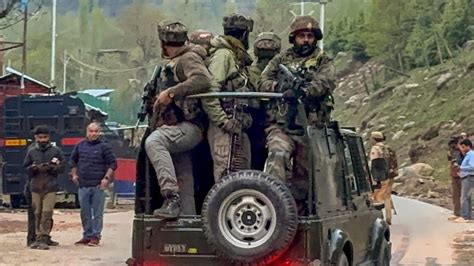
Both nations have stepped up military preparedness. Satellite imagery and local reports suggest heightened troop movement along the Line of Control (LoC). India’s Ministry of Defence issued a statement reiterating its commitment to “measured response” but warned that any further aggression from Pakistan would be met with “decisive and proportionate retaliation.”
Pakistan’s Prime Minister and military leadership have vowed a “firm and appropriate response” to what they have termed as a blatant breach of sovereignty. Pakistani fighter jets have reportedly been conducting surveillance flights over major cities, including Islamabad, Karachi, and Lahore, to assess and deter any incoming threats.
Diplomatic Fallout and Calls for De-escalation
Amid growing unease, global diplomatic efforts have surged to prevent further military confrontation. The United Nations has called for immediate restraint from both sides, while diplomatic channels between Washington, Beijing, and Moscow have become increasingly active. Former U.S. President Donald Trump even offered to mediate the situation, although both countries have so far declined third-party intervention.
“We call on India and Pakistan to resolve this through diplomatic channels,” a U.S. State Department spokesperson said. “Military escalation benefits no one, and the risk of miscalculation is extraordinarily high.”
Domestic Reactions in India and Pakistan
In both nations, nationalist media outlets and political figures are intensifying the rhetoric. Indian TV channels have labeled the drone strike a “surgical success,” while Pakistani news coverage has characterized it as an unprovoked act of war. Social media in both countries is saturated with viral footage of drone debris, military briefings, and protests, further inflaming public sentiment.
Civil society groups and academic voices are calling for caution. In Pakistan, demonstrations against potential war have taken place in Islamabad and Lahore, while in India, pro-military rallies have celebrated the drone offensive. The polarization within each country’s populace poses another challenge to efforts at de-escalation.
Aviation and Economic Implications
The immediate fallout on regional aviation has been significant. Major carriers, including Emirates, Qatar Airways, and Turkish Airlines, have suspended flights to and from Lahore, citing security concerns. Lahore’s Allama Iqbal International Airport has been operating at reduced capacity, and many commercial flights have been diverted or canceled.
From an economic standpoint, analysts warn that prolonged conflict could cripple investor confidence in both countries. Pakistan, already battling inflation and economic instability, may face a fresh wave of capital flight, while India could see a dip in market sentiment and risk downgrades by credit agencies.
The Nuclear Overhang
What makes this crisis uniquely volatile is the presence of nuclear weapons on both sides. Even a limited conflict carries the risk of accidental escalation. The doctrine of “minimum credible deterrence”—which both nations adhere to—may not suffice to prevent military miscalculations under present pressures.
Security experts warn that if border clashes escalate or if another high-profile incident occurs, the risk of nuclear posturing or a misinterpreted military maneuver could become dangerously real. Both countries maintain tactical and strategic nuclear warheads that are relatively close to conflict zones.
Conclusion: A Precarious Moment in South Asian Stability
As the situation remains fluid, the world watches with growing anxiety. The combination of military aggression, nationalist fervor, and nuclear capability makes this one of the most dangerous standoffs in recent memory between India and Pakistan. The U.S. travel warning underscores the severity of the crisis and the unpredictability of its next phase.
Peace may still be possible, but it will require immediate, transparent, and good-faith negotiations, not retaliatory drone fire and militarized rhetoric. Without a meaningful de-escalation soon, the region could edge closer to a catastrophic war—one that would have consequences far beyond South Asia.