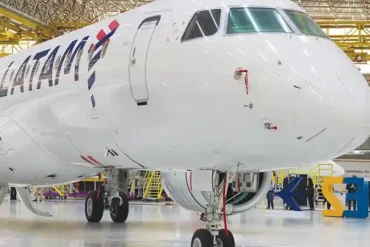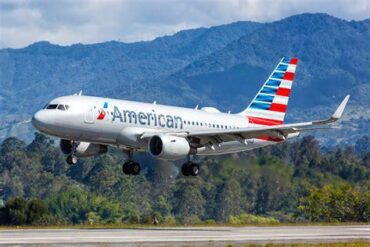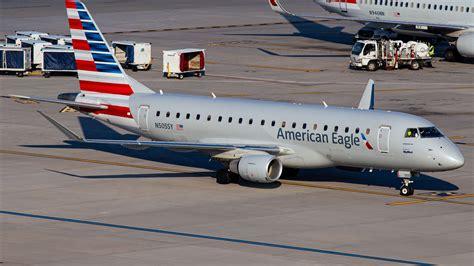
American Airlines is preparing to re-enter one of Latin America’s most politically and operationally complex aviation markets with a calculated, scaled-back approach. In just two weeks, the carrier will relaunch nonstop flights between Miami and Caracas, marking a pivotal shift in regional connectivity after years of suspended service. This time, the airline is deploying the Embraer E175, a smaller, highly efficient regional jet that reflects both caution and precision in rebuilding demand.
The route will connect Miami International Airport (MIA) and Simón Bolívar International Airport (CCS) with a daily frequency, restoring a direct link that has been absent for years. Scheduled to begin on April 30, the service represents not only a return to Venezuela but also a broader signal of renewed confidence in cross-border travel between the United States and the South American nation.
This reintroduction is notable not just for its timing, but for its measured scale. Where once American Airlines operated multiple daily flights using widebody and narrowbody aircraft, the new service prioritizes flexibility, right-sized capacity, and operational resilience—all embodied in the E175 platform.
A Carefully Timed Relaunch of Miami–Caracas Connectivity
The upcoming launch of flight AA3599 underscores a strategic recalibration. Departing Miami at 10:15 AM and arriving in Caracas at 1:35 PM, the flight will cover the route in just over three hours. The return leg, AA4194, departs Caracas mid-afternoon and lands back in Miami in the early evening, offering a convenient schedule for both business and leisure travelers.
This schedule is designed to maximize daytime connectivity, allowing passengers to seamlessly connect through Miami—American’s largest Latin American gateway—to destinations across North America and beyond. The timing also reflects a deliberate effort to rebuild passenger trust with predictable, efficient operations.
Why the Embraer E175 Is Central to This Strategy
The decision to deploy the Embraer E175 is far from incidental. With a seating capacity of 76 passengers, the aircraft provides a balanced mix of premium comfort and economic efficiency, making it ideal for a route that is re-emerging rather than fully matured.
Passengers onboard will experience a three-class configuration:
- First Class with generous seating and enhanced comfort
- Main Cabin Extra offering additional legroom
- Main Cabin designed for standard economy travel
This configuration ensures that even on a regional jet, travelers benefit from tiered service options, onboard WiFi, and streaming entertainment—features that align with modern passenger expectations.
More importantly, the E175 allows American Airlines to test and grow demand gradually, minimizing risk while maintaining a consistent presence in the market.
A Historic Route Reopens After Years of Suspension
The return of American Airlines to Caracas is significant when viewed through a historical lens. Prior to 2019, the airline operated as many as five daily flights between Miami and the Venezuelan capital, utilizing aircraft such as the Boeing 757, Boeing 737-800, Boeing 767, and Airbus A300.
However, escalating safety concerns and political instability led to a complete suspension of services. U.S. authorities, including the Department of Transportation and Department of Homeland Security, mandated the halt of flights, effectively severing direct air links between the two nations.
For years, travelers were forced to rely on indirect routes through hubs such as Bogotá and Panama City, adding time, cost, and complexity to journeys that were once straightforward.
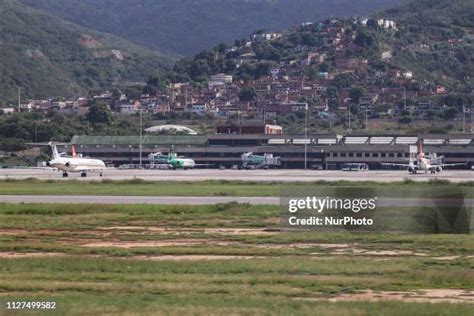
Geopolitical Shifts Drive Aviation Reconnection
The restoration of nonstop flights follows a dramatic shift in geopolitical dynamics. After a prolonged hiatus, renewed diplomatic momentum has paved the way for aviation links to reopen. The move by American Airlines positions the carrier as the first U.S. airline to resume direct service to Venezuela, giving it a crucial first-mover advantage.
This development is more than symbolic. It signals a reopening of economic and social corridors that have long been restricted, potentially unlocking pent-up demand among diaspora communities, business travelers, and humanitarian sectors.
The cautious rollout—limited capacity, single daily frequency, and a regional aircraft—demonstrates a clear understanding of the fragile yet promising nature of the market.
Competitive Landscape and Global Connectivity at Caracas
While American Airlines is leading the return of U.S.-Venezuela nonstop service, it is not alone in re-establishing international links to Caracas. Latin American carriers have steadily maintained or resumed operations, with Avianca relaunching service from Bogotá earlier this year.
In addition, several long-haul international airlines continue to connect Caracas with global hubs:
- Iberia and Air Europa linking to Madrid
- TAP Air Portugal operating flights to Lisbon
- Turkish Airlines providing service to Istanbul
These routes collectively reinforce Caracas as a re-emerging international gateway, despite years of reduced connectivity.
Meanwhile, Venezuela’s flag carrier Conviasa maintains a unique network that includes politically influenced routes to destinations such as Guangzhou and Moscow, often operated by aging widebody aircraft.
A Measured Comeback With Long-Term Implications
American Airlines’ decision to restart flights to Caracas using the Embraer E175 is a masterclass in strategic restraint paired with opportunistic expansion. Rather than flooding the market with capacity, the airline is choosing to rebuild trust, assess demand, and scale intelligently.
This approach not only mitigates operational risk but also allows the airline to remain agile in a rapidly evolving geopolitical environment. If demand strengthens and stability persists, the route could eventually see larger aircraft, increased frequencies, and expanded connectivity.
For now, the return of nonstop service between Miami and Caracas marks a critical first step in reconnecting two historically linked markets, offering travelers a direct, efficient, and long-awaited bridge between the United States and Venezuela.