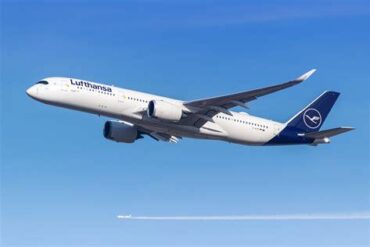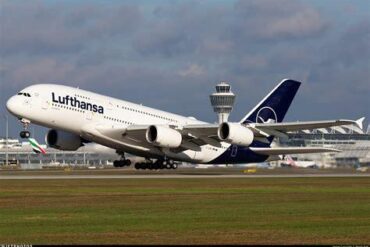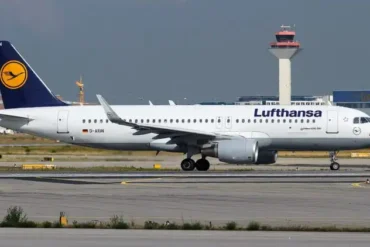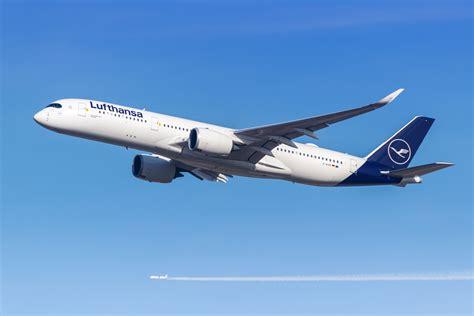
Lufthansa’s deployment of the Airbus A350 in 2025 redefined its long-haul strategy, firmly establishing the aircraft as the backbone of the airline’s most demanding intercontinental routes. Leveraging the A350’s cutting-edge efficiency and exceptional range, Lufthansa strategically expanded its global footprint, especially from its Munich hub. These long-haul journeys not only highlighted the aircraft’s technical prowess but also underlined Lufthansa’s adaptive strategy amid delays in widebody aircraft from rival manufacturers.
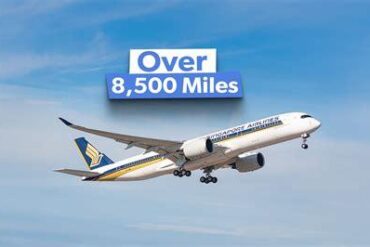
The Airbus A350-900, Lufthansa’s current workhorse, possesses a range of approximately 8,500 nautical miles (15,750 kilometers). While it does not match the ultra-long-haul variant (ULR) of the same aircraft employed by Singapore Airlines, Lufthansa still managed to operate 36 routes that exceeded 5,225 miles (8,400 kilometers) — an impressive feat by any standard.
Munich to Singapore: The Longest A350 Route in Lufthansa’s Network
The crown jewel among Lufthansa’s longest A350 routes was the service from Munich to Singapore Changi Airport, a journey of 6,252 miles (10,063 km). Operated 316 times in 2025, this high-frequency route delivered nearly 93,000 seats over the course of the year, accumulating over 578 million available seat miles. Its strategic importance lies in the vital business and leisure links between Europe and Southeast Asia, a corridor that continues to grow in demand and complexity.
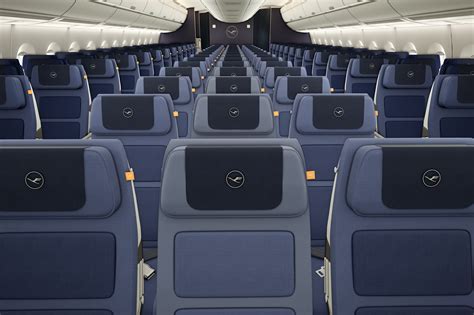
This route exemplifies Lufthansa’s commitment to premium intercontinental service, with the A350’s cabin design — quiet, spacious, and technologically advanced — catering to both corporate and leisure travelers making the 12-hour transcontinental voyage.
Beyond Singapore: The Other Major Long-Haul A350 Routes
Munich also served as the origin point for most of Lufthansa’s longest A350 flights, underscoring its role as the primary long-haul base for the aircraft. Key destinations included:
- Mexico City: 6,127 miles (9,861 km), served 157 times
- São Paulo: 6,112 miles (9,835 km), 67 flights
- San Diego: 6,025 miles (9,696 km), 297 flights
- Los Angeles: 5,989 miles (9,636 km), 42 flights
- San Francisco: 5,879 miles (9,459 km), 299 flights
- Tokyo Haneda: 5,829 miles (9,382 km), the most frequent route at 356 flights
- Osaka Kansai: 5,755 miles (9,260 km), 196 flights
- Hong Kong (from Frankfurt): 5,698 miles (9,169 km), 66 flights
- Cape Town: 5,681 miles (9,141 km), 156 flights
Among these, Tokyo Haneda stood out for its frequency, reflecting the deep business ties between Germany and Japan. Operating nearly daily, this route delivered over 598 million available seat miles, closely rivaling the Munich–Singapore link.
Interestingly, Los Angeles was among the least served of the top ten, with just 42 flights in 2025. This limited frequency suggests strategic balancing with Lufthansa’s broader California network, where San Francisco and San Diego saw significantly more robust A350 deployment.
Frankfurt Gains A350 Muscle Amid Boeing Delays
While Munich remained the primary launch point for the A350 fleet, 2025 marked a pivotal shift as Lufthansa redeployed six A350s to Frankfurt. This decision was born out of necessity. Lufthansa faced significant delivery delays with Boeing’s 787 Dreamliner and ongoing issues with the 777X program, both of which were expected to service key long-haul Frankfurt routes.
With Boeing’s delivery schedule disrupted — 15 787s were stalled in Charleston due to pending FAA certification of Lufthansa’s new Allegris cabin — the airline opted to shift some of its most capable aircraft to plug operational gaps in Frankfurt. This tactical reallocation not only helped maintain Lufthansa’s long-haul connectivity from its secondary hub but also ensured schedule reliability amid industry-wide supply chain turbulence.
A Look Under the A350’s Hood
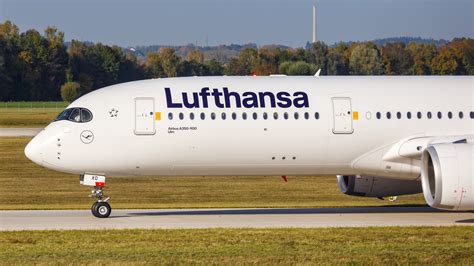
The Airbus A350-900 employed by Lufthansa brings together engineering finesse and passenger-centric design. The aircraft specifications include:
- Wingspan: 212 ft 5 in (64.75 m)
- Maximum Takeoff Weight: 590,839 lb (268 tonnes)
- Engines: 2 × Rolls-Royce Trent XWB, 84,000 lbf each
- Cruising Speed: Mach 0.85 (487 knots)
- Length: 219 ft 2 in (66.80 m)
- Height: 55 ft 11 in (17.05 m)
Its fuel efficiency and reduced noise profile make the A350 ideal for Lufthansa’s premium international network, offering an environmentally progressive alternative to aging four-engine aircraft.
The Promise of the A350-1000
In December 2024, Lufthansa expanded its commitment to the A350 family by ordering five additional A350-1000s, bringing the total to 15. The initial ten are expected to arrive in April 2026, while the rest will follow between 2028 and 2030.
The A350-1000, with its extended range of 9,000 nautical miles and higher passenger capacity, will likely be deployed on Lufthansa’s longest and highest-demand routes. CEO Carsten Spohr emphasized this fleet modernization as critical to Lufthansa’s sustainability goals, asserting that the airline is investing more than ever in its history to lower emissions and raise passenger comfort.
Lufthansa’s Routes vs. Global Long-Haul Giants
Though Lufthansa’s longest A350 routes are significant in the European context, they fall short of the ultra-long-haul records set by Singapore Airlines. Singapore’s A350-900ULR fleet connects the city-state with New York’s JFK and Newark airports, covering nearly 9,500 miles (15,300 km) — roughly 50% longer than Lufthansa’s Singapore route.
These Singapore flights are highly customized. With only 161 seats (67 business, 94 premium economy), they prioritize comfort over capacity. No economy class is offered, and passengers enjoy premium meal services like ‘Book the Cook’, extensive amenity kits, and a more intimate cabin experience. Lufthansa’s A350-900, by comparison, maintains a standard three-class configuration seating 296 passengers.
The Frankfurt First Class Terminal: A Ground Experience to Match the Sky
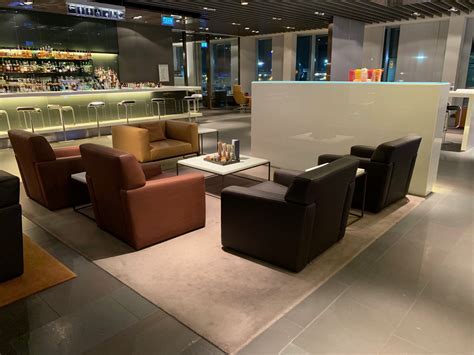
For passengers embarking on long A350 journeys from Frankfurt, the First Class Terminal provides a luxurious and seamless pre-flight experience. Voted Skytrax’s Best Lounge of 2025, it epitomizes Lufthansa’s commitment to excellence beyond the aircraft cabin.
Upon arrival, passengers are welcomed by a personal assistant, who manages everything from check-in to boarding. Guests can indulge in a gourmet restaurant, a whiskey bar boasting over 130 varieties, office pods for business travelers, and spa-grade shower suites to refresh before a long-haul flight.
When boarding time arrives, there are no queues — instead, guests are chauffeured directly to their aircraft in Mercedes or Porsche vehicles, a service emblematic of Lufthansa’s premium ethos.
A350 at the Heart of Lufthansa’s 2026 Profitability Drive
The strategic deployment of the A350 is not just about capacity — it’s also about profitability and resilience. After a challenging period, Lufthansa’s financial outlook improved in 2025. CEO Jens Ritter expressed confidence that 2026 would mark a return to sustained profitability, largely driven by the A350 fleet.
Replacing aging A340s and A330ceos, the fuel efficiency of the A350 plays a critical role in cost control. Meanwhile, the introduction of Allegris cabins on these aircraft enhances Lufthansa’s premium product offering, appealing to high-yield customers who prioritize comfort and exclusivity.
Additionally, Lufthansa plans to renegotiate labor agreements to enable more flexible aircraft deployment, ensuring that its fleet — particularly high-value jets like the A350 — can respond dynamically to shifting market demand.
Looking Ahead
As we step into 2026, Lufthansa’s A350 strategy positions the airline as a forward-looking carrier leveraging fuel efficiency, comfort, and strategic deployment to overcome supply chain delays and achieve profitability. With the A350-1000 on the horizon and a growing emphasis on sustainable long-haul travel, Lufthansa’s investment in this aircraft family is more than justified — it is foundational to its future.
From Munich to Singapore, Frankfurt to Hong Kong, Lufthansa’s A350 routes in 2025 formed the spine of a bold and agile global network, one that is poised to thrive in a new era of international aviation.