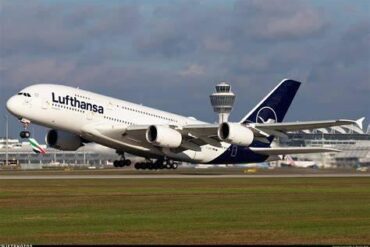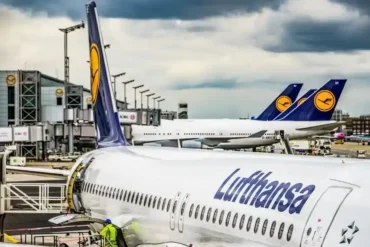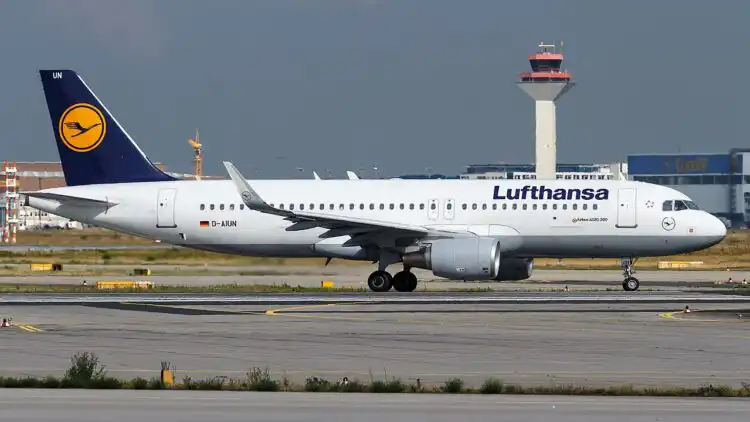
An already delayed evening departure from Munich spiraled into an extraordinary overnight ordeal when 123 Lufthansa passengers found themselves confined inside an Airbus A320neo long after the airport had shut down operations. What was scheduled as a routine 90-minute hop to Copenhagen became a six-to-seven-hour wait on the tarmac, raising pressing questions about operational coordination at one of Europe’s most tightly managed hubs.
On February 19, 2026, Lufthansa flight LH2446 was slated to depart Munich Airport (MUC) at 9:30 PM local time en route to Copenhagen Airport (CPH). Instead, a chain reaction of delays pushed the departure time closer and closer to Munich’s strict midnight curfew. By the time the Airbus A320neo was boarded from a remote stand and ready for departure, the operational window had nearly closed. Just before midnight, the flight was officially canceled.
Passengers anticipated a brief return to the terminal and hotel arrangements. That expectation proved misplaced.
Munich Airport Curfew Triggers Overnight Confinement
Munich Airport enforces a firm 12:00 AM operating curfew, a regulation designed to limit nighttime aircraft movements and reduce community noise exposure. Once the cancellation was confirmed, Lufthansa reportedly attempted to secure apron buses to transport passengers back to the terminal building. Those efforts were unsuccessful.
As the hours passed, communication from ground services reportedly grew sparse. Around 2:00 AM, crew members informed passengers that the airport had effectively shut down for the night and that no bus drivers were available. Without authorized transport, disembarkation from a remote stand was not legally permitted. Security protocols prohibit passengers from walking unescorted across apron areas due to safety and regulatory requirements.
In practical terms, this meant the aircraft cabin became an unintended holding area until morning operations resumed.
A Short-Haul Aircraft Becomes an Overnight Shelter
The Airbus A320neo is optimized for short- and medium-haul European routes, not extended ground stays. Lufthansa configures the aircraft in a typical “Euro-Biz” layout, accommodating up to 180 passengers, or 164 when the front rows are designated as business class. Seat pitch generally ranges between 29 and 30 inches, offering efficient cabin density but limited personal space.
For an overnight stay, those dimensions matter.
The aircraft was stocked for a brief flight to Denmark, not a prolonged confinement. Reports indicate that only small quantities of food and beverages were available onboard. There were no pillows or blankets, and cabin lighting and temperature conditions were not tailored for overnight rest. While the A320neo features quieter engines and modern cabin design enhancements compared to previous generations, those improvements do little to compensate when passengers are seated upright for hours beyond their planned arrival time.
Six or seven hours in a narrowbody cabin can feel significantly longer than the clock suggests.
Communication Gaps and Operational Constraints
According to passenger accounts first reported by Danish outlet Ekstra Bladet, travelers were told that airport staff and bus drivers had already gone home. The message was clear: without authorized vehicles or active ground personnel, the aircraft doors would remain closed until operations resumed in the early morning.
Passengers reportedly questioned whether they could simply walk back to the terminal under supervision. Airport security regulations made that option unviable. Airside access is tightly controlled, and movement across apron areas requires certified escort vehicles and personnel. Even if crew members were sympathetic, they lacked authority to override airport safety laws.
The situation underscores the rigid interplay between airline operations and airport governance. Munich is one of Lufthansa’s primary hubs, a facility where the airline commands significant traffic volume and strategic importance. Yet once the curfew took effect and ground services ceased, operational leverage appeared limited.
Weather Delays and “Lack of Apron Buses”
Lufthansa attributed the initial delay and eventual cancellation to weather-related disruptions, combined with what it described as a “lack of apron buses” until the following morning. Weather often creates cascading effects across European airspace, particularly during winter months when low visibility, crosswinds, or de-icing requirements compress already tight schedules.
Still, the overnight confinement highlights how thin the margin for recovery can become when flights approach curfew limits. A delay of minutes can evolve into hours if the final departure window closes. Once midnight struck at Munich, the airport effectively transitioned from a bustling hub to a dormant facility.
Passengers were eventually transported back to the terminal by bus after early morning operations resumed. Many were rebooked onto the first available flight to Copenhagen, which itself departed roughly an hour behind schedule.
Reputational Impact at a Premium Carrier
Lufthansa has spent recent years promoting a major premium push, investing in new cabin products and upgraded lounges to reinforce its standing among Europe’s leading full-service carriers. Incidents like this, even if operationally complex, test the resilience of that positioning.
From a regulatory standpoint, strict airport curfews and security protocols leave little room for improvisation. From a passenger perspective, however, spending the night inside a narrowbody aircraft without adequate provisions is a stark contrast to premium branding narratives.
Air travel is an intricate system of moving parts: aircraft scheduling, crew duty limits, ground handling coordination, weather unpredictability, and airport governance all intersect in real time. When one element falters near a hard operational boundary, the consequences can be immediate and uncomfortable.
For the 123 passengers aboard LH2446, a short Scandinavian hop became an unexpected lesson in how tightly calibrated modern aviation truly is—and how quickly that calibration can unravel when midnight arrives.