The aerospike engine represents one of the most innovative yet elusive advancements in rocket propulsion. First conceptualized in the mid-20th century, its defining characteristic is its ability to maintain near-optimal efficiency across a wide range of altitudes—a feat that traditional bell nozzle engines struggle to achieve. Although the technology has repeatedly shown promise, commercial deployment has remained frustratingly out of reach. Yet with the renewed interest in reusable launch vehicles and SSTO (Single Stage to Orbit) designs, the aerospike is experiencing a powerful resurgence.
The Principle Behind Aerospike Propulsion
At the heart of the aerospike engine is its unique ability to compensate for altitude-induced pressure changes. Where conventional bell nozzles are optimized for either sea level or vacuum conditions—never both—the aerospike adapts dynamically as the vehicle ascends.
Traditional rocket engines expel exhaust gases through a bell-shaped nozzle, expanding them into a directed stream. However, as altitude increases and ambient pressure drops, this exhaust becomes over-expanded, leading to efficiency loss. The aerospike resolves this with a plug or wedge shape, around which gases flow outward. The ambient pressure acts as an external boundary that shapes the exhaust, forming a “virtual nozzle” that adjusts with altitude.
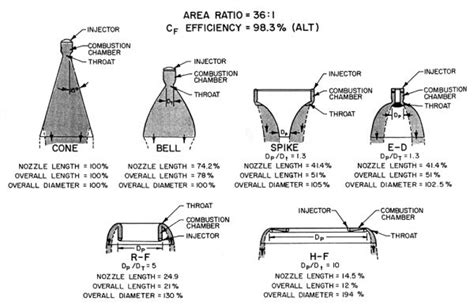
At low altitudes, the surrounding atmosphere compresses the exhaust against the spike’s surface. At higher altitudes, a recirculation zone develops at the spike’s base, maintaining a pressure differential that sustains thrust. This ensures consistent engine performance through a wide flight envelope—an advantage long coveted in aerospace engineering.
However, this elegant solution is not without cost. The spike adds considerable weight, and its exposed surface area demands more aggressive cooling techniques, resulting in reduced net pressure efficiency. Additionally, aerospike engines suffer in the Mach 1 to 3 regime, where shockwaves and flow separation become problematic.
Design Variations and Technological Adaptations
There are two dominant configurations of aerospike engines: toroidal and linear.
The toroidal aerospike features a bowl-shaped plug surrounded by a symmetrical annular exhaust flow. Its truncated versions inject gases at the base to emulate an infinitely long spike, a design that reduces weight while preserving functionality.
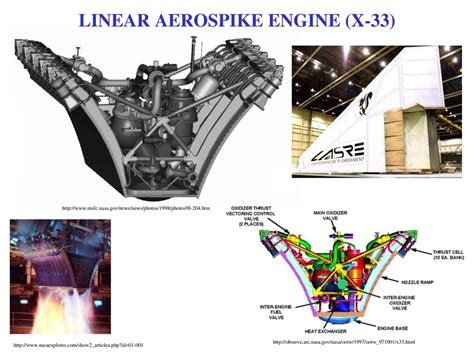
The linear aerospike, on the other hand, employs a wedge-shaped spike flanked by exhaust channels on both sides. This design is especially attractive for modular scalability: multiple engines can be mounted side by side with independent throttle control, enabling thrust vectoring and redundancy.
Historic and Modern Performance Metrics
Extensive testing since the 1960s has demonstrated the aerospike’s performance potential:
- Rocketdyne J-2T series: Achieved 200,000 lbf (J-2T-200k) and 250,000 lbf (J-2T-250k) thrust in tests.
- NASA XRS-2200 (linear, based on J-2S): Delivered 204,420 lbf at sea level with a specific impulse (Iₛₚ) of 339 seconds, and 266,230 lbf in vacuum with an Iₛₚ of 436.5 seconds.
- Despite successful individual engine tests, multi-engine configurations for NASA’s X-33 were never completed.
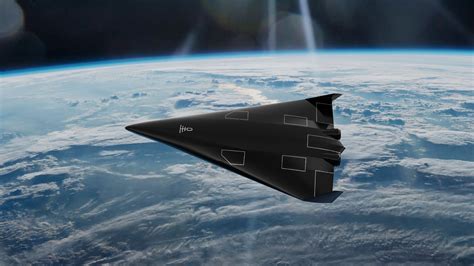
- The RS-2200 for the VentureStar SSTO vehicle was projected to deliver seven engines, each producing 542,000 lbf. Funding cuts halted progress in 2001.
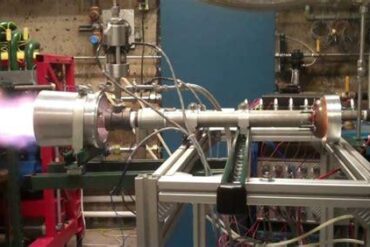
- Academic and private ventures such as CSULB/Garvey, Blacksky/Cesaroni, and Reaction Research Society have conducted low-scale, proof-of-concept launches and hot-fires.
More recent and cutting-edge developments highlight a return to serious research:
- TU Dresden and Fraunhofer IWS’s CFDμSAT prototype burned for 30 seconds in 2020.
- Bath Rocket Team conducted hybrid aerospike testing during the UK Race to Space 2023, with plans to fly at EuRoC24.
Real-World Implementations and Current Projects
Interest in aerospikes has surged anew in the 2020s, driven by the twin goals of efficiency and reusability.
- Firefly Space Systems (2014) originally envisioned the Alpha 1.0 with a 90,000 lbf cluster of plug aerospikes. Post-bankruptcy, Firefly Aerospace adopted conventional propulsion for Alpha 2.0, though the Gamma spaceplane concept may revive aerospike ambitions.
- ARCA Space’s 2017 Haas 2CA aimed for SSTO capability using the Executor linear aerospike engine (50,500 lbf sea level, 73,800 lbf vacuum). Although test firings were planned, execution remained limited.
- Rocketstar and KSF Space/Interstellar have proposed orbital vehicles powered by aerospikes but have not reached critical flight milestones.
- Pangea Aerospace demonstrated the DemoP1 LOX/methane aerospike in 2021 and is scaling up to the 300 kN ARCOS engine.
- Stoke Space is building a distributed LH2/LOX linear aerospike engine intended for a reusable second stage—one of the most serious near-term applications.
- Polaris Spaceplanes, supported by the Bundeswehr, successfully fired a linear aerospike on MIRA-II in October 2024. Their long-term aim includes a reusable hypersonic spaceplane with a 1,000 kg payload by 2028.
- SpaceFields from the Indian Institute of Science marked India’s entry with a successful test in September 2024, delivering 2,000 N of thrust with effective altitude compensation.
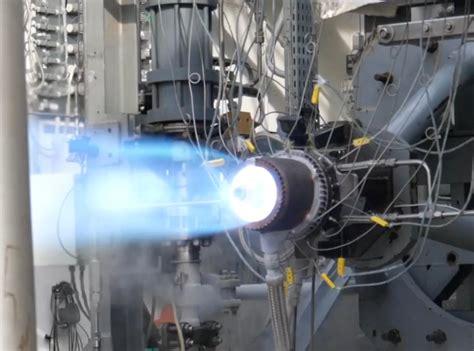
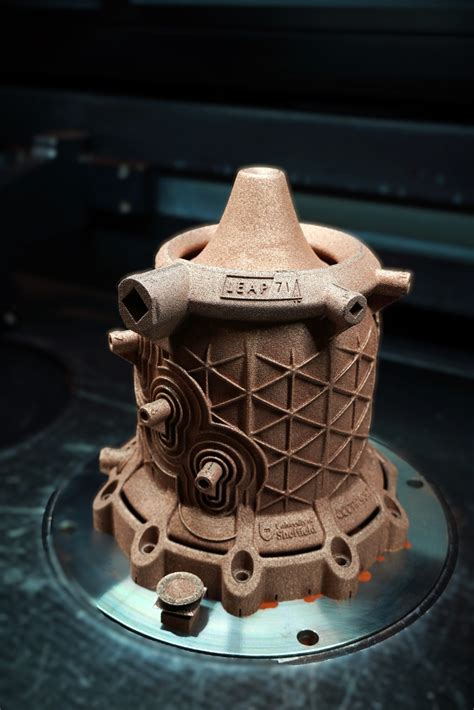
- LEAP 71 in Dubai took an innovative approach by 3D printing a single-piece copper aerospike engine. Successfully hot-fired in the UK, it featured LOX-cooling for the spike and kerosene cooling for the outer jacket.
Challenges and Why Commercial Adoption Has Lagged
Despite their elegant design, aerospike engines face a variety of engineering and economic obstacles:
- Cooling complexity: The exposed spike requires robust thermal management, especially during long-duration burns.
- Weight penalties: While offering efficiency, the mass of the spike can offset the engine’s theoretical advantages.
- Shockwave interactions: Especially in transonic flight (Mach 1–3), flow instabilities can compromise performance.
- Manufacturing challenges: Aerospike geometries are inherently more complex to fabricate, particularly when employing exotic materials for heat resistance.
- Funding and institutional inertia: With billions already invested in bell-nozzle engines, aerospace stakeholders are reluctant to divert resources.
Yet many of these barriers are diminishing. Additive manufacturing (3D printing) is reducing production complexity, while modern simulation tools allow engineers to optimize spike geometries before ever firing a test engine. And with the commercial space race intensifying, startups are more willing to experiment where national agencies have grown risk-averse.
The Future of Aerospike Propulsion
The next few years will be critical. If companies like Stoke Space and Polaris Spaceplanes succeed, the aerospike could redefine what’s possible in reusable spaceflight and SSTO platforms. Meanwhile, academic initiatives and international contributions continue to feed new data into the research ecosystem.
The aerospike engine is no longer a relic of cancelled programs and abandoned concepts. It is an active frontier of propulsion engineering—a symbol of what’s next, not what could have been.
Its promise remains bold: a single engine, optimized for all altitudes, capable of streamlining launch systems, reducing costs, and increasing payload efficiency. For a new generation of aerospace pioneers, the aerospike is not just a nozzle—it’s a revolution in waiting.