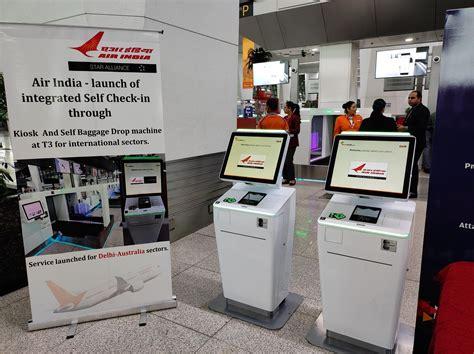
Air India has taken a significant leap in modernizing airport services by launching an integrated self-check-in and baggage-drop facility for passengers traveling from India to international destinations across Europe, the UK, and Canada. This strategic expansion is part of the airline’s broader mission to enhance customer experience through smart, efficient, and technology-driven solutions.
With this rollout, Air India cements its position as a pioneer in airport automation, having already introduced similar services on flights to the United States and Australia. The current integration reflects a sweeping upgrade across 19 international airports, aiming to provide a seamless and personalized airport journey.
Next-Generation Travel: What Air India’s Self-Check-In System Offers
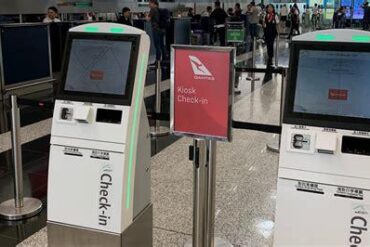
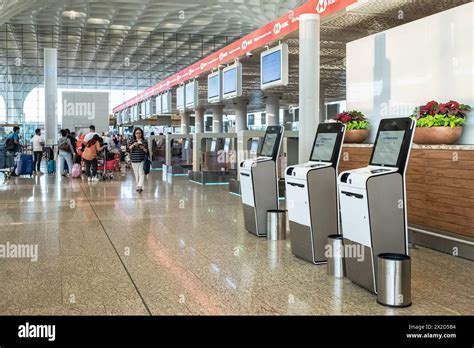
The newly integrated kiosks represent a quantum shift in passenger processing. Traditionally, travelers had to endure long queues and face last-minute stress due to delays at check-in counters. The self-check-in kiosks now empower passengers to manage their own journeys by giving them control over a range of services.
Passengers can:
- Select their preferred seat with ease
- Pay for upgrades or add-ons
- Update frequent flyer details
- Modify contact information
- Drop off checked luggage in a matter of minutes
This reduces the need for manual assistance, expedites the check-in process, and ensures passengers have more time to relax or proceed to security and boarding gates without unnecessary stress.
A Panoramic Rollout: 19 Global Airports Now Equipped
Air India’s expansion of the self-check-in and baggage drop system spans Europe, the United Kingdom, Canada, the United States, and Australia, directly connecting with major Indian hubs. The 19 participating airports include:
- United Kingdom: London Heathrow, London Gatwick, Birmingham
- Europe: Paris, Vienna, Amsterdam, Copenhagen, Frankfurt, Milan, Zurich
- North America: Toronto, Vancouver, New York (JFK), Newark, Chicago, Washington D.C., San Francisco
- Australia: Sydney, Melbourne
This comprehensive deployment ensures that passengers departing from any major international hub serviced by Air India will have access to a streamlined, tech-enabled check-in journey.
Why the Shift Matters: Speed, Autonomy, and Passenger Satisfaction
In an era where time is as valuable as comfort, speed and convenience are at the heart of travel innovation. Air India’s initiative reflects a growing industry trend that prioritizes digital interaction over human intervention without compromising service quality.
Self-check-in and baggage drop solutions have proven to drastically reduce airport congestion, shorten check-in times, and increase on-time departures. For passengers, this means:
- Less time waiting in line
- More flexibility in managing travel needs
- Fewer last-minute errors due to human oversight
- Greater control over trip customizations
This high-efficiency model not only improves operational workflow for the airline, but it also translates directly into a more positive and relaxed passenger experience.
Leveraging Automation Without Sacrificing Human Touch
While the digital shift is aggressive, Air India maintains a balance by ensuring that staff are present to assist passengers who may be unfamiliar with the kiosks or need additional help. This hybrid model allows:
- Novice or elderly travelers to feel supported
- Technical glitches to be resolved promptly
- Personalized service when necessary
This thoughtful approach ensures that the airline’s modernization drive remains inclusive and accessible to all passenger demographics.
Redefining the International Check-In Landscape
The integration of self-service technology isn’t simply a matter of installing machines. Air India’s rollout is strategically aligned with its broader vision of becoming a globally respected and digitally advanced airline. As part of the Tata Group’s broader aviation ambitions, this move exemplifies:
- Commitment to digitization across all touchpoints
- Streamlining international operations
- Elevating global brand perception
- Aligning with global standards and expectations
In global aviation, where legacy carriers are rapidly reinventing themselves to meet digital-native passenger demands, Air India’s initiative is both bold and timely.
Passenger-Centric Innovation Driven by Real Needs
Air India’s approach was not crafted in isolation. Instead, it draws on real-time passenger feedback and analytics gathered across multiple airports. Among the most cited challenges by international travelers were:
- Delays caused by manual check-in queues
- Miscommunication at baggage counters
- Inadequate options for seat upgrades
- Difficulty updating loyalty information
By addressing these directly with automation, Air India is not only solving tangible issues, but also building trust and loyalty among its international clientele.
The Competitive Edge in the Digital Age
While several international airlines have already implemented similar systems, Air India’s ability to execute a wide-scale rollout across continents sets it apart in the South Asian aviation sphere. Competitors like Emirates, Lufthansa, and Singapore Airlines have long embraced automation — but Air India’s entry into this space represents a technological leap for Indian aviation.
This move is not only about parity. It signals a shift in the airline’s operational DNA, focusing on speed, agility, and personalization as defining characteristics of its next growth phase.
Looking Ahead: The Future of Tech-Enabled Travel in India
This is just the beginning. Air India is likely to extend these capabilities across more domestic airports, expand kiosk functions (e.g., biometric recognition, document scanning), and integrate real-time AI assistants to guide travelers through every step of the journey.
The long-term vision appears to be a fully contactless airport experience, where mobile devices, facial recognition, and integrated cloud systems handle everything from check-in to boarding.
With infrastructure already in place at 19 international hubs, the scalability of this model is promising. It will pave the way for:
- Better airport traffic flow management
- Lower operational costs for the airline
- Data-driven improvements to customer service
Air India is not merely catching up — it is setting new benchmarks for Indian aviation in the global sphere.
Conclusion: Elevating Travel, One Kiosk at a Time
The integration of self-check-in and baggage-drop facilities by Air India marks a watershed moment in the airline’s evolution. As it aligns its operations with international standards and passenger expectations, the airline demonstrates its ability to blend technology with service in a way that is both practical and transformative.
By focusing on speed, efficiency, and traveler autonomy, Air India isn’t just modernizing its airports — it is reshaping how the world experiences Indian aviation. In a competitive global landscape, such bold technological adaptation is not merely commendable — it’s essential.
The journey of a thousand miles begins at a kiosk, and Air India has ensured that journey is smarter, smoother, and faster than ever before.