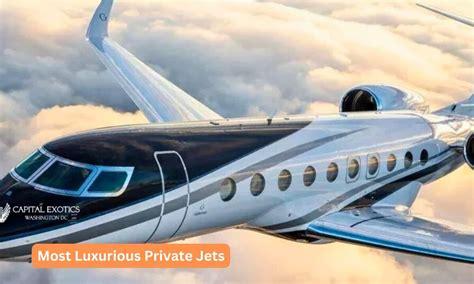
The National Football League is a kinetic machine that never truly sleeps. Games are the visible tip of the iceberg, but beneath that spectacle lies a relentless choreography of logistics, biomechanics, data, media, and corporate theater. Every week, thousands of pounds of equipment, dozens of elite athletes, and entire operational ecosystems move across the continent like a traveling city-state. In that environment, travel is not a footnote—it is a strategic variable.
Most franchises charter commercial aircraft, often widebody jets dedicated for team use on game weekends. Yet a handful of teams and ownership groups have gone further, acquiring or controlling private aircraft that operate as customized flying facilities. These are not vanity toys alone. They are mobile laboratories for recovery, strategy rooms at 35,000 feet, and high-altitude branding platforms that project power far beyond the stadium.
Private jets in the NFL ecosystem exist at the intersection of performance science, corporate symbolism, and raw wealth. Owning or controlling an aircraft allows a team to collapse variables: no waiting on airline schedules, no seat-density compromises, no logistical roulette with cargo space, and no public exposure. Instead, the aircraft becomes an extension of the franchise’s identity and competitive philosophy.
Below is a deep dive into five NFL teams with luxurious private jets, examining the aircraft types, cabin configurations, ownership structures, and the strategic rationale behind these airborne fortresses of football.
The Strategic Logic of NFL Private Jets
Before diving into specific teams, it helps to understand why a football franchise would sink tens or hundreds of millions into aviation hardware. NFL seasons are brutal on the human body. Sleep disruption, circadian rhythm shifts, cramped seating, and unpredictable travel delays compound recovery stress. When margins between winning and losing are razor-thin, reducing travel friction becomes a measurable performance edge.
Team-owned or dedicated aircraft offer consistent cabin layouts, predictable routines, onboard treatment spaces, and equipment capacity that would overwhelm standard charter configurations. Coaches hold meetings mid-flight, trainers perform therapy, and athletes can lie flat instead of folding into economy-class geometry designed for civilians rather than linebackers. In elite sport, comfort is not indulgence; it is infrastructure.
New England Patriots and the Kraft Organization’s Boeing 767 Fleet
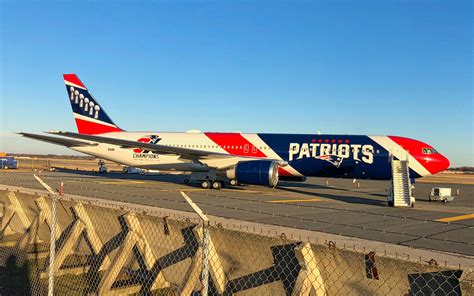
The New England Patriots stand as one of the most structured and methodical franchises in modern sports, and their aviation strategy reflects that mindset. The Kraft Organization operates two custom Boeing 767-300ER widebody aircraft, branded internally as AirKraft. These aircraft were acquired and refitted in 2017, transforming former commercial airliners into flying team headquarters.
The 767 platform provides a blend of range, reliability, and cavernous cargo volume, ideal for cross-country NFL travel. Unlike dense airline seating layouts, the Patriots’ aircraft prioritize space and operational flow. Roughly 203 seats are installed, with approximately 80 in a premium business-class configuration, allowing players and staff to stretch, recline, and recover in flight.
The operational model is also sophisticated. Omni Air International manages the aircraft, supplying flight crews and maintenance infrastructure while allowing the jets to operate charter missions when not needed by the team. This hybrid structure offsets ownership costs while preserving guaranteed availability for game travel.
Beyond football, the Patriots’ aircraft have served as logistical assets in broader societal moments. During the early COVID-19 pandemic, one of the jets flew to China to transport approximately 1.2 million N95 masks to Massachusetts, demonstrating how team aviation assets can become civic infrastructure in crisis scenarios.
The presence of two aircraft provides redundancy, a subtle but crucial advantage in a league where a single mechanical delay can cascade into compromised recovery timelines. For the Patriots, aviation is not luxury; it is a controlled environment engineered to minimize randomness.
Arizona Cardinals and Their Custom Boeing 777-200ER
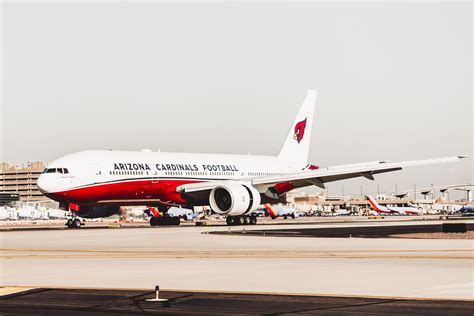
The Arizona Cardinals took a dramatic leap into aviation ownership by purchasing a Boeing 777-200ER, one of the most capable long-haul widebody aircraft ever built. This move placed the franchise among a rarefied tier of sports organizations operating an intercontinental-class airliner.
The 777’s size is almost absurd by sports standards. While the aircraft can seat nearly 300 passengers, the Cardinals configured it with 166 oversized premium seats, including 28 lie-flat first-class pods and 48 business-class seats. This transforms the cabin into a hybrid of luxury airline and medical recovery facility.
The aircraft previously served Delta Air Lines, ensuring that the platform was a proven long-haul workhorse before its conversion. The Cardinals’ rationale was pragmatic: a single aircraft capable of carrying the entire traveling party, from players and coaches to medical staff, video teams, and security, along with mountains of sideline gear.
Cargo volume matters. NFL teams transport everything from hydrotherapy tubs to video servers, and splitting these across multiple aircraft introduces logistical risk. The 777’s belly capacity allows the Cardinals to consolidate operations into one synchronized departure, reducing fragmentation.
Ownership also grants schedule sovereignty. Meetings can run long, treatments can extend, and departure times can align with recovery protocols rather than airline constraints. In a sport where minutes of sleep and hydration cycles matter, this autonomy is a silent competitive weapon.
Dallas Cowboys and the American Airlines Charter Pipeline
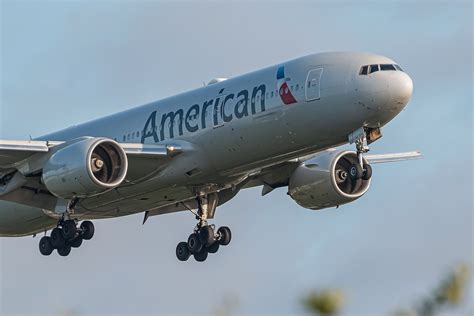
The Dallas Cowboys represent a different model of elite aviation without direct ownership. For decades, American Airlines has served as the Cowboys’ principal charter partner, providing dedicated widebody aircraft for team travel, often featuring Boeing 777-200ERs for longer routes.
These flights are effectively private operations within a commercial framework. The aircraft are configured with premium-heavy cabins, offering Flagship Business and Premium Economy seating that translates into space, quiet, and recovery potential for players and staff.
The Cowboys benefit from many advantages of ownership—privacy, schedule control, and consistent cabin experience—without bearing the capital and maintenance burden of owning an airliner. This model also leverages American Airlines’ operational scale, ensuring aircraft availability across the league’s complex travel calendar.
Beyond team charters, Cowboys owner Jerry Jones maintains his own Gulfstream V for executive travel. This smaller, ultra-long-range business jet supports ownership logistics, league meetings, and corporate engagements, creating a layered aviation ecosystem: widebody charters for the team and private jets for leadership.
The Cowboys’ approach illustrates how aviation strategy can be modular. Ownership of an airliner is not the only path to elite travel infrastructure; a deep charter partnership can deliver nearly identical performance benefits with lower operational complexity.
Indianapolis Colts and Jim Irsay’s Boeing 737-700 and Gulfstream Fleet
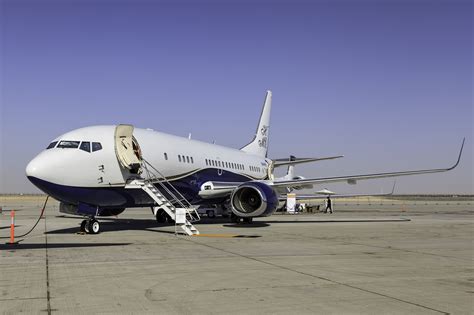
The Indianapolis Colts’ aviation story centers on ownership mobility rather than full-roster transport. Jim Irsay, the team’s owner, operates a Boeing 737-700 registered to Bopper Airways LLC, a private entity associated with Indianapolis.
A Boeing 737 in private service is a remarkable asset. Compared to traditional business jets, the 737 offers a spacious cabin, transcontinental range, and significant luggage capacity. In a VIP configuration, it functions as a flying boardroom, enabling the movement of executives, coaches, scouts, and staff with fewer compromises than smaller aircraft.
Complementing the 737 is at least one Gulfstream G-IV, a classic long-range business jet prized for speed, range, and flexibility. The G-IV is ideal for rapid point-to-point missions, front-office travel, and scouting operations that require agility rather than mass transport.
For an NFL owner, this dual-aircraft structure creates a flexible aviation toolkit. The 737 handles large-group missions, while the Gulfstream supports rapid-response executive travel. This layered approach mirrors corporate aviation strategies in Fortune 500 companies, underscoring how NFL franchises increasingly operate like multinational enterprises.
Atlanta Falcons and Arthur Blank’s Bombardier Global 7500
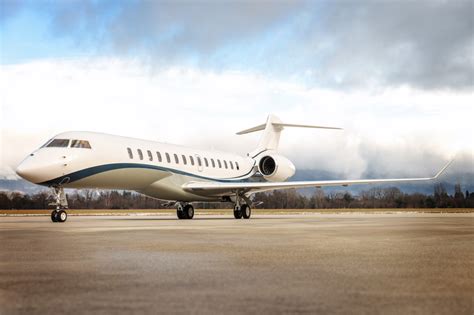
The Atlanta Falcons’ private aviation narrative revolves around ownership and executive mobility, anchored by Arthur Blank, co-founder of Home Depot. Blank is associated with Bombardier Global series aircraft, with analysts pointing to a Global 7500 registered as N62LV.
The Bombardier Global 7500 is one of the most advanced business jets ever built, capable of intercontinental nonstop flights with multiple living zones, full-size beds, and ultra-quiet cabins. It blurs the line between private jet and airborne luxury residence.
While not designed to transport an entire NFL roster, the Global 7500 is a strategic tool for ownership and football operations. Executives can travel nonstop to international league meetings, stadium site visits, and corporate engagements without the friction of commercial aviation.
In modern sports ownership, speed equals influence. A jet like the Global 7500 compresses geography, allowing ownership to operate in multiple cities or continents within a single day. For a franchise, this agility can translate into faster decisions, stronger partnerships, and strategic dominance.
Cabin Design: Where Recovery Meets Strategy
The interiors of NFL private jets are engineered around performance. Unlike commercial layouts, which prioritize seat density and revenue, team aircraft optimize space for human physiology and operations. Lie-flat seats, widened aisles, and lounge areas allow athletes to sleep, stretch, and undergo treatment.
Medical teams often perform soft-tissue work mid-flight. Coaches review film on large monitors. Analysts run data models. Nutritionists coordinate meals. The aircraft becomes a flying operations center, where every minute of travel doubles as preparation or recovery time.
Lighting, noise reduction, and cabin pressurization profiles also matter. Modern widebodies and business jets maintain lower cabin altitudes and smoother ride characteristics, reducing fatigue and dehydration. These micro-optimizations accumulate across a season, potentially preserving player health and availability.
The Branding Power of Team Jets
A team aircraft is not merely a transport tool; it is a moving brand asset. Liveries in team colors, logos on tail fins, and customized interiors serve as high-altitude billboards. When a Boeing 777 in Cardinals colors lands at an away city, it sends a message of scale and seriousness.
Private jets also feature prominently in media content, social campaigns, and behind-the-scenes documentaries. Fans see players boarding luxury aircraft and internalize a narrative of elite professionalism and organizational power. In an era where sports franchises compete for global attention, aviation imagery is part of the storytelling arsenal.
Operating Costs and Economic Reality
Owning a widebody aircraft is a staggering financial commitment. Acquisition costs can range from tens of millions for used aircraft to hundreds of millions for newer platforms. Annual operating expenses include fuel, maintenance, crew salaries, insurance, hangar fees, and regulatory compliance.
Teams mitigate these costs through charter leasing when the aircraft is idle, corporate sponsorships, and tax structures. The calculus is not purely financial; it is strategic. For billionaire owners, the marginal cost of a private jet is trivial compared to the potential competitive, branding, and logistical advantages.
Charter partnerships, like the Cowboys’ relationship with American Airlines, offer a middle path. Teams gain many benefits of private aviation without the capital burden, while airlines secure high-profile partnerships and consistent charter revenue.
Competitive Edge: Myth or Measurable Advantage?
The question remains whether private jets truly translate into wins. The answer is nuanced. Aviation does not throw touchdowns or stop runs. Yet it influences recovery cycles, injury risk, and mental preparation. Over a 17-game season, reducing travel stress could preserve marginal gains that accumulate into performance stability.
Elite athletes are biological systems operating near their limits. Sleep quality, hydration, and muscle recovery determine output. If a private jet allows players to sleep horizontally instead of upright, that alone could be the difference between soft-tissue resilience and late-season breakdown.
Moreover, organizational efficiency matters. Coaches arriving rested, staff operating on predictable schedules, and equipment arriving without delay reduce chaos. In high-performance environments, reducing chaos is a form of optimization.
The Future of NFL Team Aviation
As franchise valuations soar and international games expand, private aviation will likely become more prevalent. London, Frankfurt, Mexico City, and potentially Asia-Pacific markets are becoming part of the NFL calendar. Intercontinental travel amplifies the value of customized long-range aircraft.
Emerging aircraft technologies—such as ultra-efficient engines, composite structures, and advanced cabin environments—will further blur the line between commercial and private performance. Teams may increasingly view aircraft as core infrastructure rather than optional luxury.
Ownership groups with multi-team portfolios may centralize aviation assets, creating fleets that serve multiple franchises, stadium developments, and corporate entities. The NFL, in effect, is becoming an aviation customer segment unto itself.
A Flying Metaphor for Modern Football Power
Private jets in the NFL are more than transportation tools. They are metaphors for organizational ambition, technological sophistication, and economic power. When a team boards its own widebody jet, it signals that nothing about its operations is left to chance or external constraint.
From the Patriots’ dual Boeing 767s to the Cardinals’ massive Boeing 777, from the Cowboys’ premium charters to the Colts’ Boeing 737 and Gulfstream mix, and from the Falcons’ Global 7500 executive jet, these aircraft embody a philosophy: control the environment, control the outcome.
Football is played on grass and turf, but championships are built in film rooms, training facilities, analytics departments, and, increasingly, at cruising altitude. In a league defined by fractions of a second and inches of space, even the ride to the stadium becomes part of the game plan.
In that sense, the NFL’s most luxurious private jets are not symbols of excess. They are airborne laboratories of elite performance, carrying not just players and equipment, but the quiet infrastructure of victory.