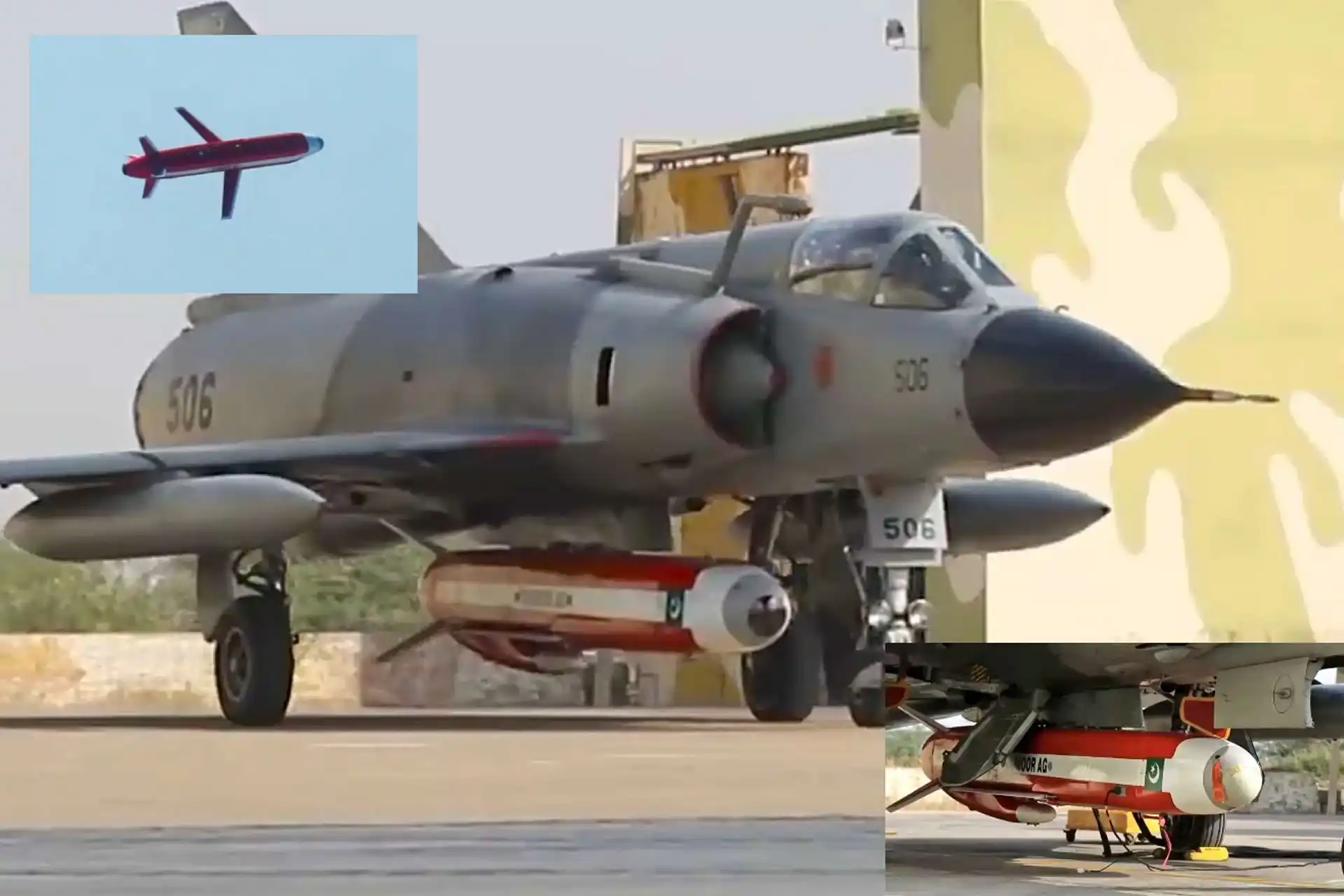
On January 3, 2026, the Pakistan Air Force (PAF) marked a milestone in its defense capability by confirming the successful first flight test of the indigenously developed Taimoor air-launched cruise missile. Conducted under full operational conditions, this test signaled the missile’s transition from prototype to a validated and credible weapon system. Designed for precision strikes against both land and maritime targets, the test represents a significant leap forward in Pakistan’s ability to conduct long-range, stand-off attacks while keeping its aircraft beyond the reach of hostile air defenses.
The Rise of Taimoor: A New Chapter in Pakistan’s Precision Strike Capability
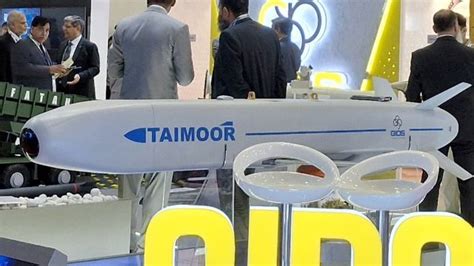
The Taimoor missile joins an expanding arsenal aimed at ensuring strategic depth and deterrence for Pakistan’s defense posture. Developed domestically, Taimoor was designed to bridge critical gaps in Pakistan’s stand-off weapon systems, and its confirmed operational capability enhances the PAF’s power projection well beyond traditional tactical ranges.
With a range of approximately 600 kilometers, the Taimoor missile empowers strike aircraft to engage high-value targets from distances that allow them to remain outside heavily defended zones. This range gives the PAF an edge in strategic flexibility, particularly important in a region marked by high military alertness and rapid technological evolution.
Engineering Excellence: Technical Capabilities and Innovations
At the core of Taimoor’s effectiveness is its advanced flight and guidance system. Belonging to the subsonic cruise missile class, the missile trades raw speed for endurance, terrain-hugging survivability, and pinpoint accuracy. The missile’s flight profile includes low-altitude terrain-following paths, making it harder for enemy radars to detect and intercept.
The propulsion system uses a compact turbofan engine, which ensures consistent low-altitude performance and stable long-range cruising. The airframe itself is reported to employ radar cross-section reduction techniques, involving both advanced shaping and material composition. These stealth characteristics enhance Taimoor’s ability to penetrate layered air defense networks with minimal exposure.
Precision Targeting: Guidance, Navigation, and Warhead Design
Taimoor integrates a dual-mode guidance system for high accuracy across all phases of flight. In the midcourse segment, the missile relies on a ring-laser or fiber-optic inertial navigation system, augmented by satellite-based updates. This ensures reliable navigation even in GPS-contested environments.
In its terminal phase, the missile reportedly utilizes an imaging-based seeker or scene-matching system, allowing it to identify and engage both fixed and relocatable targets with extreme precision. Pakistani defense officials claim a circular error probability (CEP) in the low single-digit meters, placing Taimoor within the elite class of precision-guided munitions.
The missile carries a conventional warhead, likely in the 400–450 kilogram range, and is capable of both penetration and area blast effects. Options such as delayed fusing for hardened bunkers or airburst modes for broader area impact suggest flexibility in mission planning. With selectable pre-launch profiles, Taimoor is well-suited for both sea and land attack missions.
Strategic Implications and Military Integration
The January 3 flight test was overseen by senior leadership across the Pakistan Armed Forces, including scientists and defense engineers instrumental in the program’s evolution. Their participation underlines the strategic significance of the Taimoor missile, which is seen not merely as a technological achievement but a core component of Pakistan’s conventional deterrence doctrine.
Air Chief Marshal Zaheer Ahmed Baber Sidhu publicly lauded the milestone, praising the joint efforts of the military and scientific community. He emphasized that indigenous advancements like Taimoor represent Pakistan’s growing technological self-reliance and readiness to adapt to a rapidly shifting regional security landscape.
In closed-door briefings with defense analysts, PAF planners reportedly highlighted Taimoor’s deterrence value in forcing adversaries to widen sensor coverage, maintain interceptor readiness, and invest in costly missile defense infrastructure. The psychological and material impact of a stealthy, long-range cruise missile effectively shifts the operational calculus in the PAF’s favor.
Platform Compatibility and Operational Deployment
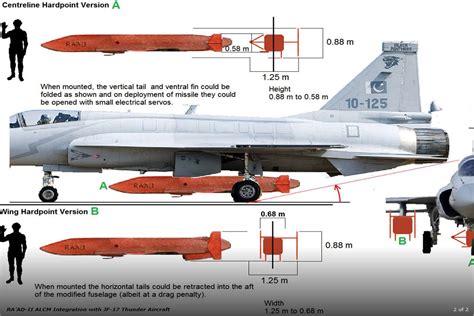
Taimoor has been designed for multi-platform integration, ensuring broad compatibility across Pakistan’s fighter fleet. Its avionics and fire control systems are aligned with modern mission computers and digital interfaces, facilitating rapid deployment across front-line aircraft without major retrofit requirements.
The missile’s dimensions and weight class suggest suitability for medium to heavy fighter aircraft, such as the JF-17 Thunder Block III or F-16 variants, without compromising mission payloads or combat radius. This compatibility ensures scalable strike options, from tactical interdiction to deep strategic missions.
Regional Context and Strategic Posture
Taimoor’s induction arrives at a time of increasing geopolitical complexity in South Asia, where airspace dominance, maritime access, and precision strike capabilities are central to deterrence and warfighting doctrines. With the Indian Air Force modernizing its own long-range assets, including the Nirbhay cruise missile and BrahMos variants, Pakistan’s development of Taimoor is a direct response to shifting threat perceptions.
The missile’s dual-targeting flexibility, capable of striking enemy command centers, naval vessels, hardened silos, and critical infrastructure, adds a layer of unpredictability for opposing planners. Moreover, by being a homegrown solution, Taimoor offers independence from foreign suppliers, strengthening Pakistan’s sovereign defense industry and limiting vulnerability to sanctions or technology denial regimes.
Toward Networked Precision Warfare
Taimoor’s development marks a paradigm shift in Pakistan’s airpower doctrine—from legacy bombing runs and unguided munitions to networked precision warfare. The missile’s characteristics suggest integration within larger command and control networks, enabling real-time target updates, coordinated strikes, and flexible mission rerouting.
In broader terms, the successful test points to the maturation of Pakistan’s aerospace sector, which is increasingly capable of designing, producing, and validating complex systems that rival regional benchmarks. While future variants may further extend range or incorporate electronic warfare resilience, the current configuration of Taimoor already places it among the most capable conventional cruise missiles in the region.
Conclusion: A Strategic Leap, Not Just a Tactical Win
The confirmed flight test of the Taimoor air-launched cruise missile marks more than a technical achievement—it represents a strategic inflection point. With the ability to conduct accurate, long-range strikes under the shield of stealth and speed, Pakistan now possesses a force multiplier that enhances deterrence, complicates enemy planning, and reinforces sovereignty.
The success of Taimoor speaks volumes about Pakistan’s determination to modernize its military not only with imported platforms but also through indigenous innovation, signaling a new era in its pursuit of credible, precise, and autonomous defense capabilities.