A major leap in British aerospace engineering is unfolding as the United Kingdom officially revealed its GCAP Combat Air Flying Demonstrator, a manned, supersonic-capable aircraft that is slated to fly by 2027. This marks the first time in over four decades that the UK is independently developing such a platform, intended to inform the broader Global Combat Air Programme (GCAP)—a trilateral partnership between the UK, Italy, and Japan aiming to field a sixth-generation fighter by 2035.
A Technological Cornerstone for Sixth-Generation Air Dominance
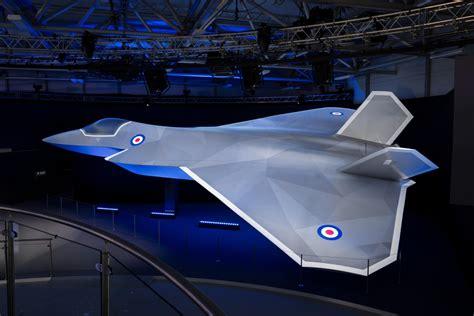
The Combat Air Flying Demonstrator is not merely a testbed—it represents a technological proving ground that will shape the direction of GCAP’s operational airframe. While visually reminiscent of the concepts and models previously associated with the Tempest program, the demonstrator’s purpose is far more crucial: to de-risk core technologies and validate manufacturing techniques under real-world conditions.
According to BAE Systems, the demonstrator already has two-thirds of its structural weight in production, including key airframe components such as the main fuselage, wings, and tail. This progress is facilitated through a blend of cutting-edge digital engineering techniques, notably:
- 3D printing for rapid prototyping and component production
- Digital twinning, creating a fully functional virtual replica of the aircraft for stress-testing, system validation, and design iteration
- Collaborative robotics, which streamline the assembly process with precision and repeatability
This digitally engineered approach minimizes production bottlenecks and enables seamless simulation of flight characteristics before the aircraft ever lifts off.
Strategic Relevance Beyond National Borders
This demonstrator is not being developed in isolation. It is the centerpiece of a multinational defence cooperation effort rooted in shared geostrategic interests. Speaking at the Global Air and Space Chiefs’ Conference in London, UK Defence Under-Secretary Luke Pollard emphasized the GCAP initiative as a framework not only for Euro-Atlantic defence but also as a tool to project democratic values globally.
“This programme means our nations can come together, not just to defend the Euro-Atlantic, but to support our values on a global stage,” he said.
While the aircraft revealed is not the final GCAP design, it will serve a similar role as the British Aerospace EAP did for the Eurofighter Typhoon—acting as an early flying testbed whose data will be instrumental in sculpting the final sixth-gen combat aircraft.
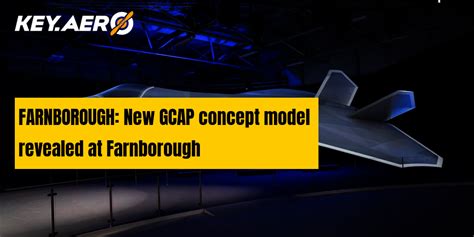
Notable Design Characteristics
The newly released rendering, while deliberately vague in some areas, hints at a few distinctive features. Most prominently, the broad, bulbous nosecone suggests space for a high-power AESA radar, and perhaps more intriguingly, multi-role avionics capable of executing electronic warfare (EW) or advanced sensor fusion tasks. This aspect aligns with GCAP’s emphasis on data-centric warfare and multi-domain command integration.
Additional attributes potentially being assessed include:
- High agility airframe geometries, possibly adopting thrust-vectoring
- Integration pathways for loyal wingman drones and uncrewed systems
- Compatibility with the UK’s emerging Digital Targeting Web, a software-defined ISR and strike network born from the recent UK Strategic Defence Review
Simulation-Driven Readiness and Pilot Involvement
Pilots from the Royal Air Force, BAE Systems, and Rolls-Royce have already accumulated over 300 hours in bespoke simulators, designed to precisely emulate the flight and handling characteristics of the demonstrator. These simulator sessions are not limited to basic maneuvering but explore mission simulation, sensor testing, and crew interface feedback—effectively shortening the feedback loop between pilot experience and design iteration.
Tony Godbold, Future Combat Air Systems Delivery Director at BAE Systems, stressed the demonstrator’s role in preparing the UK defence-industrial base:
“This significant and challenging project will deliver the UK’s first crewed combat demonstrator aircraft in four decades. The programme is accelerating the development of advanced design approaches and manufacturing techniques, helping to sharpen the UK’s industrial edge.”
Team Tempest and the Industrial Backbone of GCAP
The UK’s contribution to GCAP continues to be spearheaded by Team Tempest, a consortium including:
- BAE Systems (airframe and systems integration)
- Rolls-Royce (propulsion)
- Leonardo UK (sensors and electronics)
- MBDA UK (weapons systems)
They are joined by strategic partners such as GKN, GEUK, Martin-Baker, Collins Aerospace, Bombardier, QinetiQ, and Thales UK, as well as academic institutions actively working on subsystems and materials science.
The consortium’s reach is massive. As of July 2025, over 3,500 UK-based jobs were directly supported by GCAP development activities. The program’s new headquarters, located in Reading, UK, opened earlier this month, consolidating leadership under a joint venture company known as Edgewing. Each of the three partner nations—UK, Italy, and Japan—holds an equal 33.3% share in Edgewing.
The Path Ahead: Timelines and Strategic Vision
The official goal is for the demonstrator to complete its first flight by 2027, after which the insights gained will directly shape the production design of the full-fledged GCAP fighter. According to Italian Air Force Lieutenant General Antonio Conserva, the operational prototype is anticipated by 2030, with the full-capability aircraft targeted for 2035.
The programme also seeks to set the standard for future interoperable combat ecosystems, unifying:
- Crews in manned fighters
- Swarm-capable drones for reconnaissance and electronic warfare
- Autonomous platforms that can operate semi-independently in contested airspace
Digital integration will be at the heart of this vision, facilitated by artificial intelligence, edge computing, and secure cloud-based command networks. The demonstrator is expected to be pivotal in integrating and stress-testing these software-defined capabilities, especially in a live-air environment.
Historic Parallel: Echoes of the EAP and the Typhoon Legacy
While this demonstrator is a wholly new aircraft, its strategic and developmental role is similar to the British Aerospace EAP of the 1980s, which laid the foundation for the Eurofighter Typhoon. The EAP allowed engineers to explore previously unproven ideas in stealth shaping, flight control, and composite materials long before they were finalized into the Eurofighter.
Similarly, the GCAP demonstrator will give engineers years of critical flight data and design feedback that will vastly reduce the risk in fielding a sixth-gen platform. In that sense, its true value lies not only in its flight capabilities, but in its contribution to a generation of combat air innovation.
The Broader Stakes: Reasserting Aerospace Sovereignty
Beyond the aircraft itself, the Combat Air Flying Demonstrator symbolizes a broader ambition—restoring and future-proofing sovereign aerospace capabilities. In an era of increasing geopolitical volatility, the UK’s decision to invest in an independent manned aircraft demonstrator shows clear intent to remain a technological and strategic leader in global combat air power.
Director of Future Combat Air at the Ministry of Defence, Richard Berthon, summed up the moment aptly:
“The Combat Air Flying Demonstrator is providing invaluable lessons on future combat air delivery and equipping our people with the skills they will need to deliver GCAP.”
What lies ahead is not just a new aircraft but the emergence of a new military-industrial paradigm, one where speed, digital-first design, and multilateral defence collaboration are the decisive factors of success.
The countdown to 2027 has begun—not only for a flight, but for a historic shift in 21st-century air combat evolution.