American Airlines CEO Robert Isom has publicly raised alarm over the growing use of artificial intelligence (AI) in airfare pricing, calling out rival Delta Air Lines for deploying AI systems that he believes could erode consumer trust and potentially violate privacy standards. The criticism emerged during American’s latest earnings call, where Isom directly challenged the ethical implications of Delta’s AI-driven pricing strategy, even though he refrained from explicitly naming the airline.
Delta’s AI Pricing Strategy Sparks Controversy
Delta’s latest move involves the adoption of an AI tool described as a “super analyst,” developed in partnership with Israeli tech firm Fetcherr. This system is designed to analyze a wide range of variables including booking history, browsing behavior, market trends, and competitor pricing, allowing the airline to dynamically and individually price fares.
Currently, Delta’s AI pricing covers 3% of its domestic flight network, with ambitions to scale that to 20% by the end of 2025. Though Delta insists that the system doesn’t target individuals directly and complies with existing regulations, its lack of transparency has stirred skepticism and drawn attention from U.S. lawmakers, who fear it could be a form of algorithmic price discrimination.
Robert Isom: “This Isn’t What Trust Looks Like”
In a pointed rebuke, Isom likened the strategy to “bait and switch” marketing—a term often reserved for deceptive sales tactics. Emphasizing American Airlines’ stance, he said:
“Consumers need to know they can trust American. This is not about a bait and switch. This is not about tricking… I don’t think it’s appropriate. From American, it’s not something we will do.”
While AI is being increasingly used across airline operations for weather forecasting, fuel optimization, and scheduling efficiencies, American Airlines draws the line at dynamic fare manipulation. Isom’s statements place his airline in sharp contrast with Delta, which views AI as an enabler of ultra-personalized, data-driven pricing mechanisms.
The Ethical Quagmire of AI-Powered Pricing
Delta’s defense hinges on the claim that it is not offering “individualized offers based on personal information”, but rather using AI to improve its existing dynamic pricing infrastructure. Yet, critics argue that the distinction is razor-thin. The AI’s ability to read customer behavior patterns inherently introduces implicit personalization, potentially allowing the system to detect a traveler’s willingness to pay and inflate ticket prices accordingly.
This form of algorithmic price optimization has triggered outrage among privacy advocates and lawmakers alike. A coalition of U.S. Senators recently addressed a formal letter to Delta CEO Ed Bastian, demanding greater clarity on how AI is applied and how data is handled. With growing concerns over the implications of opaque algorithms and non-consensual data harvesting, the airline’s commitment to data protection has come under heavy scrutiny.
“Black Box” Algorithms and Trust Deficit
The AI tools employed in this context are often referred to as “black box models“—sophisticated, proprietary algorithms whose internal workings are not disclosed. While Delta touts the model’s ability to generate “amazingly favorable unit revenues,” the refusal to detail the mechanics behind it only intensifies fears of manipulation and consumer exploitation.
Airfare has always been subject to dynamic pricing, but the step toward individual-level pricing models threatens to cross a line from responsive to predatory. The key concern lies in whether such AI systems can resist the temptation—or commercial pressure—to prey on vulnerable groups, such as last-minute travelers, elderly passengers, or those unfamiliar with digital tools for fare comparison.
American Airlines’ Strategic Positioning
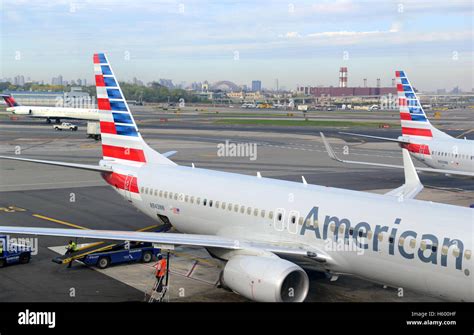
By categorically refusing to implement AI for pricing, American Airlines is positioning itself as a consumer-first brand, reinforcing the value of transparency, ethical practices, and predictable pricing. This stance could appeal to travelers wary of the digital transformation sweeping the airline industry and uncertain of how their data is used.
Isom’s remarks come at a time when American Airlines is under pressure to strengthen its brand image amid stiff competition, rising fuel costs, and shifting passenger expectations. By aligning itself with privacy-conscious travelers, American could potentially gain market loyalty from consumers turned off by Delta’s experimental strategies.
Delta’s Defense: Speed, Not Spying

Delta maintains that its AI system is not a surveillance tool, but rather a means of accelerating price responsiveness in an increasingly volatile market. As per the airline’s statement:
“We are not, nor do we plan to, use or test any model that targets customers with individualized offers based on personal information.”
However, many experts argue that machine learning systems inevitably lead to micro-segmentation of users, whether or not they are formally targeted. Even anonymous behavioral cues can be leveraged to create personalized pricing tiers, which critics equate to a digitized form of economic profiling.
Legislative Scrutiny Intensifies
In light of the unfolding developments, there’s mounting pressure on federal regulators to intervene. The Department of Transportation (DOT) and Federal Trade Commission (FTC) have not yet issued formal guidance on AI pricing models in air travel, but advocacy groups are urging immediate action.
The potential risks extend beyond just pricing. If left unchecked, AI systems could reinforce biases, penalize customers who lack digital literacy, or even use geo-location data to infer affluence levels. These concerns are central to the ongoing debates around algorithmic transparency and fairness in digital markets.
Industry Adoption: The Domino Effect?
Historically, the airline industry has shown a strong tendency to standardize cost-saving innovations, even controversial ones. Consider the introduction of checked bag fees, seat selection charges, and meal unbundling—all initially met with backlash before becoming standard across the board.
Should Delta’s AI pricing model yield significant financial upside, it could set a new industry benchmark, pressuring other carriers to follow suit. Airlines operate in an environment of razor-thin margins, and any perceived competitive disadvantage could rapidly push hesitant players to reconsider their ethical stance.
While Isom’s denouncement resonates today, it remains to be seen whether American Airlines will hold this line if AI pricing proves to be a profit accelerator. Much will depend on regulatory outcomes, public sentiment, and customer behavior in response to perceived price manipulation.
Conclusion: Trust Versus Tech in the Skies
The clash between American Airlines and Delta Air Lines over AI-based fare pricing signals a defining moment in the evolution of digital aviation commerce. As technology becomes ever more capable of reading consumer patterns, the question is no longer whether airlines can individualize pricing—but whether they should.
American’s bold rejection of AI-driven fare discrimination positions it as a champion of transparency and fairness, at least for now. In contrast, Delta’s willingness to push the envelope highlights the growing appetite within the industry to harness machine learning for maximum profit.
As the stakes rise and AI becomes further enmeshed in airline operations, one thing is clear: the future of flight pricing will be shaped as much by ethics as by algorithms.