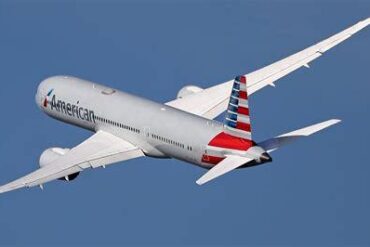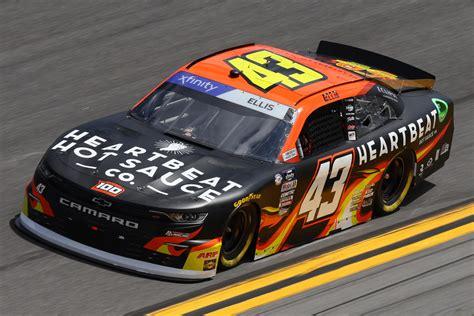
NASCAR driver Ryan Ellis has ignited a firestorm of criticism against American Airlines after a chaotic journey to Mexico City, exposing systemic weaknesses in airline operations and posing serious questions for the future of travel logistics ahead of major motorsport events. What began as a routine flight turned into a logistical nightmare that tested the patience of not just an elite athlete, but also the resilience of international event planning in the era of strained air travel infrastructure.
Abort at Charlotte: Safety First, But At What Cost?
Ellis’s ordeal began at Charlotte Douglas International Airport, where a NASCAR-chartered flight was suddenly grounded during takeoff due to an unexpected technical alarm. Emergency vehicles were dispatched. The flight was aborted. Safety prevailed, but it came at the cost of cascading delays and mass confusion. No passengers reboarded the aircraft. The crew scrambled to realign schedules, and a ripple effect began that would carry into every stage of the trip.
While safety must always come first, this unplanned grounding triggered an unpredictable spiral. With NASCAR’s tightly woven event schedules, even a few hours of delay can throw off transport logistics for entire teams, equipment, and media crews. The aborted flight placed a heavy strain on American Airlines’ commercial fallback systems—a test they failed spectacularly.
Commercial Chaos: American Airlines Fails the Backup Plan
Forced to pivot to a commercial route, Ellis rebooked with American Airlines via Miami. What should have been a manageable contingency turned into a disaster. Multiple flight delays and terminal changes compounded the stress. Boarding announcements fluctuated. Timetables shifted erratically.
Ellis, who needed to be physically and mentally prepared for an elite motorsport event, landed in Mexico City after enduring over 24 hours with just 105 minutes of sleep. The physical toll wasn’t just a personal inconvenience—it highlighted the broader problem of airline dependency during critical, high-profile schedules. The sheer fatigue Ellis experienced underscores what happens when travel logistics fail to accommodate elite performers.
Luggage Nightmare: The Sealed Suitcase Fiasco
Perhaps the most symbolic moment of the ordeal came not at a departure gate or in a customs queue, but at baggage claim. Upon arrival, Ellis’s luggage was located via AirTag—a precautionary measure many travelers now take due to inconsistent airline tracking. But the bag arrived sealed shut with a wrench-lock, applied arbitrarily by American Airlines staff.
It was not a matter of enhanced security. It was the result of a mechanical cabin error turned into a frustrating barrier for a paying customer. This seemingly minor incident became emblematic of larger issues: lack of communication, absence of apology, and total disregard for the traveler experience. For a professional athlete traveling for business, such a failure was unacceptable.
Ripple Effects on Motorsport Logistics and Scheduling
The impact of this travel debacle extended beyond Ellis himself. NASCAR’s tightly coordinated Mexico City schedule was already balancing international logistics, customs timelines, and local transportation planning. When a driver is delayed, it doesn’t just hurt team preparation—it affects the entire event ecosystem.
Qualifying rounds were delayed. Practice sessions had to be rescheduled. Team engineers and pit crews adjusted strategies. All these disruptions stemmed not from competitive incidents, but from a systemic travel failure. In the growing world of sports tourism, a missed flight is more than an inconvenience—it’s an economic and operational hazard.
Airline Accountability in the Age of Sports Travel
Ellis’s public denunciation of American Airlines has put the aviation industry under the spotlight. Traditionally, airlines have escaped direct blame during high-pressure travel periods. But when a NASCAR driver with a large fan following makes headlines, it forces executives to answer questions. Airlines must ask themselves:
- Are baggage handling protocols sufficient for high-profile travelers?
- Do rebooking systems prioritize time-sensitive connections?
- Are crisis communication methods robust enough for digital-era fallout?
This incident wasn’t a freak one-off. It was a predictable failure in an era of maxed-out travel systems, compounded by summer traffic, event clustering, and reduced contingency planning.
Reputation Damage: Travel Confidence at Risk
The aviation industry relies on traveler trust, particularly during high-traffic event seasons. For fans, teams, and even sponsors, reliability is key. Ellis’s story, now viral, plants seeds of doubt. The reputational impact is not limited to American Airlines—it ripples across every carrier serving high-profile, time-critical clientele.
As events stack up through the summer—F1 races, World Rally Championships, MotoGPs—airlines face increasing pressure to provide VIP handling services with far greater precision. For sports leagues, this moment raises alarms: How do we prepare for inevitable delays? Should travel insurance clauses expand? Do charter redundancies need federal or private funding?
Travel Tips from the Paddock: Lessons for Every Traveler
Ellis’s misadventure offers clear takeaways for the average traveler. This isn’t just a cautionary tale for athletes—it’s a warning for tourists, business executives, and families entering peak travel season:
- Plan buffer time around high-value events or meetings.
- Track luggage independently with smart tags.
- Carry essentials in onboard bags.
- Buy flexible fares or elite status where possible.
- Use travel insurance that covers missed events, especially for ticketed experiences.
The NASCAR star may have been the face of the disruption, but the underlying lessons are broadly relevant.
A Call for Innovation: What Airlines Must Do Now
The pressure is now squarely on airline executives to implement systems that anticipate disruption and provide elite-level support. With thousands of high-stakes travelers moving weekly through global hubs, reactive measures are no longer enough.
Airlines should explore:
- Dedicated athlete and performer protocols, including guaranteed seating and priority rebooking.
- Enhanced baggage security labeling that avoids unnecessary tampering.
- Real-time support lines for team managers and corporate event coordinators.
- Redundancy charters for sports leagues during global travel windows.
Failing to act will see more viral episodes, more public complaints, and more lost faith.
Will the FAA or NASCAR Step In?
American Airlines now faces mounting pressure to respond formally. Consumer advocacy groups have flagged the wrench-lock incident as a breach of passenger respect standards. Meanwhile, there is speculation that the Federal Aviation Administration (FAA) may review aspects of emergency protocol communication.
Simultaneously, NASCAR may reevaluate its charter travel agreements, possibly moving toward exclusive travel partners or beefed-up private coordination units. After all, sports organizations cannot afford delays that affect international exposure, sponsor satisfaction, and team morale.
Final Lap: Racing Toward a More Resilient Travel Future
Ryan Ellis made it to the track. He raced. He fulfilled his professional duty. But the story he left behind was bigger than any podium finish. It was a blistering indictment of how modern air travel, bloated and underprepared, struggles to meet the demands of today’s global event calendar.
His wrench-locked suitcase has become more than just a personal nuisance. It’s a symbol of what happens when communication fails, systems break down, and accountability disappears. As sports and travel become more intertwined than ever, stakeholders must stop treating travel like a sideline detail. It is the race before the race.
Ellis’s message rings clear: “In this sport, precision is everything. Our travel needs to match that standard.” The world of motorsports—and every traveler along for the ride—deserves nothing less.