The global aviation industry is confronting a rapidly escalating threat that could disrupt international travel on an unprecedented scale. Airlines are now issuing urgent warnings that jet fuel supplies may begin to run critically low within weeks, driven by geopolitical instability and supply chain choke points. What began as a price surge has evolved into a far more dangerous scenario: the real possibility that aircraft may simply have nowhere to refuel.
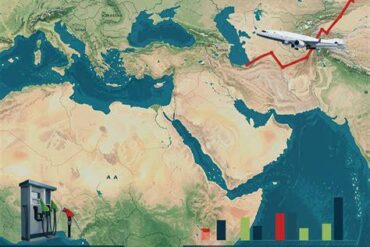
At the center of this unfolding crisis lies the ongoing 2026 Iran Crisis, which has triggered a near-doubling of jet fuel prices while severely restricting access to one of the world’s most vital energy corridors—the Strait of Hormuz. With this strategic artery effectively constrained, fuel shipments from key Gulf refineries are no longer flowing reliably to global markets.
The implications are immediate and far-reaching. Airlines are not just facing higher costs—they are confronting the logistical nightmare of uncertain fuel availability at international destinations, raising the specter of grounded aircraft stranded far from home bases.
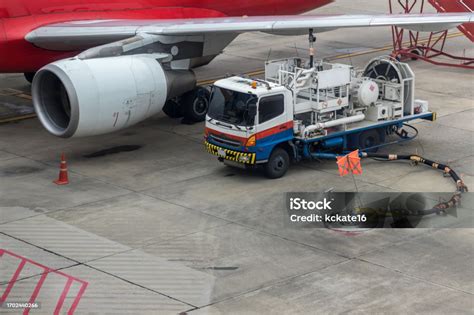
Airlines Brace for Operational Shock as Fuel Security Deteriorates
Leading carriers across Europe and North America are already modeling worst-case scenarios. Air France-KLM CEO Ben Smith has openly acknowledged that contingency plans are underway, particularly for routes into regions where fuel supplies are increasingly fragile.
Southeast Asia has emerged as a critical pressure point. Countries like Vietnam, heavily dependent on imported fuel routed through the Gulf, are signaling early warning signs of shortages. Unlike Europe, which still maintains modest reserves, these regions are exposed to immediate supply shocks that could ripple through airline networks.
Even within Europe, confidence is fading. easyJet CEO Kenton Jarvis has indicated that while short-term stability may hold, the outlook beyond a few weeks is increasingly uncertain. The message is blunt: the industry is operating on borrowed time.
The Hidden Risk: Aircraft Stranded Abroad Without Fuel
Beyond rising prices, the more dangerous risk is operational paralysis. Airlines may be able to fuel aircraft at their home bases, but there is no guarantee those same aircraft can refuel for the return journey. This creates a cascading dilemma where planes, crews, and passengers could become stuck in foreign airports.
The financial consequences are severe. Idle aircraft generate no revenue, while airlines remain obligated to cover passenger accommodations, meals, and rebooking costs. In a business already defined by razor-thin margins, such disruptions can rapidly spiral into billions in losses.
U.S. carriers are particularly vulnerable. United Airlines has already announced plans to cut approximately 5% of its flight schedule, with CEO Scott Kirby warning that sustained fuel instability could add up to $11 billion in annual costs. Meanwhile, Delta Air Lines has reported a $400 million financial hit directly tied to rising fuel prices.
Flight Cuts and Network Reductions Become Inevitable
As uncertainty deepens, airlines are shifting from contingency planning to decisive action. Route suspensions and flight cancellations are no longer hypothetical—they are becoming a necessary strategy to avoid deeper financial damage.
Scandinavian Airlines has already canceled around 1,000 flights, signaling the beginning of what could become a broader industry contraction. The logic is unforgiving: it is more cost-effective to cancel flights than to operate them at a guaranteed loss or risk stranding aircraft.
This recalibration is likely to reshape global travel patterns in the coming months. Secondary routes, long-haul leisure destinations, and fuel-intensive operations are expected to be the first casualties, as airlines prioritize core, high-demand corridors with more reliable infrastructure.
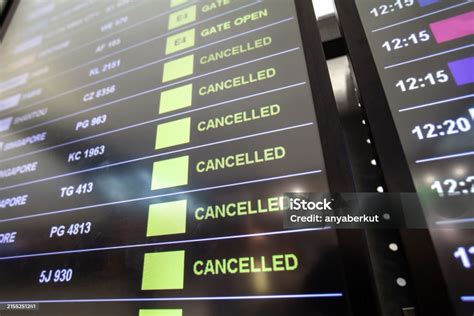
Fuel Tankering Returns—A Costly Stopgap Measure
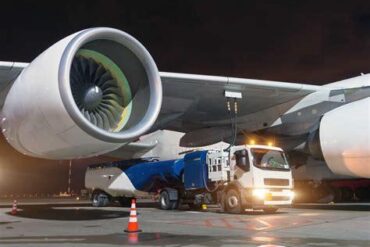
In response to the crisis, airlines are revisiting an old but imperfect strategy: fuel tankering. This involves loading additional fuel at the departure airport to reduce reliance on uncertain supplies at the destination.
While effective in theory, the practice introduces its own complications. Heavier aircraft consume more fuel, reducing overall efficiency and increasing operational costs. In an industry where margins are often measured in single digits, even minor inefficiencies can erase profitability entirely.
Executives are acutely aware of this trade-off. As Scott Kirby has emphasized, there is little justification for operating flights that effectively burn cash. The result is a stark operational philosophy: only fly routes that remain economically and logistically viable under extreme conditions.
A Defining Moment for Global Aviation Stability
The unfolding jet fuel crisis is more than a temporary disruption—it is a stress test of the aviation industry’s resilience in the face of geopolitical volatility. With supply chains strained and uncertainty deepening, airlines are navigating a narrowing path between operational continuity and financial survival.
If fuel access does not stabilize soon, the industry could enter a phase of sustained contraction, marked by reduced connectivity, higher ticket prices, and prolonged travel disruptions. For passengers, this means fewer choices and rising costs. For airlines, it is a fight to maintain viability in an environment where fuel—the lifeblood of aviation—can no longer be taken for granted.