The United States has initiated an unprecedented push to acquire more than 300,000 combat-ready drones, marking one of the most sweeping unmanned warfare expansions ever attempted by the American defense establishment. The campaign, executed under President Donald J. Trump’s Drone Dominance Plan, reflects an unmistakable pivot toward mass-produced, low-cost, lethal drone systems designed to saturate future battlefields with relentless, attritable firepower.
Officials attributed to the newly branded Department of War describe the plan as a core pillar of Trump’s Unleashing American Drone Dominance executive order. The directive accelerates procurement processes, clears regulatory obstacles, and injects immediate funding into the effort, establishing an industrial surge reminiscent of past wartime mobilizations—yet engineered for an era where unmanned systems define the tempo of conflict.
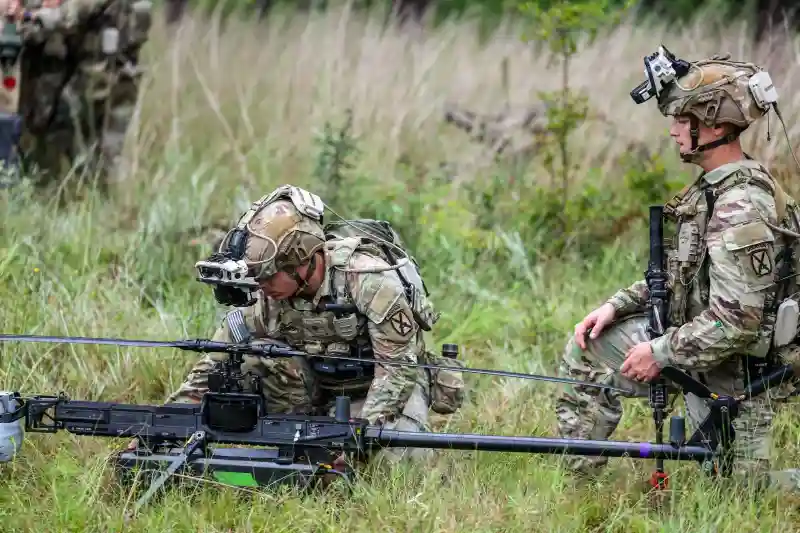
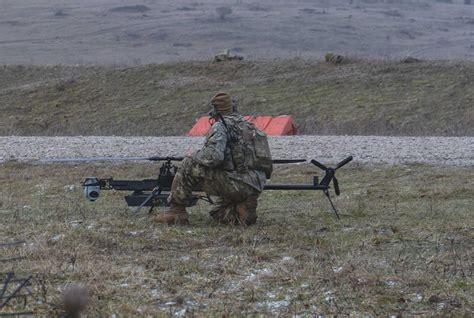
At training sites such as Camp Beauregard in Louisiana, the shift is tangible. Soldiers from Sioux Company, 3rd Brigade, 10th Mountain Division are already rehearsing drone-centric tactics with systems like the Ghost-X Medium-Range Reconnaissance drone, illustrating how quickly unmanned coordination is moving from concept to battlefield routine.
The Strategic Architecture Behind Drone Dominance
The Drone Dominance initiative aims to deliver hundreds of thousands of small, lethal, and inexpensive drones to U.S. Army, Marine Corps, and Special Operations units within a two-year window. Backed by $1 billion in immediate funding through the administration’s Big Beautiful Bill, the effort introduces a fundamentally new template for American force design: lethality achieved through volume rather than exquisite, high-cost platforms.
Unlike traditional procurement cycles that drag on for years, this program deploys an agile framework built around four competitive procurement phases—referred to internally as “gauntlets.” Beginning in February 2026, twelve manufacturers will deliver the first 30,000 attack drones at roughly $5,000 per unit. By 2027, five finalists will scale production to 150,000 units, driving the cost down to about $2,300 each. Total output is set to surpass 340,000 systems, creating an arsenal of expendable aerial weapons unrivaled by any global competitor.
Battlefield Lessons From Ukraine Define America’s New Playbook
Operational lessons from the Russia-Ukraine war loom heavily over this strategy. The conflict has revealed that mass-produced drones—sometimes improvised from commercial components—can dismantle armored formations, sever supply lines, and expose headquarters with startling efficiency. The cost-effectiveness is impossible to ignore: a $1,500 loitering drone can force an enemy to expend a $100,000 interceptor, gradually eroding their defenses through economic exhaustion.
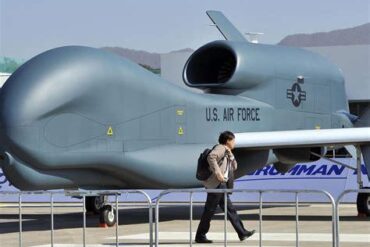
The Pentagon’s traditional reliance on exquisite drones like the MQ-9 Reaper or expensive missile-defense systems does not scale to this new threat environment. The Drone Dominance Plan confronts this gap directly, embracing the paradigm of attritable warfare—platforms meant to be deployed in massive numbers, used aggressively, and lost without strategic consequence.
A New Doctrine for High-Tempo Drone Combat
As planners describe it, drones under this initiative are not mere enablers. They are primary weapons systems, designed to deliver suppression, reconnaissance, lethal strike waves, and electromagnetic disruption. U.S. forces will integrate them across all echelons—dismounted squads, mechanized units, forward observers, and special operations teams.
Starting in 2026, drone warfare will be embedded across major combat training rotations, transforming everything from squad tactics to brigade-level maneuver. The shift marks a doctrinal realignment toward quantified lethality, where advantage derives from overwhelming volume rather than singular high-priced assets.
Competing Against Global Drone Powers
The program also responds to the rapid expansion of drone arsenals in China, Russia, and Iran. These nations increasingly field advanced swarms, electronic warfare modules, and AI-enabled targeting architectures. American strategists argue that quantity is now a form of deterrence: adversaries must anticipate facing not a handful, but thousands of autonomous strike platforms arriving from multiple axes.
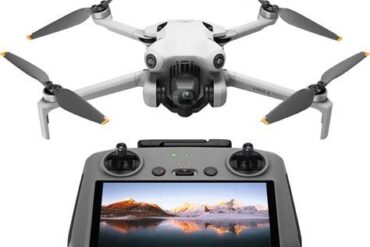
This procurement surge signals that the United States intends to remain dominant in a battlespace where airspace is contested, GPS may be denied, and the first strike may come from a quadcopter the size of a backpack.
Industrial Mobilization and Supply Chain Reinvention
The Department of War’s approach seeks to rebuild the domestic industrial ecosystem by fostering new entrants, reducing acquisition friction, and providing stable, long-term contracts. The focus is on speed, adaptability, and resilience, not on funneling procurement exclusively through legacy defense primes. The result is a more diversified, responsive manufacturing base capable of surging output during crises.
Manufacturers are expected to emphasize modularity, rapid assembly, and digital production techniques that compress lead times and enable continuous upgrades as battlefield requirements evolve.
Shaping the Future of American Warfare
If fully executed, the Drone Dominance Plan positions the United States by 2027 with a vast, flexible fleet of unmanned systems capable of saturating enemy defenses, supporting dispersed maneuvers, and generating persistent airborne pressure across every layer of the battlespace. Future conflicts are likely to be fought in electronic haze, denied airspace, and fluid frontlines—conditions where massed drones provide an asymmetric advantage.
The initiative does more than build drones. It rewrites the architecture of American force projection for the next era of great-power competition, where the decisive edge may belong to the nation capable of manufacturing intelligent, lethal machines at overwhelming scale.