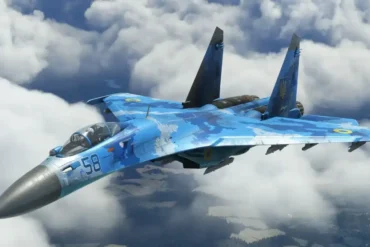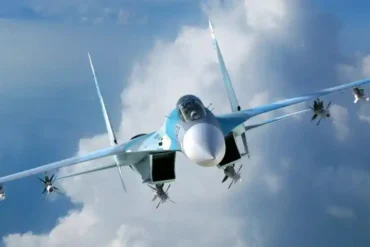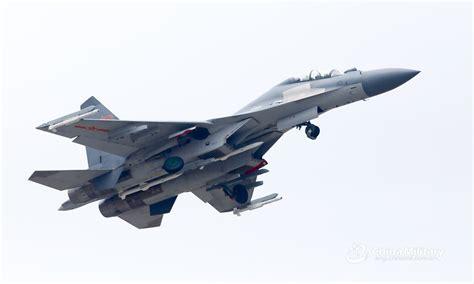
Amid rising tensions and evolving airpower dynamics in the Indo-Pacific, Chinese military bloggers and defense analysts are touting the J-16 multirole fighter as the most advanced ‘Flanker’ variant in the world. Once considered a junior sibling of Russia’s Su-27/30 family, the J-16 has now evolved into an elite aerial platform that Chinese experts claim outclasses even the latest Russian Su-35S, challenging long-standing assumptions about fighter aircraft hierarchy.
The declaration isn’t just about nationalism—it reflects China’s ambitious aerospace advancement, blending indigenous innovation with proven Russian design heritage. Chinese military commentators have boldly stated: “The best Eagle fighters are in the United States, but the best Flanker fighters are now in China.”
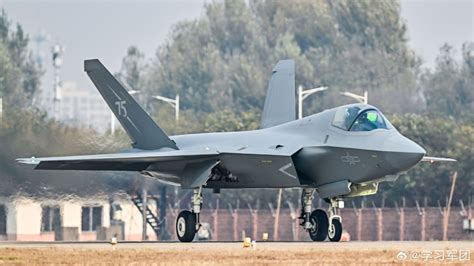
J-16: From Russian Roots to Chinese Supremacy
The J-16, born out of the licensed J-11 series, itself an evolution of the Russian Su-27, has now far surpassed its lineage. While originally mimicking Russian platforms, the People’s Liberation Army Air Force (PLAAF) has aggressively iterated upon the airframe, transforming it into a modern, combat-proven multirole powerhouse. The J-16 leverages the airframe of the Su-27 but incorporates Chinese-built WS-10B engines, Active Electronically Scanned Array (AESA) radar, and domestically-developed avionics, enabling unmatched sensor fusion and strike capabilities.
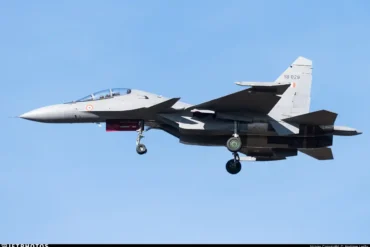
One of the most notable advantages over the Su-30MKI—the Indian variant co-developed with Russia—is the J-16’s cutting-edge avionics suite. The Su-30MKI still employs passive phased array radar, whereas the J-16’s AESA radar dramatically enhances tracking, target discrimination, and electronic resistance, establishing a clear technological edge.
Avionics and Combat Systems: A New Benchmark
Chinese sources emphasize the superiority of the J-16’s onboard computer systems, photoelectric detection units, data-link integration, and EW/ECM systems, all of which contribute to the aircraft’s survivability and lethality. The glass cockpit, heavily influenced by the J-20 stealth fighter, features a helmet-mounted display (HMD) that allows for high off-boresight missile targeting, improving pilot awareness in contested airspace.
The J-16 also benefits from extensive use of radar-absorbent materials (RAM) and a dark-gray stealth coating, which reduce its radar cross-section, offering partial stealth characteristics without compromising speed or maneuverability. These features, along with its electronic countermeasures (ECM) suite, missile approach warning systems (MAWS), and chaff/flare dispensers, make it an incredibly resilient platform in high-threat environments.
Combat Performance and Global Engagements
The aircraft’s track record in real-world operations further amplifies its credibility. In May 2022, a J-16 dangerously intercepted an Australian RAAF P-8 Poseidon over the South China Sea, releasing chaff into the P-8’s engine path, causing international outcry. A year later, another J-16 executed an aggressive maneuver against a US RC-135 Rivet Joint, showcasing Beijing’s willingness to project airpower through this aircraft.
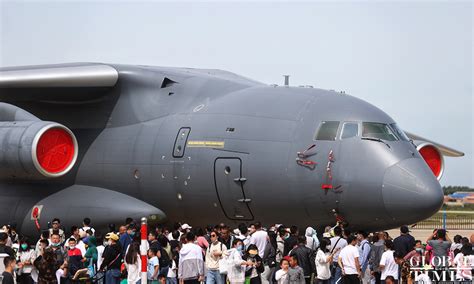
These encounters demonstrate not just confidence but operational maturity, as the PLAAF integrates the J-16 into its routine patrols, aerial refueling missions, and intercepts of foreign reconnaissance aircraft. The aircraft is often seen in formation with YU-20 tankers and J-20 stealth jets, indicating its role in China’s high-altitude, long-range strike doctrine.
J-16 vs Su-30MKI and Su-35S: The Superiority Debate
Chinese military bloggers make a detailed comparison between the J-16 and its closest Russian and Indian counterparts—the Su-30MKI and Su-35S. While the Su-30MKI boasts thrust vectoring for enhanced maneuverability, the J-16 offers superior sensor integration, radar capability, and mission versatility.
The Su-35S, though an advanced air superiority fighter, is considered limited in multirole capability. Meanwhile, the J-16 is capable of air-to-air combat, electronic warfare (EW), suppression of enemy air defenses (SEAD), and precision strike missions, giving it a broader operational envelope.
Furthermore, analysts note that China’s domestic production of over 300 J-16s—nearing 400 units—dwarfs India’s Su-30MKI fleet, which remains under 300. Mass production, digital upgrades, and doctrinal integration all contribute to J-16’s rise as the world’s most deployed and most advanced Flanker variant.
Training & Operational Readiness: Statements from PLAAF Pilots
Wang Songxi, a veteran flight instructor with the Northern Theater Command, offered a rare insight into the aircraft’s handling and capabilities in a 2021 interview with the Global Times. He stated: “In terms of performance, the J-16 is superior to all types of aircraft I have flown.”
During a training dogfight with the J-10C in 2020, both aircraft reportedly ended the exercise in a draw. However, Wang noted the J-16’s twin-engine and twin-pilot configuration offered distinct advantages in mission execution, endurance, and survivability. His testimony adds considerable weight to China’s internal confidence in the platform.
J-16 and the Chinese Air Doctrine Shift
The elevation of the J-16 as a top-tier platform represents a broader shift in China’s airpower doctrine. For decades, the PLAAF depended on Russian imports and reverse-engineered derivatives. Now, the J-16 demonstrates that China has transitioned from imitation to innovation.
The aircraft’s success also aligns with China’s broader strategic goals. It reinforces Beijing’s narrative of self-reliance and technological superiority, serving both as a deterrent in regional flashpoints and a showcase piece for prospective export partners.
However, it’s worth noting that international demand for the J-16 remains muted, as China’s export success has been largely confined to Pakistan, which operates the export variant J-10CE. Attempts to market the J-10C as a competitor to the Dassault Rafale have met with limited traction, despite claims of superiority based on the PL-15E long-range missile system.
The Role of the ‘Three Swords’ in Chinese Air Power
Together with the J-20 stealth fighter and the J-10C 4.5-generation multirole jet, the J-16 forms one of the “Three Swords” or “Three Musketeers” of the PLAAF’s elite aviation fleet. While the J-20 dominates air superiority roles and the J-10C provides tactical flexibility, the J-16 excels in multirole dominance, acting as the workhorse for offensive strike, aerial denial, and electronic warfare.
This trinity reflects China’s attempt to match the West’s fifth-generation triad—comprising the F-22 Raptor, F-35 Lightning II, and support from fourth-generation aircraft like the F-15EX. The J-16 is now frequently positioned by Chinese commentators as a peer to the F-15EX and Rafale, not just in role, but in raw performance.
Conclusion: China’s Flanker Rises to Global Preeminence
The J-16’s transformation from a derivative fighter to the world’s premier Flanker underscores China’s rapid rise as a dominant force in aerial warfare. With superior avionics, radar, and multirole capability, it is no longer merely an echo of Russian innovation—it’s the new benchmark.
As China continues to develop sixth-generation platforms like the J-36 and J-50, the J-16 will remain the tip of the spear for PLAAF combat operations. It marks a shift not only in Chinese military capabilities but in the global perception of fighter jet supremacy.
With global defense stakeholders closely monitoring Beijing’s next move, one fact becomes increasingly difficult to dispute: Russia may have invented the Flanker—but China now perfects it.