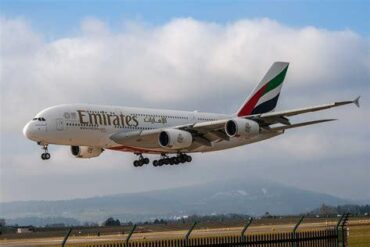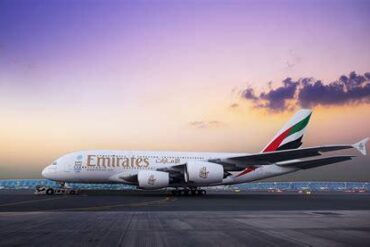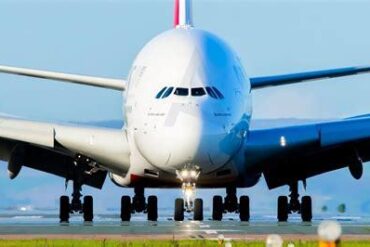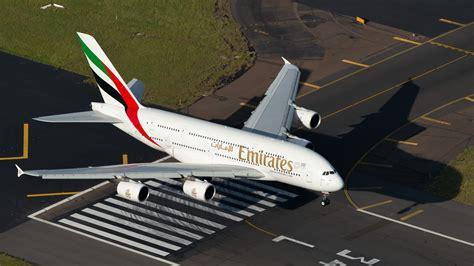
Emirates’ position on second-hand Airbus A380 aircraft has shifted from quiet disinterest to a firm and unambiguous rejection. During the Dubai Airshow 2025, CEO Sheikh Ahmed bin Saeed Al Maktoum detailed why acquiring used A380s is not a viable path, even as the airline pushes manufacturers for larger, next-generation widebodies. The messaging is clear: the world’s biggest A380 operator is hungry for giant jets, but not at the cost of reliability or fleet consistency.
The airline’s fleet philosophy has always leaned toward pristine maintenance records, predictable upkeep cycles, and well-documented operational histories. Used A380s, especially those that have been dormant for years, introduce layers of uncertainty—from unknown storage conditions to component fatigue that may not be immediately visible. Sheikh Ahmed emphasized that Emirates prefers full lifecycle visibility, something only its in-house aircraft can guarantee.
Why Emirates Wants Bigger Jets—but Not Used A380s
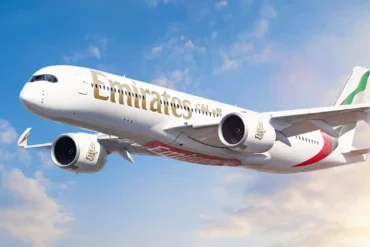
Emirates’ request for feasibility studies on a stretched Boeing 777-10 and its interest in a larger Airbus A350 paint a clear picture: the airline’s growth strategy hinges on very high-capacity aircraft. The logic is simple. With constrained slots at major global hubs, Emirates depends on aircraft that can carry maximum passengers per movement. Yet this ambition does not extend to used A380s.
Sheikh Ahmed underscored that accepting second-hand superjumbos would jeopardize Emirates’ tight control over fleet quality. Older A380s come with years of varying maintenance practices from different operators, and the added complication of long-term storage. This storage issue is particularly severe because many grounded A380s sat idle during the pandemic under uncertain conditions, creating unpredictable maintenance burdens.
He explained that Emirates’ own A380s, which the airline has tracked from day one, are known quantities: “well maintained, refurbished, and fully documented.” Anything less introduces unacceptable operational risk.
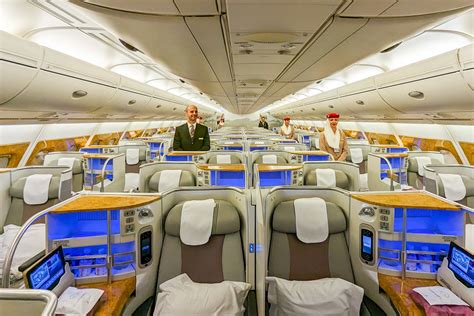
Emirates’ A380s in Long-Term Storage Face Enormous Challenges
Even Emirates’ own stored A380s—eight aircraft that have not flown in years—are proving problematic to reactivate. These aircraft range from 14 to 19 years old, with the oldest, MSN 9, having spent more than seven years dormant since the earliest pandemic grounding in March 2020.
Bringing these giants back online is expensive, time-consuming, and mechanically complex. Chris Welham, Senior Manager of Base Heavy Maintenance, noted that these inactive aircraft have accumulated a massive maintenance backlog. Returning them to full regulatory compliance would require extensive inspections, parts replacement, and deep structural validation.
Welham explained that for some airframes, reactivation may not be financially viable due to the sheer scale of work required. In several cases, scrapping the aircraft for parts appears more logical than reviving them.
The Global Reality: Most A380s Will Never Fly Again
Airbus produced 254 A380s, and Emirates took 123 of them—nearly half of the entire program’s output. Yet today, only 160 A380s remain active, according to ch-aviation data. Another 63 sit in a limbo category: retired, undergoing maintenance, or stored without a clear future.
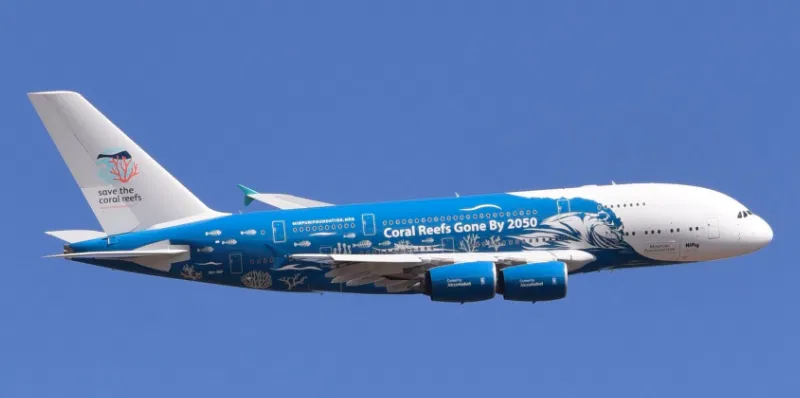
Efforts to relaunch used A380 operations have struggled. Hi Fly, the Portuguese wet-lease specialist, briefly operated a former Singapore Airlines A380, only to retire it due to insufficient demand. Global Airlines, a startup aiming to relaunch A380 passenger service, has also hit turbulence. Its aircraft has flown just two test flights and has been parked ever since.
These cases highlight a sobering reality: the second-hand A380 market is effectively non-existent. High operating costs, limited airport compatibility, and uncertain maintenance histories make them unattractive—even to carriers that once championed the aircraft.
Why Emirates Stays the Course on Fleet Purity
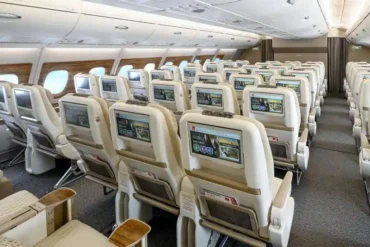
Emirates’ refusal to consider used A380s is not an emotional decision—it is a strategic one rooted in long-term operational stability. Introducing aircraft with unknown maintenance complexity would strain engineering resources, disrupt scheduling reliability, and compromise the airline’s hallmark cabin consistency.
The airline is instead playing a longer, more deliberate game. It is pressuring Boeing for a stretched 777X variant, nudging Airbus toward a higher-capacity A350, and optimizing its existing A380 fleet for another decade of service. The message is unmistakable: bigger jets are essential, but only if they meet Emirates’ uncompromising standards for quality, predictability, and future-proof efficiency.
This stance will continue to influence widebody development trajectories, shaping industry expectations about what the next generation of super-capacity aircraft should deliver.