
The most expensive domestic flights in the United States are not automatically the longest. In the first quarter of 2026, a seat from Eagle County Regional Airport (EGE) in Colorado, the gateway to the Vail ski resorts, to Miami International Airport (MIA) averaged $576, more than any transcontinental city pair in the country. Aspen-Pitkin County Airport (ASE) to New York JFK followed at $570, and Jackson Hole Airport (JAC) in Wyoming to New York ranked third at $565. These figures, drawn from federal airfare data analyzed by The Motley Fool, expose a domestic aviation market split between two very different kinds of high-fare routes: short-hop services to premium mountain resorts, and long-haul corridors linking major business centers. Understanding which routes command the highest average fares in 2026, and what drives those prices, matters for anyone planning travel through the rest of the year.
Which US Domestic Routes Command the Highest Average Fares in 2026?
Eagle County to Miami sits at the top of the 2026 city-pair rankings with an average fare of $576, followed by Aspen to New York JFK at $570 and Jackson Hole to New York at $565. The fourth position belongs to a completely different animal: New York JFK and Newark Liberty International Airport (EWR) to San Francisco International Airport (SFO), which averaged $518 and carried more passengers than any other high-priced route in the analysis. The geography behind the top three is striking. EGE serves travelers bound for Vail and the wider Colorado mountain corridor, ASE delivers passengers into one of America’s best-known luxury ski resorts, and JAC funnels winter sports traffic into Jackson, Wyoming, alongside access to Grand Teton National Park and the Yellowstone region. During the winter quarter, all three airports benefit from concentrated seasonal demand, and travelers routinely pay a premium to land minutes from the slopes rather than endure multi-hour ground transfers from larger hubs.
Why Ski Resort Flights Command Some of the Highest Fares in the Country
The first engine behind these fares is seasonal demand colliding with limited capacity. Ski resorts attract compressed waves of travelers around winter holidays, long weekends, and periods of reliable snow, while small mountain airports cannot accommodate the operational volume of major hubs. When demand for premium seats outpaces supply, average ticket prices climb quickly. Eagle, Aspen, and Jackson Hole also draw affluent leisure travelers whose priority is convenience rather than the lowest fare, particularly when a direct flight into a mountain airport eliminates hours of driving on winter roads. The Motley Fool’s analysis identifies mountain-resort routes as a recurring feature of the most expensive city-pair rankings during the winter quarter, which tells you this is a structural pattern rather than a one-off anomaly.
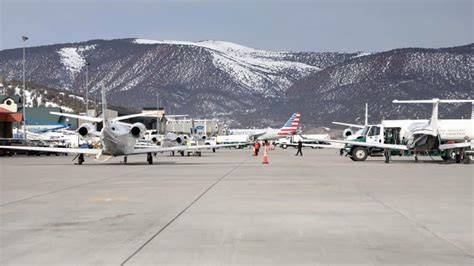
Airport size explains only part of the equation. Airlines must weigh whether a route can sustain enough year-round demand to justify additional frequencies. A destination that generates intense traffic for three or four winter months may not support a large schedule in quieter periods. Operating costs, aircraft availability, crew requirements, and the economics of seasonal scheduling all constrain how much capacity carriers are willing to add. A short flight on a regional jet to a ski resort can therefore cost more than a longer flight between major cities, because passengers have fewer convenient alternatives and airlines have fewer economic reasons to flood the market with seats.
Why New York to San Francisco Remains One of the Most Expensive Transcontinental Routes
New York to San Francisco proves that limited airport capacity is not the only force behind high fares. At $518 in the first quarter of 2026, the corridor ranked fourth overall despite connecting two of the largest metropolitan areas in the country. Its importance to business travelers, technology companies, financial institutions, and leisure passengers sustains relatively high pricing year-round. Distance contributes to the final cost as well: a nonstop journey between the New York area and San Francisco runs roughly six hours westbound, with eastbound flights typically shorter thanks to prevailing winds. Airlines must account for aircraft utilization, fuel burn, crew costs, and the opportunity cost of assigning an aircraft to a long domestic sector instead of several shorter flights.
Competition distinguishes this corridor from resort routes. Multiple airlines compete between the New York area and San Francisco, and travelers can choose among different departure airports, departure times, and cabin products. Passengers in the New York region can consider Newark, LaGuardia Airport (LGA), or JFK depending on the itinerary, although not every airport offers equivalent nonstop options. The $518 average therefore reflects a different blend of demand and operating economics than the $565 to $576 averages on the three leading mountain-related routes, where convenience and scarcity do most of the pricing work.
America’s Most Expensive Airports Reveal a Geography of Limited Choice
The most expensive places to depart from are often those with the fewest practical alternatives. According to The Motley Fool’s analysis of Bureau of Transportation Statistics data, domestic flights originating in Guam averaged $1,576 in the first quarter of 2026. Unalaska, in Alaska’s Aleutian Islands, ranked highest among airports in the 50 states at $1,114. These are airport-origin averages rather than fares for a single route, and they should not be confused with the city-pair figures above. Guam’s position in the western Pacific creates a domestic aviation market fundamentally different from the continental United States, with long journeys and thin route options. Unalaska faces a different but equally severe constraint: its location in the Aleutian chain makes air travel essential, while weather, geography, and a small local market limit competition among carriers.
In 2026 airport cost rankings published by Yahoo Travel, Ted Stevens Anchorage International Airport (ANC) ranked as the most expensive departure point among the 100 busiest US airports, with an average fare of $521.54. Birmingham-Shuttlesworth International Airport (BHM) in Alabama led the contiguous United States at $497.72, followed by Dane County Regional Airport (MSN) in Madison, Wisconsin, at $491.19. Those figures cover only the busiest airports and use a different comparison from the all-airport data for Guam and Unalaska. The rankings underline a central lesson: a large passenger market does not guarantee cheap flights, and a remote airport does not necessarily generate enough demand to attract multiple competing airlines.
Rising US Airfares Add Pressure to Already Expensive Routes
Broader market data provides essential context for the most expensive domestic routes. According to the Bureau of Transportation Statistics, the average US domestic itinerary fare reached $445.26 in the second quarter of 2026, up 2.0% from the previous quarter after adjusting for inflation, and the unadjusted figure was the highest second-quarter average in the agency’s records. That increase suggests mounting pressure across the entire domestic market, not just on routes serving ski resorts or remote destinations. National averages, however, hide substantial differences between individual markets: competition keeps fares low on busy routes, while limited capacity and concentrated seasonal demand allow airlines to charge far more elsewhere.
Fuel represents another significant pressure point. Jet fuel prices have risen substantially compared with the previous year’s average. Fuel costs shape airline operating expenses, although the impact on any particular ticket depends on competition, demand, hedging arrangements, and the carrier’s wider cost structure. Airlines cannot always pass every increase directly to passengers, especially on routes where rivals compete aggressively. The available fare figures also exclude optional charges such as checked baggage, seat selection, and upgrades, so the total cost of a journey frequently exceeds the reported average even when the base ticket sits close to the national benchmark.
Will the Most Expensive Domestic Routes Become More Affordable in 2026?
The outlook hinges on whether airlines can add seats without undermining their network economics. Ski-resort routes are especially sensitive to seasonal scheduling, because adding capacity for a few peak winter weeks is not the same as sustaining a profitable year-round service to a hub. If carriers increase frequencies or deploy larger aircraft during periods of strong demand, average fares could moderate. Airport constraints, aircraft availability, and the risk of weaker demand outside the ski season limit how easily carriers can respond, which is why mountain-route pricing tends to stay stubborn through the winter quarter.
Travelers heading to mountain destinations can reduce their exposure to peak pricing by comparing nearby airports, shifting travel dates away from the busiest holiday periods, and booking early. Passengers bound for Vail can weigh flights into Eagle County Regional against services to Denver International Airport (DEN), though the latter requires a substantially longer ground transfer. Visitors heading to Aspen or Jackson Hole may discover that a cheaper flight into another airport does not translate into a cheaper overall journey once rental cars, ground transportation, and extra travel time are included.
What Really Drives the Highest Domestic Fares in 2026
Distance alone does not define the most expensive routes in the United States. They emerge from the interaction of passenger willingness to pay, airline competition, airport geography, and the number of seats available when travelers actually want to fly. A $576 average between Eagle County and Miami reflects scarcity and convenience at both ends of the journey, while a $518 average between New York and San Francisco reflects the pricing power of a high-volume business corridor. Airport-origin averages in Guam, Unalaska, Anchorage, Birmingham, and Madison complete the picture, showing that isolation and limited choice can push fares even higher than seasonal mountain demand. For travelers weighing options in 2026, the practical takeaway is that the cheapest ticket is rarely the cheapest journey, and the most convenient airport is often the most expensive one. Whether the coming winter delivers another surge in mountain-resort fares depends on how airlines balance seasonal demand against the cost and complexity of adding capacity, but the forces that made these routes the most expensive in the country show little sign of fading.