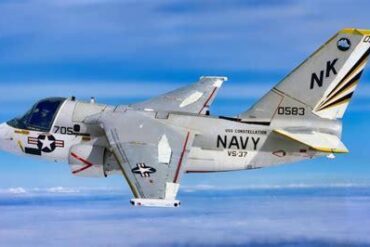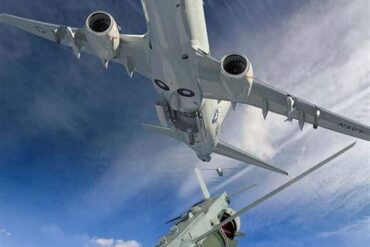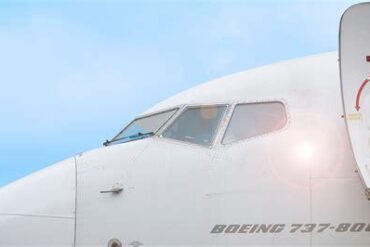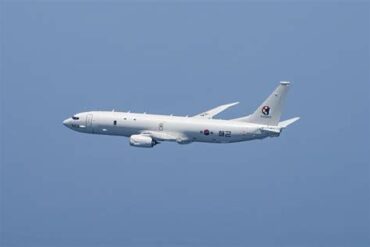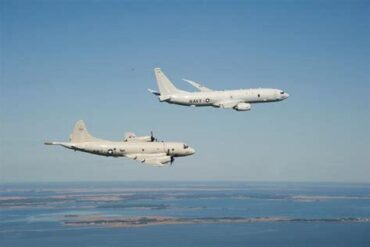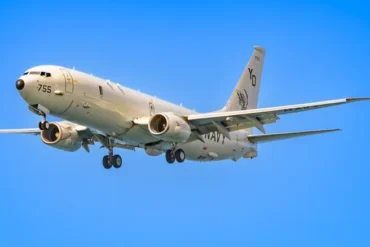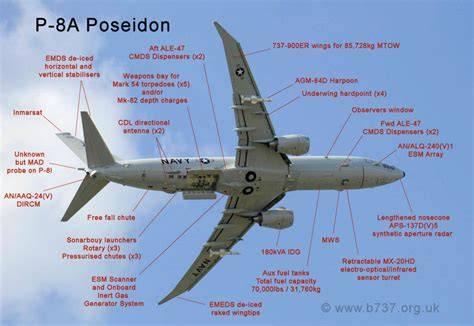
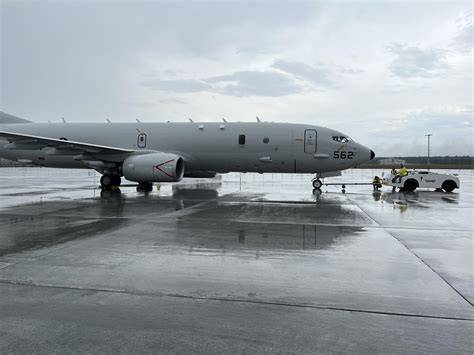
The Boeing P-8A Poseidon represents one of the most consequential platform conversions in modern naval aviation, taking a commercial 737-800 airframe off an ordinary Everett assembly line and transforming it into the US Navy’s primary anti-submarine warfare aircraft. In doing so, it has replaced the venerable Lockheed P-3 Orion while rewriting the doctrine that governed maritime patrol for more than half a century. Where the Orion spent decades skimming the waves at low altitude, the Poseidon hunts submarines from above 28,000 feet, turning a fuel-efficient airliner into a networked sensor and weapons hub that can sprint to distant search boxes at 564 miles per hour. That single shift in operating altitude changed how the Navy finds, fixes, and attacks submerged threats, and it made the Poseidon the tip of the spear in a merge of commercial logistics and military mission systems.
From P-3 Orion Fatigue to the Multimission Maritime Aircraft Program
The search that produced the Poseidon began in 2000 under the Multimission Maritime Aircraft program, an effort driven less by ambition than by necessity.
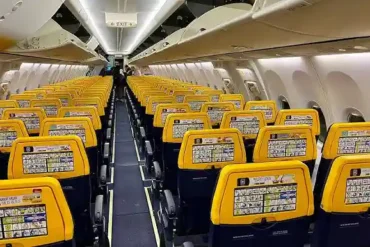
The P-3 Orion, in service since 1962, had performed brilliantly in its low-altitude patrol role, but decades of flying through turbulent, salt-laden air had inflicted severe structural wing fatigue and corrosion on the fleet. Boeing ultimately won the contract on June 14, 2004, with a proposal for a modified 737-800ERX built directly on a standard commercial assembly line. The airframe combines the 737-800 fuselage with strengthened 737-900 wings that carry missile pylons, additional fuel, and raked wingtips, producing a unique hybrid: a passenger jet shell wrapped around a heavily networked mission suite and an internal weapons bay.
The most striking feature of the design is economic. The Poseidon shares 86 percent commonality with the civilian 737 Next Generation fleet, giving the Navy access to a well-established global supply chain, spare parts network, and maintenance infrastructure that no bespoke military airframe could match. That open architecture also allows the platform to move beyond anti-submarine work into anti-surface warfare, humanitarian relief, long-range search and rescue, and sustained overland surveillance.
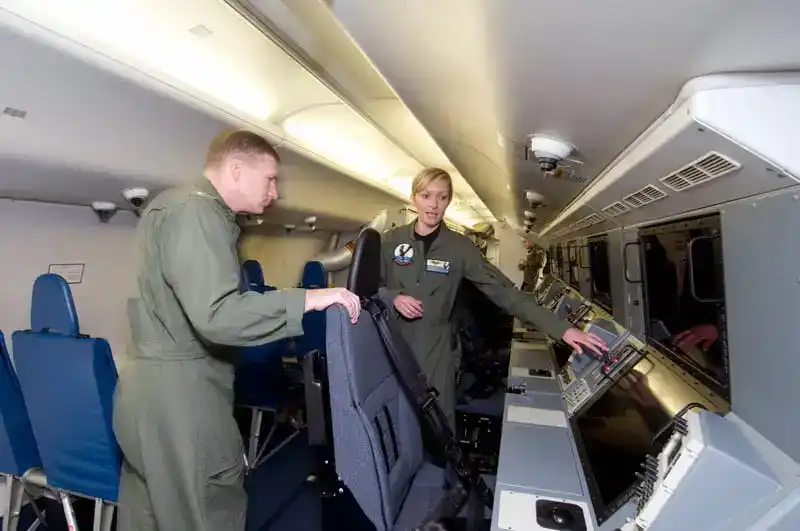
Inside the Flying Command Center: Crew, Consoles, and Digital Kill Chains
Behind the two pilots, the mission cabin houses five inline workstations managed by two Naval Flight Officers and three specialized aircrewmen, all wired into an integrated open-architecture system that merges sensors and humans into a single, high-speed digital kill chain.
The tactical consoles use universal multi-function displays built on BAE Systems CSMCW hardware, which means any operator can pull up, manipulate, or hand off data from any sensor in real time instead of working in isolated silos. The Tactical Coordinator serves as the mission manager and quarterback, synthesizing the combined intelligence flowing in from each specialist to make big-picture decisions. Aircrewmen separately monitor the underwater battlespace, managing pneumatic sonobuoy launches, tuning hydrophone frequencies, and processing active and passive sonar returns. When a contact is fixed, the jet carries Mk 54 lightweight torpedoes fitted with high-altitude flight kits and Harpoon anti-ship missiles for beyond-visual-range engagements.
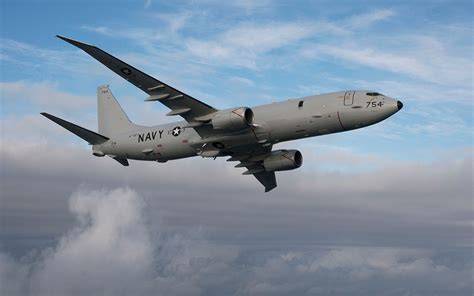
Flying High Instead of Skimming the Waves
The Poseidon’s powerplant forced the most radical doctrinal break in the program. Its two CFM56 turbofans, each producing 27,300 pounds of thrust, burn fuel far too quickly near the surface to sustain the Orion’s famous low-and-slow patrols, so crews rebuilt the mission around fuel-efficient altitudes typically above 28,000 feet and often as high as the aircraft’s 41,000-foot ceiling.
The altitude advantage is not merely economical. The Raytheon AN/APY-10 radar scans enormous swaths of ocean from above, and the aircraft’s 123.6-foot wingspan and 189,200-pound maximum takeoff weight give it the reach to patrol vast expanses. More importantly, the Poseidon operates as a command hub, streaming data through high-bandwidth links to unmanned aircraft such as the Northrop Grumman MQ-4C Triton, allowing a small fleet to cover ocean areas that once demanded dozens of sorties. High-altitude torpedo release required specialized aerodynamic kits so the Mk 54 could enter the water cleanly from altitude and speed, an engineering solution that preserved the jet’s greatest asset: the ability to reach a distant search box faster than any turboprop predecessor.
P-8A Poseidon vs P-3C Orion Specifications
| Specification | P-8A Poseidon | P-3C Orion |
|---|---|---|
| Wingspan | 123.6 ft (37.6 m) | 99.6 ft (30.4 m) |
| Maximum Takeoff Weight | 189,200 lb (85,820 kg) | 139,760 lb (63,394 kg) |
| Service Ceiling | 41,000 ft (12,496 m) | 28,300 ft (8,626 m) |
| Engines | 2 CFM56 turbofans, 27,300 lb thrust each | 4 Allison T-56-A-14 turboprops, 4,600 hp each |
| Crew | 9 | 11 |
| In-Flight Refueling | Capable | Not Capable |
Increment Three Block Two and the Rolling Upgrade That Closed the Gap
The early Poseidon squadrons arrived in 2013 with software that largely replicated P-3C Orion capability rather than surpassing it, leaving torpedo employment and sonar functionality significantly restricted. The Navy treated those shortfalls as a rolling upgrade schedule, systematically adding features in stages until the airframe’s potential was unlocked.
The Increment Three Block Two upgrade finally closed the tactical gap, delivering the networked maritime strike suite envisioned at the program’s outset. The modification is a physical rebuild as much as a software overhaul: reinforced system racks, an advanced radome, new antennas, wideband satellite communication links, and a substantially expanded computing architecture with automated track management. That capacity directly supports an enhanced sonar suite tuned to detect ultra-quiet submarines, fusing organic and off-board signals intelligence into a single operational picture. The Navy recently declared initial operational capability for Block Two, though full operational capability still requires fielding the mature system across the entire active fleet.
Only Australia has committed to a full Block Two rollout abroad. The Royal Australian Air Force operates just 14 aircraft compared with more than 115 in US Navy service, making the upgrade a far more manageable undertaking through the Southern Hemisphere’s first dedicated deep maintenance and modification facility, which lets the RAAF perform heavy overhauls and software upgrades domestically.
A Global Fleet of More Than 200 Poseidons
The Poseidon program has grown into a coalition asset, with more than 200 aircraft delivered or on order across a widening network of Western allies. India flies 12 customized P-8I Neptune variants over the Indian Ocean, the United Kingdom operates nine from RAF Lossiemouth watching the Greenland-Iceland-UK gap, South Korea has integrated six, and Norway and New Zealand deploy five and four respectively across the Baltic and Arctic. Canada committed in 2023 to 14 aircraft to replace its CP-140 Auroras, Germany expanded its order from five to eight, and Denmark is advancing plans to replace its Bombardier Challenger CL-604 fleet. Singapore and Israel are negotiating their own acquisitions.
Australia stands apart as a cooperative development partner rather than a mere export customer, operating from RAAF Base Edinburgh with Nos. 11 and 292 Squadrons. That shared global footprint lets allied air arms work together seamlessly while spreading the financial burden across every squadron, an economy of scale the P-3 Orion never enjoyed. The result is a commercial airliner that became the most capable submarine hunter the US Navy has ever fielded, and a template for how off-the-shelf platforms and networked data can redefine naval warfare.