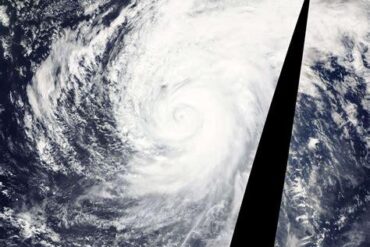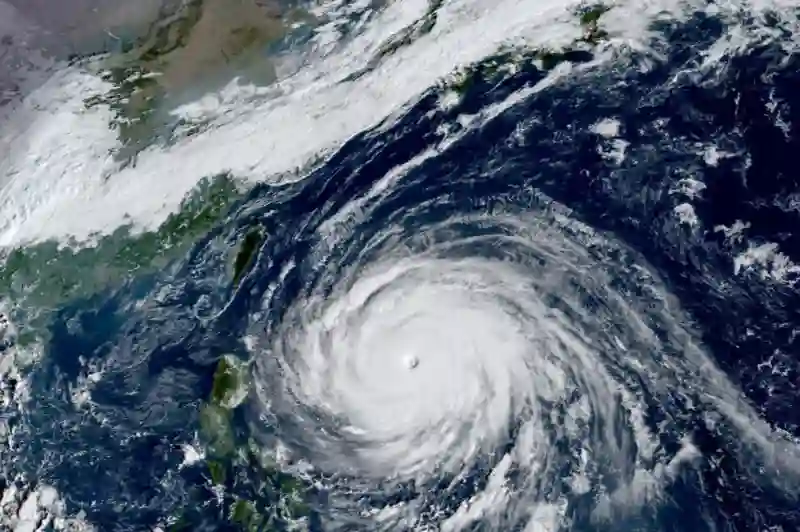
Typhoon Champi, described by the South China Morning Post as the strongest storm of the year, is bearing down on the coasts of eastern Asia, forcing airlines to issue pre-emptive groundings and commanders to redraw the timetable of one of the region’s largest military drills. The tropical cyclone is tracking toward Taiwan and mainland China, with forecast models later projecting a path toward southern Japan, where carriers have already begun pulling flights from the schedule. The disruption is unfolding on two fronts at once: across the civil aviation network, where major Chinese hubs sit in the crosshairs, and across the military exercises that stitch together Japanese and American air power in the southwest Pacific.
The Chinese Airports Most Exposed to Typhoon Champi’s Path
The projected track places a cluster of China’s busiest coastal gateways directly in Harm’s way. According to the South China Morning Post, citing flight-tracking data from Variflight, the airports likely to absorb the heaviest impact as Champi approaches and makes landfall are Wenzhou Longwan, Fuzhou Changle, Ningbo Lishe, Hangzhou Xiaoshan, Shanghai Hongqiao, Shanghai Pudong, and Xiamen Gaoqi. Together these facilities form the connective tissue of eastern China’s travel economy, linking the Yangtze River Delta with the Taiwan Strait littoral. Shanghai Pudong alone handles tens of millions of passengers a year, and a multi-day closure window cascading through Hongqiao, Hangzhou, and Xiamen would ripple into connecting itineraries across the entire hemisphere.
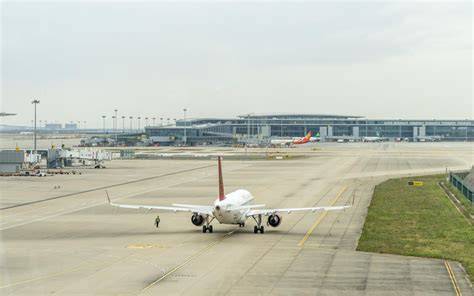
The warning is not confined to the mainland. Authorities in Thailand have alerted passengers booked on routes from Thai cities to Taiwan that their travel plans could shift between now and October 24, per reporting by The Star. Japan Airlines has moved first, pre-emptively canceling flights at nine different airports across the October 22 to 24 window. “The decision on flight operations is going to be made depending on the latest weather information,” the carrier stated, adding that it recommends passengers check the latest status of their flight through arrival and departure information before leaving for the airport. That language is deliberate corporate hedging—a recognition that typhoon tracks can shift by hundreds of kilometers in a single model run.
Keen Sword: How the Storm Reaches Into Military Aviation
Typhoon Champi has already delivered a calling card. The storm’s eye passed within ten miles of Guam, close enough to leave roughly 50% of the island without power even though the territory avoided a direct hit. At that stage it was rated Category Four; it has since been upgraded to Category Five, its eyewall described as “two Mount Everests tall and 1.2 Rhode Islands wide.” Guam Airport (GUM) recorded cancellations over the weekend, but because the cyclone never struck head-on, the facility was able to keep operating normally. That outcome is the exception rather than the rule, and it offers a clean illustration of the margin between an inconvenience and a catastrophe.
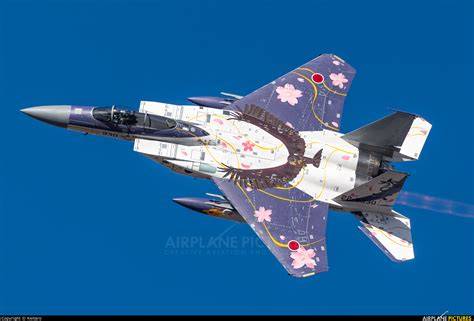
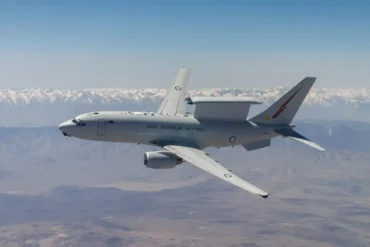
The more consequential disruption has landed on Keen Sword, the large-scale joint exercise conducted by US and Japanese forces in southwestern Japan. Commanders have confirmed that elements of the drill have been canceled or scaled back, with changes reassessed on a day-to-day basis against updated forecasts. The exercise includes some 56,000 personnel, and safety remains the governing constraint: aircraft cannot launch into crosswind envelopes that exceed airframe limits, ground crews cannot safely service airframes in violent gusts, and search-and-rescue planning must assume degraded conditions. Those involved do not anticipate a large-scale failure of the exercise, but the storm has already reduced its scope at the margins. Any typhoon that merges a live-fire air campaign with a moving Category Five system forces exactly this kind of triage.
Why Typhoon Disruption Scrambles Entire Airline Networks
Typhoons are defined by extreme wind loads, intense convective cells, and low-level wind shear, a combination that pushes commercial aviation outside its operating margins. When such systems make landfall, widespread cancellations are the natural consequence, and 2023 delivered a dense cluster of examples. In August of that year, Emirates and Japan Airlines trimmed flights as Typhoon Lan approached Japan. Barely two weeks later, the projected landfall of Typhoon Saola drove Hong Kong Airlines to cancel more than 30 flights, with Bangkok, Tokyo, Naha, Beijing, and Shanghai among the affected routes.
Not every flight stands down. An Ethiopian Airlines Boeing 787 drew widespread attention shortly afterward by completing a daring landing at Hong Kong International Airport (HKG) on September 1, 2023, threading the storm’s teeth while rivals stayed on the ground. That contrast matters for anyone reading the cancellations as a verdict on an airport’s capability. Airlines cancel on the basis of conservative safety buffers, crew duty limits, and the cost of diverting aircraft, not because landing is physically impossible. The result for travelers is a schedule that contracts sharply and recovers unevenly, with recovery often trailing the storm’s departure by a full day as carriers reposition aircraft and crew at outstretched rotations.
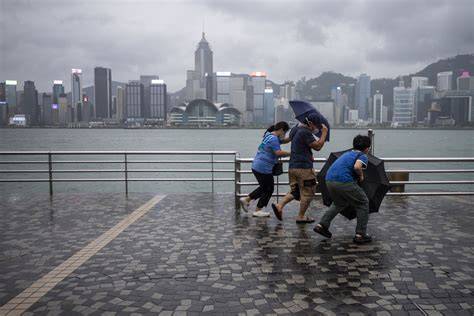
For the eastern seaboard of Asia, the practical advice is the same as the meteorological one: watch the forecast, confirm with the carrier, and treat every published timetable as provisional until the storm clears.