
Australia’s Climate Visa Program has ignited a fervent debate, particularly in relation to its implications for Tuvalu, a small Pacific island nation grappling with the severe consequences of climate change. As the world watches closely, Tuvalu’s government has sought to clarify misconceptions surrounding its citizens’ intentions to migrate to Australia amid the growing interest in the climate visa. While reports indicate a surge in applications, Tuvaluan officials emphasize that the reality is far more nuanced than a simple desire to leave the island.
In July 2025, Tuvalu’s government addressed concerns regarding the climate visa following an overwhelming response from potential applicants. Within just four days of opening the application window, over 4,000 individuals expressed interest, raising alarms about a mass exodus from a nation with a population of merely 10,600. However, Tuvalu’s Energy Minister, Simon Kofe, quickly mitigated these fears, explaining that many applicants reside outside Tuvalu, including in Australia, New Zealand, and other Pacific nations. This revelation highlights a significant aspect of the application process — for many, the climate visa represents an opportunity for easier travel rather than a permanent relocation.
The Falepili Union, established in 2023, serves as a foundational agreement between Tuvalu and Australia aimed at addressing the environmental challenges posed by climate change. This innovative treaty not only creates a residency pathway for Tuvaluans through a ballot system but also integrates various development projects designed to bolster Tuvalu’s resilience against climate-induced disasters. Under this agreement, Australia commits to granting 280 visas annually, a cautious approach intended to prevent a brain drain from Tuvalu, which could severely impact its workforce and essential services.
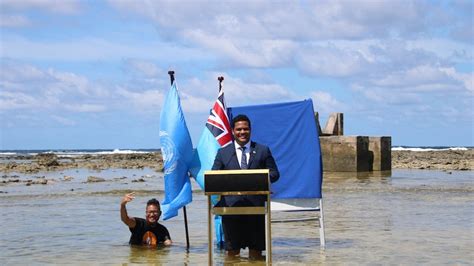
As climate change continues to threaten Tuvalu’s very existence, with its highest point standing at a precarious six meters above sea level, the introduction of the climate visa is seen as a lifeline. Prime Minister Anthony Albanese’s government implemented this program as a proactive measure, acknowledging the potential future need for Tuvaluans to relocate due to rising sea levels and extreme weather events. During a poignant speech at COP28 in 2021, Minister Kofe underscored the urgency of Tuvalu’s plight by standing in thigh-deep water, a stark reminder of the existential threat faced by his nation.
Despite the high volume of applications, Minister Kofe reiterated that many Tuvaluans are not necessarily seeking to emigrate permanently. Instead, they are leveraging the climate visa as a means to navigate the complexities of visa regulations that have long plagued Pacific island citizens. The ability to secure a visa that simplifies travel to Australia is particularly appealing for those with family ties or frequent travel needs.
The Falepili Union should be viewed not just as a migration solution but as a comprehensive strategy for Tuvalu’s adaptation to climate change. The treaty outlines commitments from Australia to assist Tuvalu in disaster response and to help build resilience against the multifaceted challenges posed by a warming planet. The Australian government’s emphasis on cooperation signifies a growing recognition of the geopolitical dynamics surrounding climate migration, especially in the Pacific region.
While the climate visa offers a glimmer of hope for Tuvaluans, both the Tuvaluan government and its citizens remain acutely aware of the potential pitfalls associated with mass emigration. There is a concerted effort to maintain a balance between providing mobility and preserving the island nation’s demographic integrity. Minister Kofe articulated this delicate balance by noting that Tuvalu specifically requested a cap on annual visas to prevent a significant outflow of skilled workers, thereby safeguarding the country’s capacity to deliver essential services.
The broad eligibility criteria for the climate visa further complicate the narrative. Tuvaluans living abroad — whether in Australia, New Zealand, or other Pacific islands — can apply, thereby expanding the pool of applicants beyond those currently residing in Tuvalu. This inclusivity aims to offer greater flexibility and access to Tuvaluans who may wish to travel to Australia in the future, yet it also raises questions about the long-term implications for the island’s population.
As Tuvalu navigates this complex landscape, the government remains committed to ensuring its citizens can continue to live and thrive on their homeland. The climate visa is a temporary measure in the face of an uncertain future, not a definitive solution to the ongoing climate crisis. The Falepili Union represents a pivotal step toward adaptation, but it simultaneously highlights the pressing need for international collaboration to address the multifaceted challenges faced by vulnerable nations like Tuvalu.
In conclusion, while the climate visa program has sparked significant interest among Tuvaluans, the government is cautious about the potential ramifications of mass emigration. Minister Kofe’s insights reveal a crucial distinction: many applicants are not necessarily fleeing their homeland but are instead seeking enhanced travel options and opportunities. As discussions around climate migration evolve, Tuvalu remains focused on its long-term survival, prioritizing resilience and adaptation while fostering international partnerships to combat the existential threats posed by climate change.