In a recent development that has sent shockwaves across the Pacific, Tuvalu, Tonga, and Vanuatu are facing the grim prospect of potential travel bans to the United States. This disconcerting news emerged after these nations were listed among 36 countries that could be subjected to stringent visa restrictions, igniting widespread anxiety among the citizens of these vulnerable island nations. As U.S. officials cited what they referred to as “valid concerns,” the governments of Tuvalu, Tonga, and Vanuatu have raised questions about the accuracy and fairness of this alarming classification. The implications of such travel restrictions could profoundly disrupt the ability of these nations’ citizens to enter the U.S., a country that plays a pivotal role in the international community.
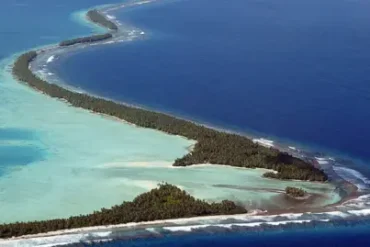
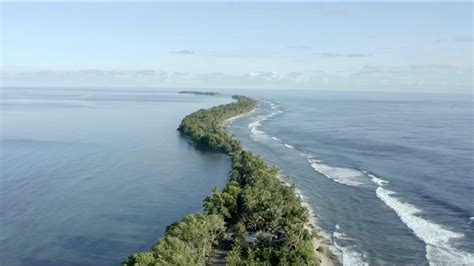
Tuvalu, with its population of merely 11,000, stands at the forefront of climate change discussions. The rising sea levels threaten its very existence, making its citizens eligible for Australia’s climate migration visa program. However, the looming U.S. travel restrictions cast a shadow of uncertainty over the already precarious situation faced by Tuvaluans. The stakes have never been higher, as these nations grapple not only with environmental challenges but also with the potential for diplomatic isolation.
According to a diplomatic cable from the U.S. Department of State, the U.S. government is contemplating an expansion of travel restrictions impacting these island nations. Signed by U.S. Secretary of State Marco Rubio, the cable indicated that countries placed on the list would have 60 days to implement corrective actions or risk facing prolonged travel limitations. The inclusion of Tuvalu, Tonga, and Vanuatu in this list has not only triggered anxiety within their borders but has also sparked diplomatic responses from their respective governments.
Administrative Error or Valid Concern?
In the wake of these developments, Tuvalu’s ambassador to the United Nations, Tapugao Falefou, disclosed that a U.S. official had informed him that Tuvalu’s presence on the list was due to an “administrative and systemic error” within the U.S. Department of State. Despite receiving verbal assurances from the U.S. embassy in Fiji, Tuvalu has demanded written confirmation to ensure that its citizens will not be adversely affected by these potential travel bans. The Tuvaluan government emphasized that it had not received any formal communication regarding the visa restrictions, which only exacerbated the uncertainty and distress among its populace. A statement from Tuvalu’s Ministry of Foreign Affairs, Labour and Trade reiterated their commitment to engaging with U.S. authorities to clarify the situation, asserting, “We continue to seek formal written confirmation from U.S. authorities that no travel restrictions are currently in place for Tuvaluan nationals.”
As Tuvalu anxiously awaits official written confirmation, its neighbors Tonga and Vanuatu find themselves grappling with similar predicaments. Tonga has already received an official warning from the United States and is actively working on a response to address the concerns raised by U.S. authorities. Meanwhile, Vanuatu is closely monitoring the evolving situation, eagerly awaiting more information about its status concerning the visa restriction list.
U.S. Government’s Position
The U.S. embassy in Fiji, which serves multiple Pacific island nations including Tuvalu, Tonga, and Vanuatu, has issued a statement explaining the rationale behind the proposed travel restrictions. According to the embassy, the U.S. is leveraging its visa process to bolster national security. Factors such as countries’ security capabilities, information-sharing practices, identity management, and the risk of visa system exploitation—including high overstay rates—are all considered in this assessment. A senior U.S. official, who requested anonymity, clarified that the inclusion of these nations on the list is not necessarily indicative of their direct actions but stems from broader concerns regarding security and administrative factors. The official asserted, “Tuvalu’s public statement mischaracterizes and omits some of the valid concerns the United States has with travelers from that country,” signaling that the matter remains unresolved.
As the situation continues to unfold, Secretary of State Marco Rubio, along with other significant U.S. officials, is poised to consult with the U.S. Attorney General, the Department of Homeland Security, and the Director of National Intelligence to determine whether these suspensions should be maintained, lifted, modified, or supplemented.
Rising Tensions in the Pacific
The potential for travel bans has injected further complexity into the diplomatic relations between these small island nations and the United States. Tuvalu, Tonga, and Vanuatu are already grappling with the severe challenges posed by climate change and limited resources. The added uncertainty surrounding their citizens’ travel capabilities raises fears of increased isolation from the international community. These small island nations, often at the forefront of advocating for global action on climate change, may find their voices muted if faced with further restrictions that hinder their engagement on the world stage.
The next few weeks will prove critical for Tuvalu, Tonga, and Vanuatu as they work diligently to address the concerns raised by the U.S. government and seek clarity regarding the travel ban situation. For Tuvalu, in particular, which already contends with the harsh reality of potentially becoming uninhabitable, the uncertainty surrounding U.S. visa restrictions exacerbates the multitude of challenges it faces.
Moving Forward
In the interim, these Pacific nations are intensifying their diplomatic efforts to resolve the issue amicably with the United States. Tuvalu’s request for formal written assurances could provide much-needed clarity to its citizens, many of whom are already facing a precarious future due to climate change. While the issue of travel restrictions may appear technical on the surface, it has transformed into an emotional battleground, reflecting deeper concerns about the future of these island nations and their standing in the global community. As the situation evolves, Tuvalu, Tonga, and Vanuatu remain hopeful that their ongoing efforts will yield a resolution, allowing them to continue their international engagements without the fear of further isolation.