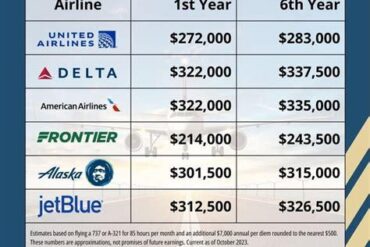
Flight instruction sits at the very bottom of the professional aviation ladder, and the pay reflects it. The instructors who sign off logbooks and supervise a student’s first solo are the gatekeepers of every airline career in America, yet their compensation is the least understood figure in the industry. Airline salaries dominate the headlines, but the people who produce those airline pilots usually earn a fraction of what their former students will one day take home. A flight instructor salary in the US in 2026 is not a single number, and anyone planning a career around it needs to understand why the published statistics disagree so sharply.
What Certified Flight Instructors Actually Earn
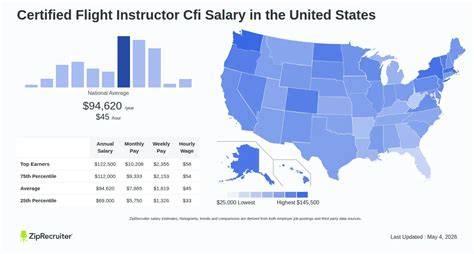
The most reliable private-sector benchmarks put average base pay for flight instructors at roughly $28.17 per hour in 2026, with reported rates stretching from about $15.00 at the bottom of the market to more than $52.00 per hour at the top. That spread is enormous, and it is not explained by experience alone. It reflects geography, the type of school, and the kind of aircraft being flown more than it reflects teaching skill. An instructor in a high-cost metropolitan area teaching at a well-funded academy may approach the upper half of that range, while an instructor at a small rural school may never leave the low twenties.
Federal labor data complicates the picture considerably. The Bureau of Labor Statistics files certified flight instructors under the broad umbrella of commercial pilots rather than isolating instruction as a distinct occupation, and its May 2025 survey placed the national median annual wage for that category at $123,220. Applying that six-figure figure to an entry-level instructor is a statistical distortion. The category lumps together corporate charter captains, agricultural aviators, cargo operators, and brand-new flight educators, producing a median that describes none of them accurately. The number looks impressive in a headline and tells a prospective instructor almost nothing about what they will deposit in their bank account.
Being Paid For Billable Hours, Not For Working Hours
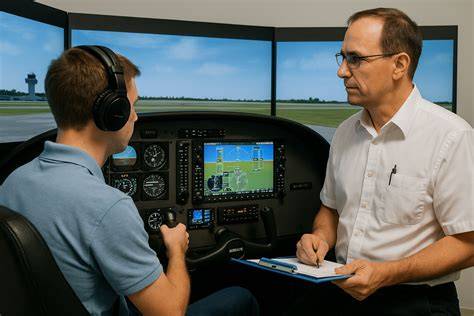
This is where most outside observers get lost. Flight instructors are not salaried employees in the traditional sense, and they are not paid for the hours they spend at work. They are paid for billable flight and ground instruction time, which means compensation begins when the aircraft engine turns over and stops when the lesson ends. The Hobbs meter is effectively their time clock, and it runs far less often than the clock on the wall.
Everything else is unpaid. Pre-flight planning, aircraft inspections, lesson preparation, post-flight debriefs, records management, and the endless phone calls to reschedule weather-thwarted sessions all happen on an instructor’s own time. Cancellations are worse than unpaid; they are unpaid and they consume a slot that could have generated income. An instructor with a nominal rate of $30 per hour can watch a week of scheduled lessons collapse under a low ceiling and discover that the month’s flying time has dropped to sixty or seventy billable hours. Full-time entry-level and mid-career instructors typically gross between $35,000 and $55,000 annually before taxes and insurance deductions, and that figure assumes decent weather and functioning aircraft, neither of which is guaranteed.
How Weather and Aircraft Downtime Shape Annual Income
Seasonal weather has a disproportionate effect on instructor earnings because flight training is concentrated in daylight hours under visual flight conditions. Northern schools lose much of their training capacity in winter, when low ceilings, icing risk, and short days cut deeply into scheduling. Southern schools fare better, which is part of why the Sun Belt states have become centers of year-round flight training and why location often matters more to an instructor’s paycheck than experience does. A move from the upper Midwest to Arizona can raise annual income by many thousands of dollars without any change in hourly rate.
Mechanical problems compound the problem. A grounded aircraft eliminates every lesson scheduled on it that day, and flight schools with small fleets have limited ability to route students elsewhere. Maintenance delays cascade through the schedule for weeks, pushing students back and shrinking instructor billable hours in the process. Instructors learn quickly that maximizing income is not primarily about negotiation but about time utilization: flying multiple sessions per day, filling gaps with ground instruction, and working with enough students that one cancellation does not empty a schedule.
Part 61 Versus Part 141: Two Different Pay Models
The regulatory structure under which a flight school operates has a direct effect on instructor stability. Part 61 schools, which follow less rigid training requirements, are typically small local operations that hire instructors as independent contractors or on flexible hourly terms. Instructors there manage their own student pipelines, chase their own leads, and absorb the full impact of seasonal drop-offs. Income is unpredictable, but autonomy is high, and some instructors prefer the freedom.
Part 141 academies and collegiate aviation programs operate under FAA-approved syllabi with structured curricula, standardized procedures, and predictable student flows backed by institutional enrollment. Instructors at these schools receive defined pay scales, consistent scheduling, and a steady supply of students moving through a fixed sequence of lessons. Much of the lesson-planning uncertainty disappears, and the instructor’s job narrows to student performance rather than business development. Airline-affiliated academies, including those tied to United Airlines and American Airlines, sit at the upper end of this tier.
The daily rhythm differs accordingly. Independent instructors juggle ad hoc scheduling and student acquisition between lessons, while academy and university staff work within established course milestones and report to supervisory structures. For anyone trying to model annual earnings in advance, the predictable institutional environment is far easier to budget around than the peaks and troughs of an independent operation.
Advanced Training and Simulator Instruction
The highest-paying instruction roles sit far above the piston-engine flight line. Advanced simulator facilities, training centers, and government contractors instruct experienced commercial and military aviators who are pursuing type ratings, recurrent training, or emergency-procedure validation. These instructors must hold multi-engine turbine expertise and deep systems knowledge, and they train pilots who already know how to fly. Compensation scales reflect that technical threshold and the corporate environment in which the work happens, moving well beyond entry-level piston-hour benchmarks into stable salaried packages with benefits.
This tier represents a genuine career path rather than a stepping stone. Instructors who move into simulator and defense instruction trade the fatigue and weather exposure of flight-line teaching for predictable schedules and long-term professional security. They also give up the flight hours that piston instruction provides, which is the central trade-off: the well-paid instruction jobs are often held by people who no longer need those hours, while the low-paid ones are held by people who desperately do.
Why the 1,500-Hour Rule Keeps Wages Low
The Federal Aviation Administration requires 1,500 flight hours before a pilot can qualify for an airline transport pilot certificate, and flight instruction is one of the most efficient ways to accumulate them because every teaching hour counts and gets paid. That structural reality defines the entire labor market for instructors. The overwhelming majority of certified flight instructors are not pursuing teaching as a career; they are building hours on the way to an airline seat.
The result is a constant churning supply of low-hour aviators willing to accept modest pay in exchange for flight time. Flight schools rarely need to raise base wages aggressively because the pipeline refills itself continuously. This is the core reason entry-level instructor pay remains close to regional cost-of-living floors despite the substantial financial investment required to earn instructor certificates. Wages will not rise measurably unless that supply shrinks, and supply only shrinks when airlines stop hiring.
Airline hiring cycles therefore drive instructor compensation more powerfully than any school owner or union ever could. When major and regional carriers accelerate hiring, instructor ranks empty out and schools must offer higher hourly rates and retention bonuses to keep the doors open. When hiring slows, the market reverses: pilots holding 1,500 hours find themselves unable to land airline jobs, and the instructor pool expands far beyond demand. In 2026 the industry sits in the latter phase, with abundant qualified pilots competing for limited airline openings and wage leverage compressed across the training sector.
The Investment and the Return
The financial arithmetic of becoming an instructor is unforgiving in ways that the hourly rate conceals. Earning the certificates and ratings required to teach, including the commercial pilot certificate, the instrument rating, and the flight instructor certificates, represents a substantial investment in aircraft rental, instruction fees, knowledge tests, and check rides. A newly minted instructor starting at an average of $28 per hour, with uneven billable hours and no paid vacation, may spend the first year of teaching working toward a break-even that never quite arrives. The return on that investment materializes at the airline, not at the flight school.
That does not make the instructor economy irrational. It makes it a deliberate apprenticeship, priced by the hour that it delivers rather than by the value delivered. Students pay for a trained professional’s attention, and instructors accept the gap between that value and their pay in exchange for the hours that unlock the next stage of their careers.
Where Instructor Compensation Goes From Here
Flight instruction in the United States is not one profession but several, layered by aircraft type, institutional structure, and career intent. The piston instructor building hours and the simulator instructor teaching type ratings share a certificate but almost nothing else in pay, schedule, or professional trajectory. Across that spectrum, earnings are governed less by teaching ability than by airline hiring velocity, regional weather patterns, billable-hour utilization, and the regulatory structure of the school that employs them.
For instructors, the practical levers are limited but real: choose a location with year-round training weather, work at a structured academy with a guaranteed student pipeline, treat scheduling discipline as a financial skill, and keep an eye on airline hiring trends as the leading indicator of when wages will loosen. For anyone considering the career, the most useful guidance is to hold two numbers simultaneously: the advertised hourly rate and the realistic billable hours per year. The gap between them explains a great deal about why instructors who earn thirty dollars an hour often take home salaries that look more like entry-level pay than six figures, and why the industry’s quiet foundational workforce remains the least compensated group in the professional aviation pipeline.