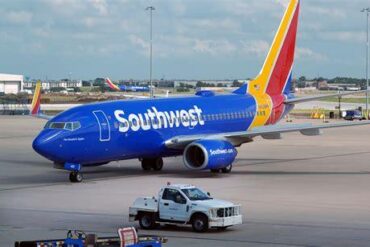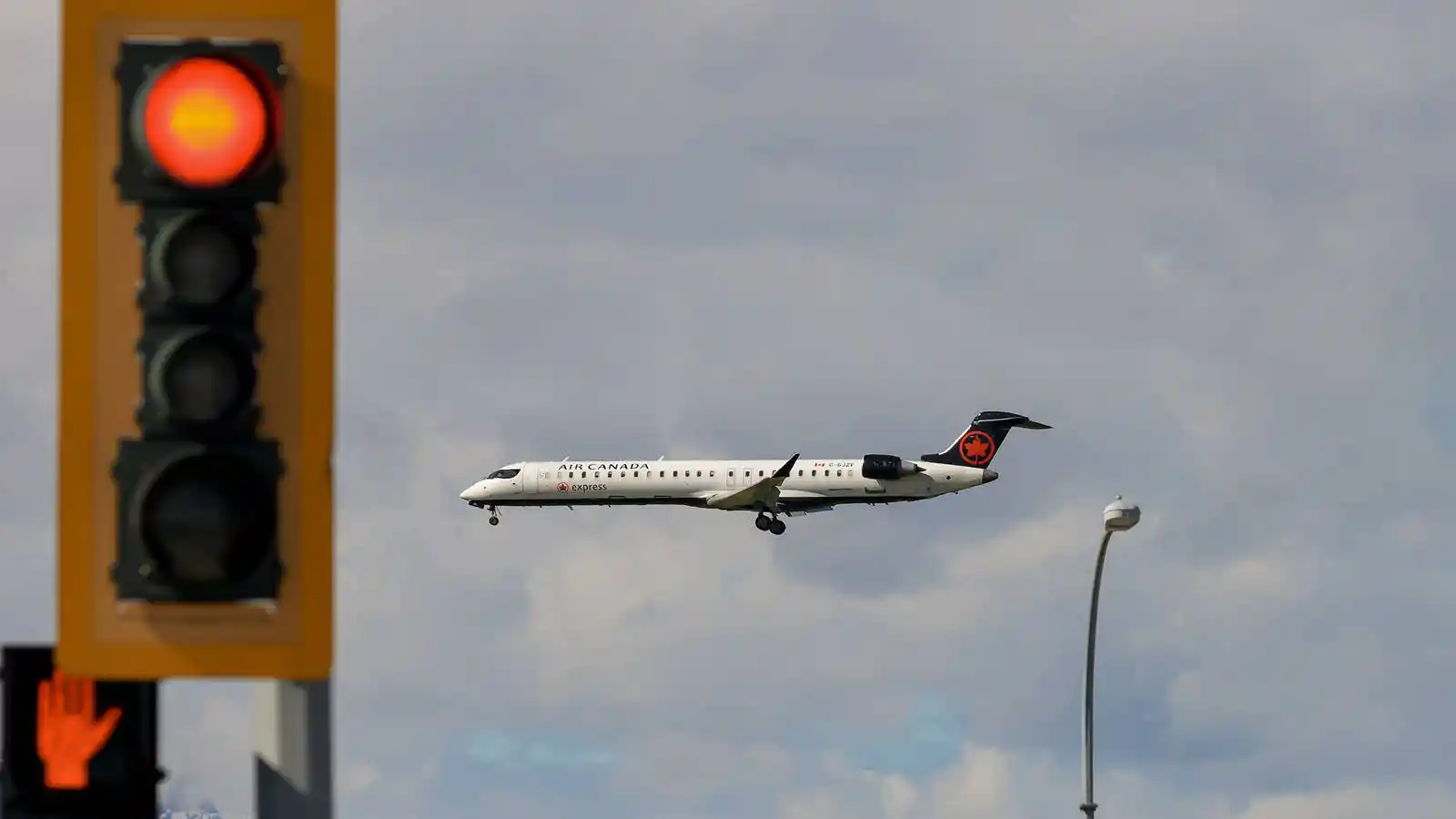
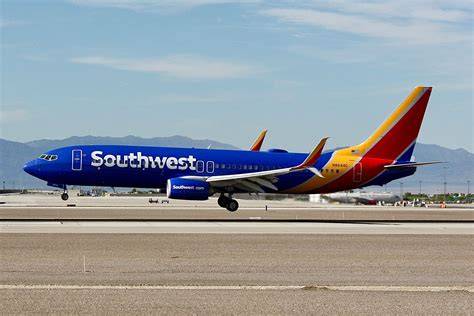
An Air Canada Express regional jet was ordered to halt seconds after receiving takeoff clearance at Lambert St. Louis International Airport (STL) on Tuesday morning, as a Southwest Airlines Boeing 737 approached the same runway to land. The tower’s urgent “stop, stop, stop” transmission turned a routine departure sequence into a textbook example of how quickly runway safety margins can collapse — and how decisively a controller and a disciplined flight crew can restore them.
The flight, AC8886, was operated by Jazz Aviation under the Air Canada Express banner and bound for Toronto Pearson International Airport. It had been cleared to depart Runway 12R when the controller abruptly canceled that clearance as Southwest flight 3082, arriving from Minneapolis, was on final approach. The Air Canada jet stopped before reaching the hold short line, meaning it never entered the runway’s protected area. The Southwest 737 landed safely, and no injuries were reported.
ATC Cancels Air Canada Express Takeoff Clearance Within Seconds
Air traffic control audio archived by VASAviation captures the sequence in unnerving detail. The tower first cleared Southwest 3082 to land on Runway 12R, and the crew acknowledged the instruction. The controller then cleared the Air Canada Express flight — a Bombardier CRJ900 flying under the callsign Jazz 886 — for takeoff from the same runway. What followed was an almost immediate reversal, with the controller repeating the order with rising urgency: “Jazz 8, stop, stop, stop, Jazz, stop. Jazz stop, Jazz stop, stop Jazz!”
The Jazz pilots acknowledged the instruction and confirmed they were “holding position.” The Southwest crew then asked the tower to verify that their landing clearance still stood, a sensible double-check given the burst of radio traffic. The controller confirmed, and the Boeing 737-800 touched down on Runway 12R several seconds later. Only after the landing did the tower inform the Jazz crew that arriving traffic was on an eight-mile final and that the regional jet had been instructed to line up and wait.
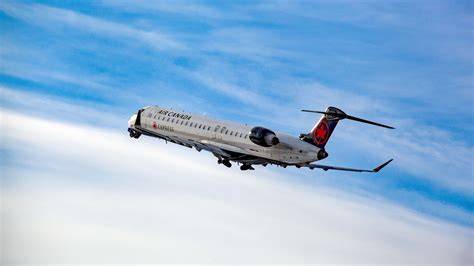
In a statement, the Federal Aviation Administration said Jazz 886 stopped before the hold short line and that “the required separation was maintained.” That phrase matters legally and procedurally, because the hold short line is the boundary that separates a taxiway from the runway’s protected area. An aircraft that halts on the taxiway side of that line has not committed a runway incursion, regardless of how close the audio sounds to disaster.
Potentially Catastrophic Collision Averted on Runway 12R
Had the CRJ900 — registration C-FTJZ — continued past the hold short line, the Southwest 737 could have touched down while the runway was still occupied by the departing regional jet. The outcome would have been determined by seconds and by braking distances that no crew can fully control once two aircraft share the same pavement. Neither airline has disclosed the exact number of passengers and crew aboard at the time, but with typical load factors on both routes, the combined figure would likely exceed 250 people.
The stakes are thrown into sharper relief by the aircraft involved. A CRJ900 is a relatively light regional jet, while the 737-800 is a much heavier narrowbody arriving at landing speed. A collision between them on an active runway would not be a minor fender-bender but a high-energy event with catastrophic potential for everyone on both aircraft.
Seven Months After the Fatal LaGuardia Runway Collision
The St. Louis incident lands seven months after a Jazz-operated Air Canada Express flight was involved in a fatal runway collision at New York’s LaGuardia Airport. On March 22, flight AC8646 — a CRJ-900 arriving from Montréal with 76 people aboard — struck a Port Authority fire truck on Runway 4 moments after landing, killing both pilots. On that occasion, the truck had been cleared to cross the runway roughly 12 seconds before the jet touched down, and investigators found that the driver heard the controller’s instruction to stop but did not recognize it was meant for the truck, because the tower identified the vehicle only in its second call.
That detail carries uncomfortable resonance for anyone listening to the St. Louis audio. The controller’s repeated “stop” calls were unambiguous in their repetition, yet clarity in a rushed transmission depends on the crew recognizing instantly that the order applies to them. The Jazz pilots did recognize it, and their immediate acknowledgment is the reason this event is being discussed as a close call rather than a disaster. Still, two serious events involving the same regional operator within a single year will inevitably draw scrutiny to training, phraseology, and tower workload at high-tempo airports.
FAA Yet to Classify the St. Louis Close Call
The FAA defines a runway incursion as the incorrect presence of an aircraft, vehicle, or person on the protected area of a runway, and the hold short line is the exact point where an aircraft must stop to remain clear of it. Because Jazz 886 stopped before reaching that line, the incident may not be recorded as a runway incursion at all. What the FAA ultimately labels the event will determine whether it appears in national safety statistics or in a separate review channel.
Severity categories matter in that accounting. Category A covers incidents in which a collision is narrowly avoided; Category B applies when separation is reduced and there is significant potential for a collision requiring a time-critical response; Categories C and D cover less serious events with more time to react or no immediate safety consequence. Recent FAA data shows the two most serious categories have been climbing nationally. An FAA Safety Team notice published in August stated that Category A and B events rose by 44% in 2025, even as the total number of incursions fell by roughly 1% to just over 1,600.
That divergence — fewer total incursions but more severe ones — is the uncomfortable trend line behind this week’s audio. The St. Louis sequence may escape formal classification as an incursion, but it belongs to the same family of events: a clearance issued, a clearance revoked, and a crew that had to convert an ordinary takeoff into an emergency stop. For the passengers aboard both jets, the outcome was unremarkable, which is precisely what made it so remarkable.