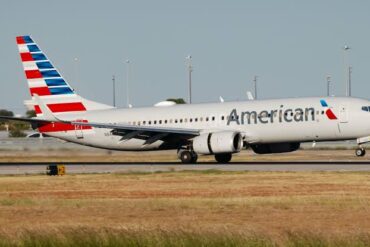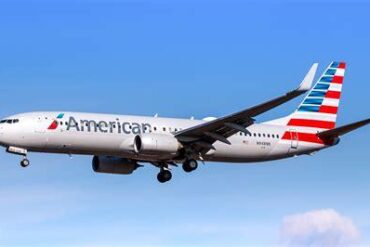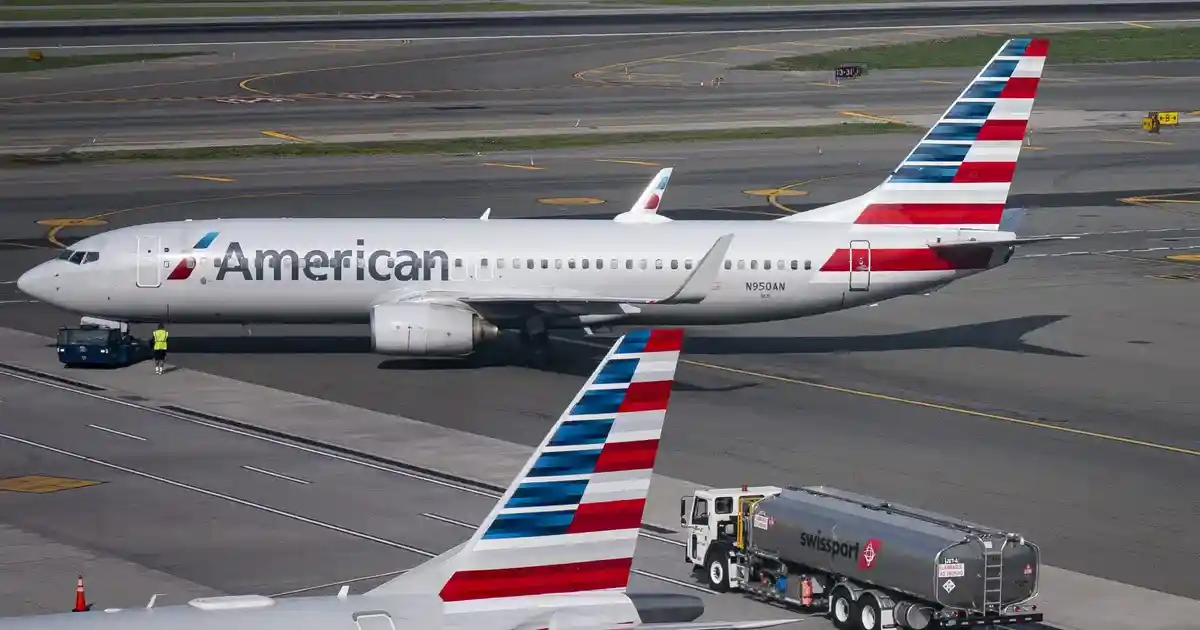
American Airlines Flight 392 experienced a dramatic aborted takeoff at LaGuardia Airport (LGA) on Thursday morning after its crew believed the Boeing 737-800 had struck a bird while accelerating down the runway. The aircraft had reportedly reached approximately 140 mph when the takeoff was rejected, turning what initially appeared to be a potentially serious wildlife-strike incident into a precautionary stop.
The aircraft, registered N942AN, was operating toward Chicago O’Hare International Airport (ORD) when the suspected bird strike occurred. With the 737-800 already traveling at high speed, the flight crew made the decision to remain on the ground rather than continue the takeoff. Although subsequent inspections found no evidence that the aircraft had actually been hit by a bird, the decision highlights the difficult judgments airline crews must make when an unexpected hazard appears during the most critical phase of a flight.
American Airlines Flight 392 Aborted Takeoff at LaGuardia
The incident unfolded during the takeoff roll at LaGuardia, where Flight 392 was accelerating for its scheduled departure to Chicago. According to reports, the crew believed they had experienced a bird strike at around 140 mph, prompting them to reject the takeoff.
At that speed, stopping a commercial jet is far from routine. A Boeing 737-800 can carry substantial momentum during the takeoff roll, particularly when heavily loaded. The aircraft’s maximum takeoff weight can reach roughly 174,000 pounds (79,000 kilograms), meaning enormous braking forces are required to bring it safely to a halt once it is traveling at high speed.
The apparent bird strike also triggered a brief FAA ground stop affecting traffic around LaGuardia as authorities responded cautiously to the reported hazard. Wildlife strikes are a recognized threat to aviation, particularly around airports, where birds can cross runways and flight paths unexpectedly. In this case, however, the precaution ultimately proved unnecessary after inspection crews found no visible evidence of an impact.
The Boeing 737-800 was eventually cleared to continue operating after maintenance personnel completed their checks. Flight 392 later departed LaGuardia and arrived safely at Chicago O’Hare, while N942AN subsequently returned to service.
Why Aborting a Takeoff at 140 MPH Is a Serious Decision
The most significant aspect of the incident was not necessarily the suspected bird strike itself, but the speed at which the crew rejected the takeoff. Airline pilots are trained around a series of carefully calculated takeoff speeds, including V1, commonly known as decision speed.
Before V1, pilots generally have greater flexibility to reject a takeoff when a serious problem occurs. After V1, the standard procedure is normally to continue the takeoff unless there is an emergency severe enough to make remaining airborne more dangerous. The reason is straightforward: at high speed, stopping an aircraft can introduce its own significant risks, including runway overrun, brake overheating, tire damage and loss of directional control.
Yet a suspected bird strike presents an unusual problem. Continuing into the air after a genuine wildlife strike could expose the aircraft to engine damage or other critical failures. Birds can damage engines, windshields, flight-control surfaces and other components, and a strike involving a flock can potentially affect more than one engine.
That makes the crew’s decision particularly important. Even when the eventual inspection reveals that no collision occurred, pilots must make decisions based on the information available to them in the moment, not on what investigators discover afterward.
Maintenance Checks Go Far Beyond the Aircraft’s Exterior
Once Flight 392 returned to the terminal, maintenance personnel had to establish that the aircraft was safe before it could depart again. A visual examination of the fuselage and wings is an obvious first step, but a suspected bird strike can require considerably more detailed inspection.
The 737-800’s engines would be among the most closely examined components. Technicians can inspect fan blades for dents, deformation or other evidence of foreign-object damage. If there is any uncertainty about what happened inside an engine, maintenance personnel can use a borescope, a specialized camera that allows them to inspect internal areas without completely dismantling the engine.
The inspection can extend to the landing gear and braking system as well. Because the aircraft stopped after a high-speed rejected takeoff, technicians need to establish that the brakes, tires and wheels remain within safe operating limits. High-energy braking can generate substantial heat, while tires and associated components must be checked for signs of damage.
Another American Airlines Bird Strike Shows the Real Risk
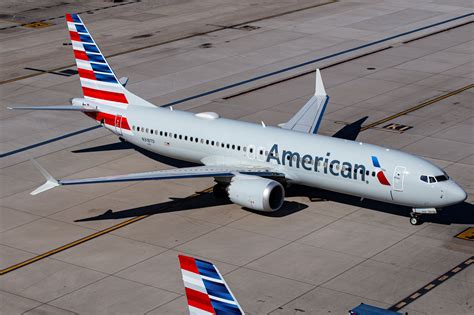
The false alarm at LaGuardia becomes more understandable when viewed alongside another recent American Airlines incident involving a Boeing 737-800. In August, Flight 1760 departing Myrtle Beach International Airport encountered an actual flock of birds shortly after rotation.
That aircraft suffered serious engine-related consequences. After striking the birds, the jet experienced surging engine power, and its left engine caught fire. The crew declared a mayday and stabilized the aircraft while operating under single-engine procedures.
The pilots subsequently flew a wide loop over the coast before returning to Myrtle Beach approximately 36 minutes later. Emergency crews were positioned on the runway as a precaution, but the aircraft ultimately landed safely and taxied to the gate under its own power. No injuries were reported.
Why the LaGuardia False Alarm Still Mattered
The LaGuardia incident ended without injuries or aircraft damage, but that does not make the crew’s decision unnecessary. Aviation safety often depends on responding decisively to uncertain situations, even when later evidence shows that the perceived threat was not real.
For Flight 392, the suspected bird strike created a situation in which continuing the takeoff could potentially have been more dangerous than stopping. The subsequent inspection confirmed that N942AN had apparently avoided damage, allowing the aircraft to return to service.
In that sense, the incident demonstrates an important reality of commercial aviation: a precaution that turns out to be unnecessary can still be the correct safety decision. The Boeing 737-800 eventually completed its journey to Chicago, but only after pilots, air traffic controllers and maintenance personnel had treated the suspected wildlife strike with the seriousness such an event demands.