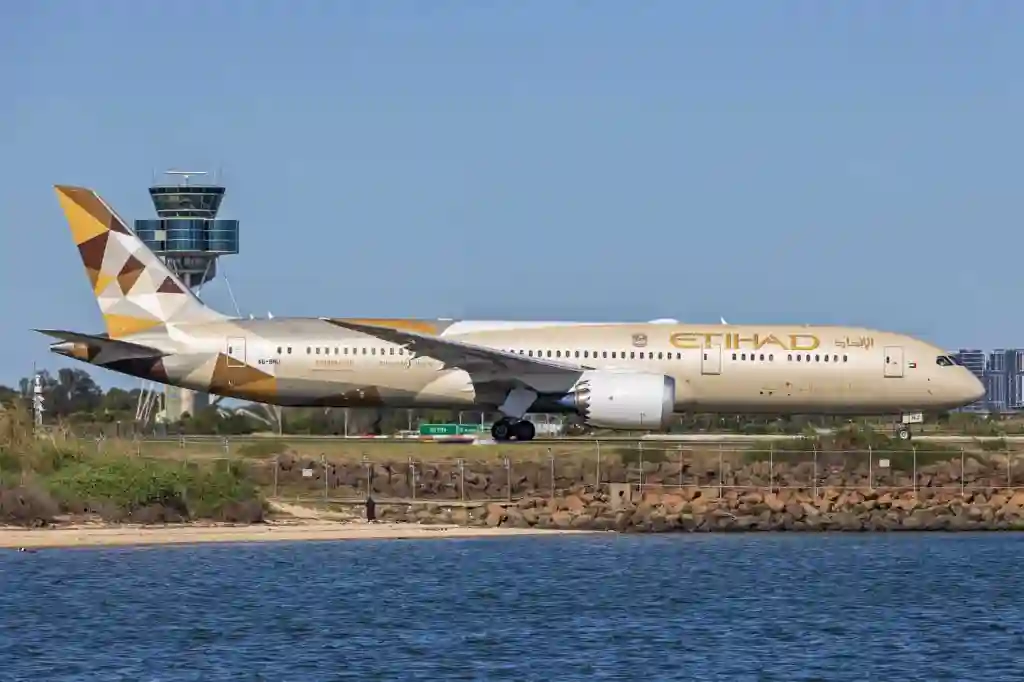
An Etihad Airways Boeing 787-9 Dreamliner crossed an active runway at Boston Logan International Airport (BOS) without clearance on Thursday, October 15, 2026, prompting air traffic controllers to send an inbound Delta Connection regional jet around on final approach. The widebody had just arrived from Abu Dhabi International Airport (AUH) as flight EY7, landing roughly fifteen minutes behind schedule at 2:55 PM local time after the transatlantic sector from the United Arab Emirates. What followed was a textbook runway incursion, acknowledged in the cockpit and then apparently forgotten within minutes, and it forced a Republic Airways Embraer E175 to abandon a stabilized approach at low altitude.
Etihad Flight EY7 Acknowledged The Hold-Short Instruction Before Crossing Runway 4L
The sequence of events is straightforward, and that is exactly what makes it unsettling. After touching down, the Etihad Airways 787-9 crew, operating aircraft registered A6-BNJ, were instructed to taxi to their gate via taxiways R and N and to hold short of runway 4L. The crew read back the instruction, confirming they understood both the route and the restriction. Runway 4L was the strip on which the approaching Delta Connection service was about to land, which is precisely why the hold-short clearance existed. Yet when the Dreamliner reached the hold-short point, it continued across the landing strip instead of stopping. Controllers in the tower, watching two aircraft converge on the same pavement, reacted immediately and told the inbound E175 to go around.
Delta Connection Flight DL5739 Went Around On Runway 4L Approach
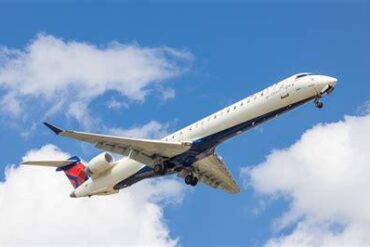
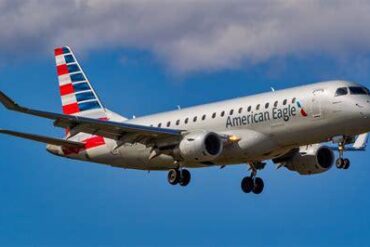
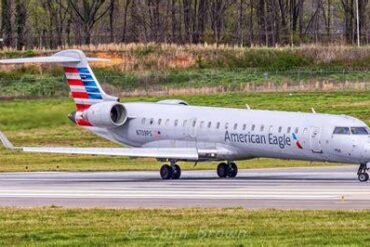
The aircraft pushed off its approach was Delta Connection flight DL5739, operated by Republic Airways with an Embraer E175 registered N224JQ, arriving from New York’s LaGuardia Airport (LGA). The same Embraer had flown its two preceding sectors on schedule before lining up for Boston. Controllers’ rapid intervention meant the regional jet never came into conflict with the taxiing widebody, and the go-around itself was uneventful. The flight touched back down at Boston on its second attempt, again on runway 4L, at 3:09 PM, a full fourteen minutes ahead of schedule. N224JQ subsequently remained on schedule for the rest of Thursday and most of Friday, so the disruption was effectively absorbed.
The Pilots Were Handed A Number To Call At The End Of Their Taxi
While the situation was resolved easily enough in operational terms, the Etihad crew’s day was not over. Toward the end of their taxi, they were given a number to call regarding the possible deviation. This is standard procedure in US airspace, a documented follow-up conversation with the carrier and the regulator, but it is not a message any pilot wants to hear. It signals that the incursion has been logged, reviewed and will be formally examined rather than quietly forgotten. Simple Flying has reached out to Etihad Airways for further information regarding the incident and will update its coverage upon receiving a statement from the carrier. The Dreamliner itself was largely back on schedule by the time it returned to Abu Dhabi. Flight EY8 departed Boston on Thursday at 5:28 PM, almost an hour behind its 4:35 PM slot, but recovered most of that delay and landed in the UAE only seven minutes late at 1:07 PM local time on Friday.
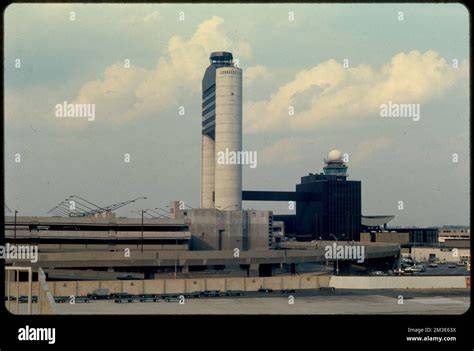
Boston Logan Has Already Recorded A More Serious Runway Incursion This Year
Runway incursions and other close calls have become something of a hot topic in US aviation in recent years, particularly as the country struggles to come to terms with crippling air traffic control shortages. Boston Logan is not immune. On June 20, 2026, an American Airlines Boeing 737 was cleared to take off from runway 27, even though that strip intersects with runway 33L, on which a Delta Air Lines Airbus A319 had simultaneously been cleared to land. At their closest point, according to Aero Corner, the two jets were just 670 feet (204 meters) apart, a margin the NTSB later attributed in part to a controller who had forgotten he had issued the takeoff clearance. The narrow margin of error in that June near-miss highlights the pressure on US airport systems, and it lends this October incident a heavier context than its mild operational fallout would otherwise suggest.
Why An Acknowledged Instruction Still Failed To Prevent The Incursion
The Etihad case sits in a familiar category: the clearance was heard, understood and read back correctly, yet the aircraft crossed anyway. Runway incursions often trace back not to a missing instruction but to a breakdown in execution somewhere between the ears of the crew and the yellow hold-short bars on the pavement. Fatigue after a long overnight sector, divided attention during a complex taxi, a misread taxiway diagram or simple expectation bias can each quietly override a correctly acknowledged restriction. That the Dreamliner proceeded with the crossing suggests a chain of small failures rather than a single dramatic lapse, the kind of sequence investigators typically reconstruct from voice recordings, surface surveillance data and cockpit records.
What The Etihad 787 Runway Incursion Means For Boston Logan’s Safety Push
The absence of a collision or meaningful knock-on disruption should not be mistaken for an absence of risk. Boston Logan handled the situation through alertness on the ground and in the tower, not through luck, and the number-to-call request ensures the event will feed into the formal review pipeline. As US airports contend with staffing strains and rising traffic, each of these near-misses adds weight to calls for better surface detection systems, clearer taxi instructions and more disciplined cockpit monitoring during the post-landing phase. For Etihad’s 787-9, the flight ended close to schedule. For everyone watching the runway, the lesson is that an acknowledged instruction is only as reliable as the attention behind it.