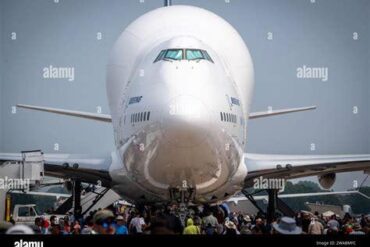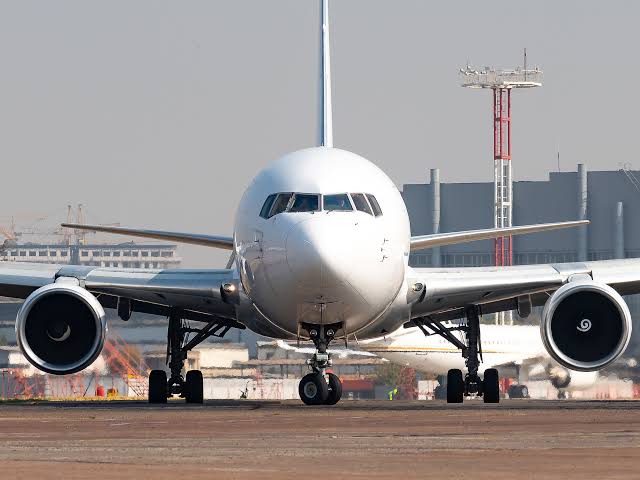
AerCap did not stumble into its Boeing 767 freighter sale by accident. In the third quarter, the world’s largest aircraft lessor divested nine Boeing 767 widebody freighters, adding to the single 767-300ERF it had already sold in the second quarter. For a company that owns or manages more than 1,400 aircraft, nine jets amount to a rounding error on the balance sheet. In the narrow, specialized world of mid-size air cargo, however, the move is seismic. It arrives at a moment of genuine confusion in the freighter market, when global air cargo demand is cooling from its post-pandemic highs while the supply of new and converted cargo aircraft is collapsing under the weight of production delays, conversion bottlenecks, and the looming end of the 767 line itself.
On the surface, the timing looks adversarial. Selling freighter exposure just as cargo yields retreat and express operators grow cautious about long-term lease commitments seems like retreat dressed as rotation. Look closer, and the transaction reveals something far more deliberate: a lessor converting scarce, still-valuable assets into immediate cash while the market’s structural shortage of cargo lift keeps residual values artificially firm. AerCap is not abandoning air freight. It is harvesting the premium embedded in an aging platform before that premium erodes and recycling the proceeds into newer, more efficient cargo programs, into shareholder returns, and into the patience required to wait out a supply chain that cannot yet deliver anything better.
What AerCap’s Ledger Reveals About a Shifting Portfolio
The second-quarter and third-quarter trading data tells a story about direction rather than scale. AerCap’s most active acquisitions were new-generation narrowbodies: twenty Boeing 737 MAX aircraft purchased against just two sold, and eight Airbus A320neo family jets brought in against four divested. On the widebody side, the asymmetry sharpens. AerCap added three Airbus A350s, three Airbus A330s, and two Boeing 787-9s while pushing nine 767 freighters out the door. The company’s heritage Boeing 737NG position was trimmed by seven airframes with nothing added. In total, AerCap sold sixty-five aircraft and bought thirty-two, a ratio that reflects a house actively curating its book rather than expanding it indiscriminately.
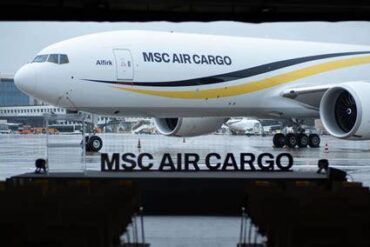
That pattern matters because it contradicts the crude reading of the 767 sale as a signal about cargo demand. If AerCap genuinely believed air freight was entering a durable downturn, it would be unwinding narrowbody freighter conversions too. Instead, the lessor continues to hold and order Airbus A321P2F conversions and the Boeing 777-300ERSF, the “Big Twin” conversion program developed with Israel Aerospace Industries. Those platforms represent the future of AerCap’s cargo book: volume-optimized, fuel-efficient, and designed around the payload profile that e-commerce actually generates. The 767 sale funds that transition; it does not abandon it.
Why E-Commerce Changed What a Freighter Must Be
The most important structural shift in air cargo over the past decade is invisible in tonnage statistics but decisive in fleet economics. Parcel traffic has transformed the freighter payload mix. Modern express networks haul lighter, bulkier packages for e-commerce platforms, consumer electronics brands, and cross-border online marketplaces, not the dense industrial machinery and perishables that once filled cargo holds. This changes the physics of profitability. A freighter running e-commerce routes typically reaches its volumetric limit, filling the usable space in the hold, long before it reaches its maximum structural payload. Density, not weight, becomes the binding constraint.
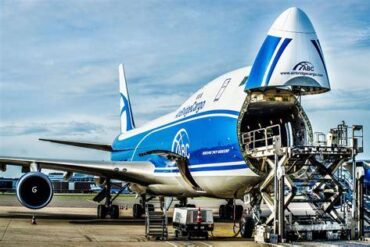
For a 767-300F with roughly forty tons of payload capacity, that shift cuts both ways. The aircraft remains versatile and reliable, and plenty of cargo haulers still prize the 767-300 platform for its widebody cross-section and balanced economics. But when revenue is earned per cubic meter rather than per kilogram, older airframes with less efficient volume-to-cost ratios lose ground to platforms engineered around the new payload reality. AerCap’s move toward A321 conversions and 777-300ERSF twins is a direct response to that commercial mathematics.
Boeing 767 Freighter Values and the Mid-Size Widebody Supply Crunch
Here lies the paradox that explains the timing of the sale. No mid-size freighter can currently be produced or converted in sufficient quantity, which means every existing airframe carries a scarcity premium. Boeing has told customers that no passenger 767-300ER feedstock is available for conversion, and the company plans to shut down the new-production 767 freighter line by next year. Airbus A330 conversions, the 767’s principal rivals in the mid-size class, are equally constrained, with conversion capacity booked years in advance. Meanwhile, the manufacturing delays that have plagued Boeing’s production system have pushed delivery timelines for new aircraft out dramatically across the commercial market.
The result is a market caught between soft demand and hard supply. Major express operators are pulling back from new long-term leases on mid-tier platforms, yet carriers that urgently need capacity cannot wait years for a new aircraft to roll off a line. Regional and international freight carriers are therefore holding on to their existing mid-size jets and bidding aggressively for any airframe that becomes available. That is precisely the environment in which a disciplined lessor sells. AerCap is offloading 767s into a supply-constrained secondary market, capturing gains from buyers who need immediate lift and cannot manufacture an alternative.
AerCap’s Capital Returns and the Arithmetic Behind the Sale
The financial logic behind the sale runs through AerCap’s capital allocation machinery rather than its cargo strategy. In the second quarter, the lessor completed $1.4 billion in asset sales at a 20 percent margin, which Chief Financial Officer Peter Juhas characterized as equivalent to roughly 1.7 times book value on an equity basis. First-half sales reached $2.8 billion, and AerCap projects $4 billion to $5 billion in full-year divestitures, a company record. Juhas has described buyer demand as holding up across the entire portfolio, not just in freighters.
Those proceeds flow directly into equity value. AerCap repurchased 5.3 million shares in the third quarter at an average price of $147.12, spending roughly $783 million. Chief Executive Aengus Kelly has argued that the $1.4 billion returned to shareholders in July equated to buying about $5.5 billion of aircraft through sale-and-leaseback transactions, at economics AerCap could never negotiate in the open market. When a lessor can earn that kind of effective multiple by repurchasing its own stock, selling well-priced aircraft, including scarce freighters, becomes the obvious marginal use of capital.
Why Mid-Size Widebody Freighters Remain the Industry’s Capacity Buffer
The apparent contradiction in AerCap’s decision dissolves once you separate asset value from rental demand. The leasing market for mid-size widebody cargo aircraft has undeniably slowed, and rental yields on older 767s are compressing as express operators delay commitments. But rental demand is not the same as residual value, and residual value in 2026 is being distorted upward by a genuine industrial bottleneck. Mid-size freighters provide an essential capacity buffer that carriers cannot replace quickly, and every delay in new production or conversion squeezes that buffer tighter.
The engine market reinforces this. The 767-300 operates on large, durable, and highly reliable powerplants: the General Electric CF6 and the Pratt & Whitney PW4000. Right now, the overwhelming driver of used-aircraft liquidity is a severe global shortage of engines and spare parts, with carriers desperate for serviceable CF6 and PW4000 units to replace engines stuck in multi-year maintenance backlogs. A 767 freighter is therefore worth more than the sum of its cargo role; it is a source of scarce propulsion hardware and rotable components. That dynamic keeps airframe values resilient even as lease rates soften, which is exactly the window AerCap is exploiting.
Two Risks Reshaping the Midsize Freighter Market
Beneath the supply story sit two forces that could change the value of mid-size freighter assets over the medium term. The first is the end of the European Union’s de minimis tax exemption, which has slowed low-value parcel volumes flowing into the bloc. That policy shift lands hardest on express networks running dense intra-European and Asia-to-Europe routes, and the 767-300F dominates those corridors. Softer parcel volumes translate into slower growth in demand for the aircraft type that carries them.
The second is jet fuel pricing. Fuel spikes hit older, less-efficient widebodies disproportionately, because fuel burn is the single largest operating cost driver on a freighter and the efficiency gap between a 767 and a modern A330 or 777 conversion widens as prices rise. Investors should treat both as refinements of the rotation thesis, not as evidence of collapse. The 767’s efficiency disadvantage is precisely why AerCap wants to exit the platform on its own schedule rather than during a forced liquidation.
AerCap’s 777-300ERSF and A321P2F Strategy: A Fleet Rotation, Not a Retreat
AerCap’s own inventory ledger contradicts any narrative of withdrawal. The Boeing 777-300ERSF, the Airbus A321 freighter conversions, and the 737-800 conversion programs remain actively owned or on order. Company executives have said aircraft returning from conversion lines will lift future lease yields. Against an entire cargo book of roughly 120 freighters, selling nine older 767s is a marginal adjustment that improves average asset quality while preserving exposure to the platform segments with the strongest forward demand.
The broader context supports the rotation. Market reports continue to flag severe widebody capacity shortages, and AerCap is positioning itself between two closing doors: the end of 767 production, which removes new supply, and the conversion bottleneck, which limits substitute capacity. Buying narrowbodies and modern widebodies while selling legacy mid-size freighters lets the lessor maximize returns before scarcity premiums eventually normalize.
What AerCap’s Third-Quarter Results Will Reveal About Cargo Demand
The definitive answer arrives when AerCap reports third-quarter earnings. Gain-on-sale margins will show whether the nine 767s commanded premiums above book value and how those premiums compare with the 20 percent margin achieved in the second quarter. Executive commentary on buyer identity will matter just as much, because it will reveal whether the aircraft are heading to active cargo operators or to parts dealers for teardown, and the outcome will clarify whether the sale reflects genuine demand for lift or a market cashing out its last versatile midsize freighters.