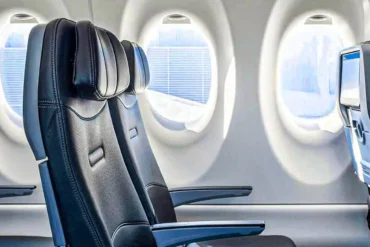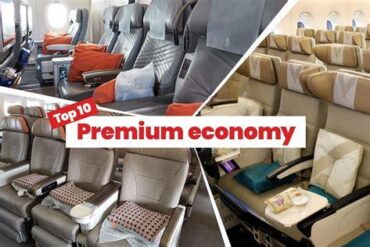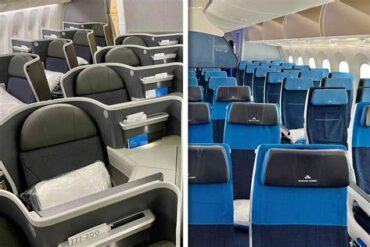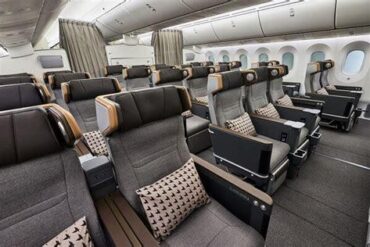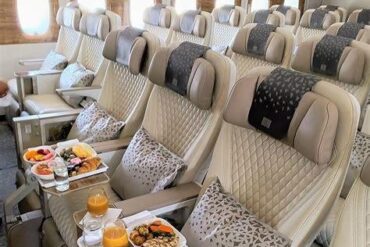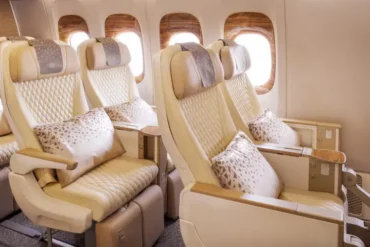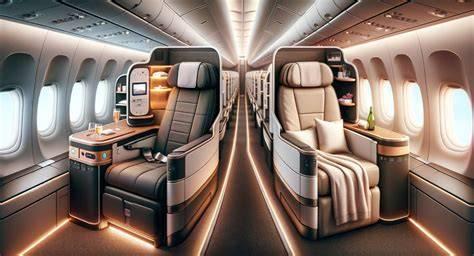
The gap between premium economy and business class is narrowing faster than most travelers realize. Since EVA Air pioneered the concept with Economy Deluxe on transpacific routes in the early 1990s, premium economy has evolved from a modest legroom upgrade into a genuine premium product, and the airlines listed below are now delivering passenger experiences once considered unattainable without a business class ticket. These five carriers have invested heavily in seat architecture, cabin privacy, catering, and service delivery, and the results are so compelling that many frequent flyers report stepping off the aircraft convinced they had flown the pointy end of the plane.
Why the Market Has Finally Started Paying for Premium Economy
For years, most carriers treated premium economy as a simple recliner with a few extra inches of pitch, and passengers accepted this as long as the fare sat comfortably below business class. That calculus has shifted. Business class seats have become increasingly innovative and enclosed, but alongside this innovation, several airlines decided to differentiate their premium economy offering rather than leave it as a generic stepping stone. They have layered in privacy wings, sliding partitions, integrated lighting, 4K displays, wireless charging, dedicated amenity kits, and elaborate onboard catering designed to mimic a different cabin entirely.
The result is a sharper divide between elite and standard premium economy products. United Airlines’ ‘Elevated’ Premium Plus, Emirates’ generous pitch, EVA Air’s record-setting legroom, and Japan Airlines’ fixed-shell innovation now sit closer to a lower-tier business class experience than to economy, and understanding what separates these seats from the rest of the market is essential for anyone booking a long-haul flight where comfort actually matters.
United Airlines Premium Plus: The Most Functional Seat in the Sky
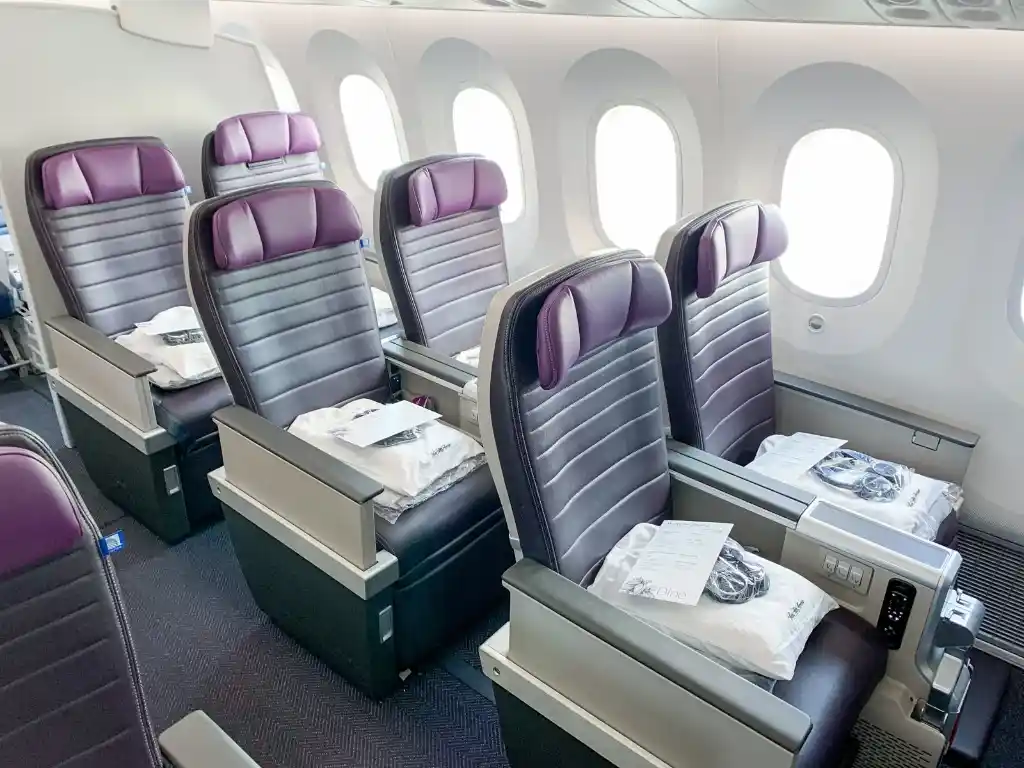
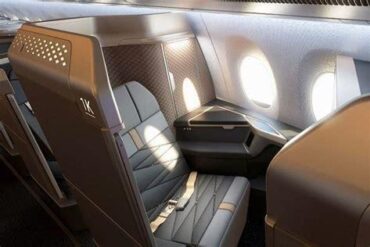
United Airlines has been quietly redefining what a premium economy seat can offer, and its new Boeing 787-9s in a premium-heavy layout with the updated ‘Elevated’ interior have become the reference point for passenger functionality. These aircraft now fly from San Francisco to Singapore, London-Heathrow, and Zurich, and the new Premium Plus seat builds on the Collins Aerospace MiQ platform with meaningful refinements. The most striking additions are privacy wings and a sliding partition, a rarity in this segment that gives passengers a genuine sense of enclosure without the structural walls of a business class suite. The headrest wings also integrate a reading light, eliminating the awkward overhead lamp adjustments that plague economy passengers.
What truly distinguishes the Elevated Premium Plus seat is its technology package. It sports a massive 16-inch 4K OLED display with Bluetooth capability, letting travelers connect their own headphones and enjoy a cinema-grade screen normally reserved for the front cabin. Between each seat, United provides standard power ports, supplemented by USB-C ports and a wireless charging pad, along with a dedicated water bottle holder that keeps hydration within easy reach. With 38 inches of pitch and a seven-abreast configuration on the Dreamliner, this is not the most spacious premium economy seat in the world, but the level of functional detail is unmatched. Although only about six aircraft currently feature the new seats, United is rapidly taking delivery of additional 787s and intends to install the same product on its Airbus A321XLR and A321neo ‘Coastliner’ aircraft.
Virgin Atlantic Premium Economy: Service That Belongs in Business Class
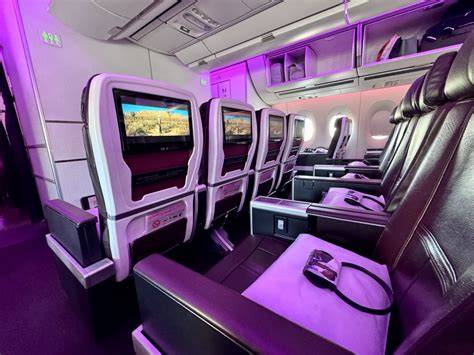
Virgin Atlantic’s premium economy is routinely ranked among the best in the world, and the reason has little to do with the seat itself. On the Airbus A330-900 and A350-1000, the carrier installs the Collins Aerospace MiQ, a competent but fairly standard seat found across the industry, lacking headrest wings and offering average screen size and legroom. The cabin experience, however, operates at an entirely different level. Premium economy passengers receive elaborate meals with large portions and upscale presentation, a beverage selection that runs to remarkable depth, and flight attendants who consistently deliver service widely regarded as the best in the premium economy segment worldwide.
The fleet picture explains both the strength and inconsistency of the product. Virgin Atlantic operates six Airbus A330-300s with the older Safran GB Retreat seat, eight A330-900s with the Collins MiQ, twelve A350-1000s with the same MiQ, and seventeen Boeing 787-9s fitted with the Safran GB Reverb. Modernized 787 interiors are planned, and the A330-300 fleet is set for retirement, which will bring welcome consistency. Despite the seat specifications being modest, most passengers remember the flight by the food, wine, and cabin crew, and that emotional signature is precisely what makes Virgin Atlantic’s premium economy feel closer to a business class encounter than a premium recliner.
Emirates Premium Economy: Generous Pitch, Regional Menus, and Business Class Wines
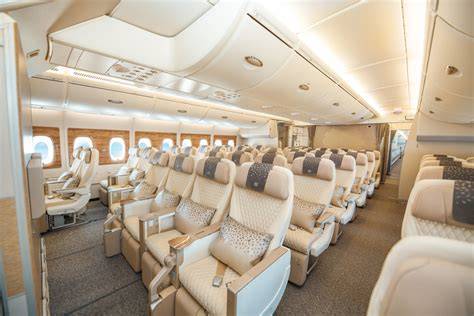
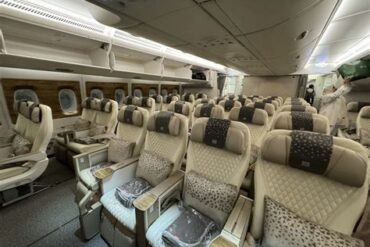
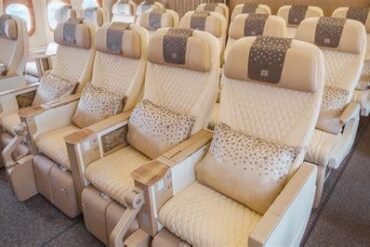
Emirates entered the premium economy market in 2022, and despite using the commonplace Recaro PL3530 with only modest changes, the product performs far beyond its hardware. The seats are installed on retrofitted Airbus A380s and Boeing 777s as well as all Airbus A350s, and the defining feature is a 40-inch pitch rather than the industry-standard 38 inches, paired with a notably generous recline. On the A350-900, Emirates configures just 21 or 28 seats in a 2-3-2 layout, while the A380-800 carries 56 seats split between a 2-4-2 arrangement on the main deck and 2-3-2 upstairs. Seat width measures 19.5 inches across the fleet, and the Boeing 777-200LR and 777-300ER each feature 24 seats arranged 2-4-2.
The screen measures 13.3 inches, identical to economy, so the real differentiators lie elsewhere. Emirates has been widely praised for catering quality, offering a rotating menu with regional themes, generous portions, and upscale plating that feels deliberately more premium than the cabin next door. Premium economy passengers can also choose from an extensive complimentary wine list, including labels normally poured only in business class, and the airline’s service culture rounds out an experience that consistently surprises travelers expecting a modest upgrade. For passengers flying long-haul through Dubai, this combination of space, cuisine, and wine makes the cabin feel far closer to business class than the fare suggests.
EVA Air’s Latest Premium Economy: Where Record Legroom Meets Real Privacy
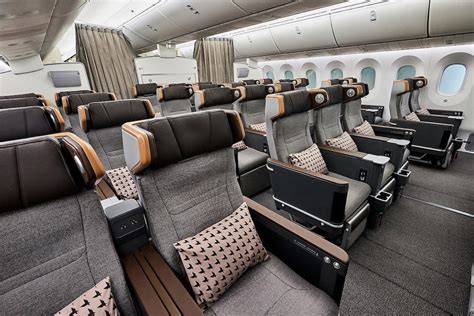
EVA Air introduced premium economy to the world, and its latest seat model proves the pioneer still leads on hardware. Eight Boeing 787-9s carry 28 premium economy seats based on the Recaro R5, configured in the standard seven-abreast Dreamliner layout, but the similarities to competitors end at the seat frame. EVA Air specifies a 42-inch pitch, roughly four inches more than most airlines offer, giving passengers legroom that borders on the business class experience. The seats add privacy wings between adjacent passengers and a 15.6-inch HD screen, creating a private, well-equipped space that transforms long transpacific journeys.
Beyond the seat, EVA Air delivers significantly upgraded meals compared with economy, complimentary champagne, and comprehensive amenity kits, all underpinned by an onboard service culture renowned across the industry. The main limitation is availability, because only eight aircraft currently carry the new product while most of the fleet still flies an older seat. That picture is set to change dramatically. EVA Air has another nine 787-9s on order along with 24 Airbus A350-1000s, which will replace part of the 777-300ER fleet while the remaining 777s receive refurbished cabins, meaning the record-setting seat will soon become the airline’s signature premium economy standard.
Japan Airlines A350-1000 Premium Economy: Fixed-Shell Seating Perfected
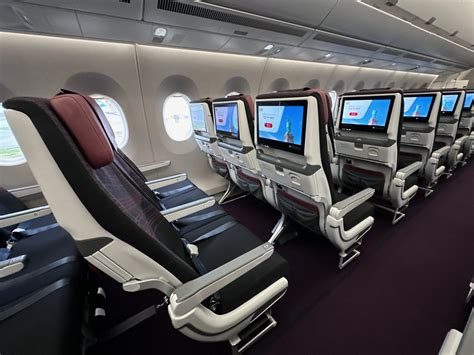
Japan Airlines’ Airbus A350-1000 has become the carrier’s flagship, gradually replacing the Boeing 777-300ER, and eleven of these aircraft are now in service with entirely new seats across every cabin. In premium economy, JAL selected Safran fixed-shell seats, a design philosophy that divides frequent flyers because shells sacrifice recline freedom for predictability and never intrude on the passenger behind. Even among travelers who typically avoid fixed shells, JAL’s implementation stands apart. The seats offer a 42-inch pitch, tying EVA Air for the most legroom in premium economy worldwide, together with a headrest wing and full-height dividers between seats, an amenity so rare it instantly separates the product from the broader market.
Technology and comfort receive equal attention. The seats feature motorized controls, a 16-inch 4K screen, a tablet holder, USB-C ports, and seven inches of recline, giving passengers the tools to work or relax for an entire long-haul sector. JAL’s cabin crew, renowned for impeccable five-star service, serve high-quality meals on ceramic dishes with metal cutlery, and the combination of a genuinely innovative seat and near-perfect hospitality makes this arguably the most complete premium economy experience in the air. The only meaningful drawback is fleet size, because with just eleven A350-1000s in service, many passengers will never encounter this seat on their chosen route.
What These Five Cabins Reveal About the Future of Premium Economy
The common thread across United, Virgin Atlantic, Emirates, EVA Air, and Japan Airlines is that each invests in a different dimension of the experience: functionality, service, space, privacy, and innovation. United pushes onboard technology to the edge with sliding partitions and wireless charging, Virgin Atlantic turns catering and crew into its signature, Emirates uses pitch and regional menus to punch above its hardware, EVA Air leverages record legroom and privacy wings, and Japan Airlines perfects the fixed-shell format with full-height dividers. None of these seats is a lie-flat business suite, yet each delivers a level of comfort, personalization, and hospitality that makes the premium economy fare feel like remarkable value. For travelers willing to research their aircraft and carrier carefully, the gap between premium economy and business class has never been smaller, and these five cabins represent the clearest proof that the middle cabin has become a genuinely premium destination in its own right.