The moment a traveler commits to an ultra-long-haul journey—often stretching beyond 12, 15, or even 20 hours—the question is no longer whether comfort matters, but how much it is worth. The gap between business class and premium economy has evolved into one of aviation’s most strategic battlegrounds, where airlines carefully balance luxury, revenue, and passenger expectations.
At first glance, the distinction appears straightforward: one is a premium upgrade, the other a luxury tier. Yet, the reality unfolds in layers—seat architecture, cabin psychology, service choreography, and even how your body feels upon arrival. These differences become amplified at 35,000 feet over vast oceans, where fatigue, space, and silence take on new meaning.
For travelers navigating ultra-long-haul routes, the choice between these cabins is less about indulgence and more about how you want to experience time itself.
Seat Architecture: Where Comfort Becomes Sleep Science
The most defining difference between business class and premium economy is not simply space—it is the ability to transform a seat into a bed.
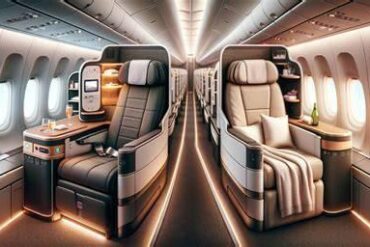
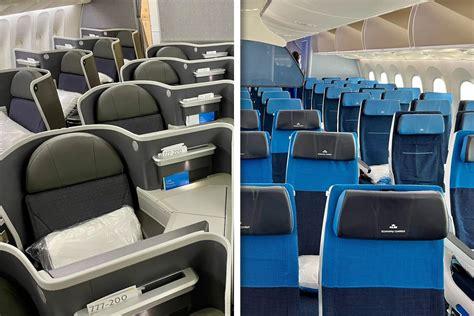
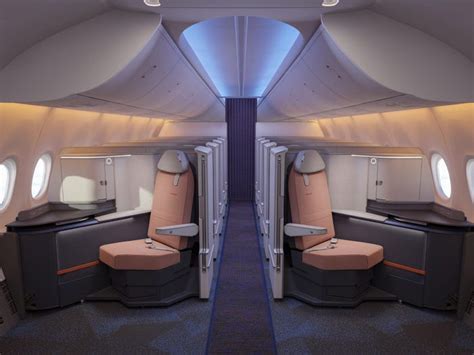
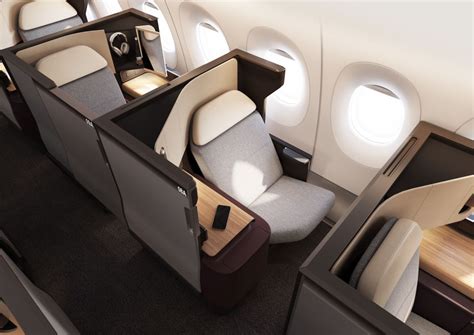
Business class cabins are engineered around the concept of rest. Modern configurations, especially on widebody aircraft, prioritize lie-flat functionality. A typical seat offers around 21 inches of width and up to 70 inches of pitch, extending into a fully flat surface. Some airlines have pushed boundaries further. For example, All Nippon Airways introduced “The Room FX,” delivering a remarkable 27-inch-wide seat and a bed length exceeding 76 inches, rivaling boutique hotel standards.
This transforms the in-flight experience into something fundamentally different. Sleep is no longer improvised—it is intentional. The body aligns horizontally, circulation improves, and passengers arrive in a state far closer to normalcy.
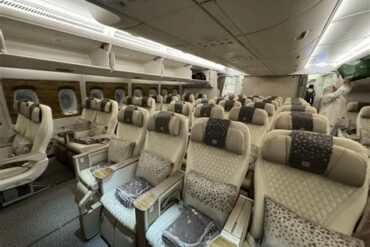
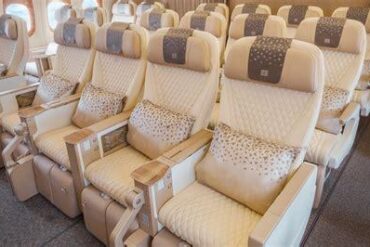
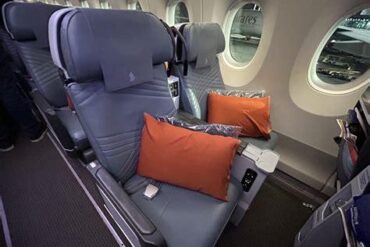
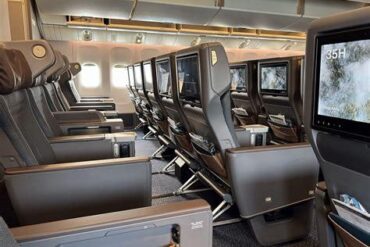
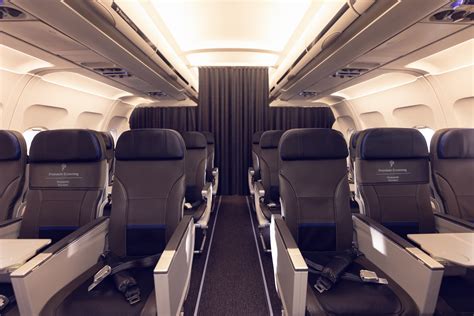
Premium economy, while significantly improved over standard economy, operates within constraints. With 38–42 inches of pitch and around 19 inches of width, it offers enhanced comfort but remains firmly in the realm of seated travel. Recline typically reaches 7–8 inches, enough for relaxation, but insufficient for deep, restorative sleep.
The distinction becomes stark after hour eight. In premium economy, passengers shift, adjust, and negotiate for comfort. In business class, they simply sleep.
Cabin Density and Spatial Psychology
Space is not only measured in inches—it is felt through proximity, privacy, and movement.
Business class cabins are intentionally sparse. The industry-standard 1-2-1 configuration ensures that every passenger enjoys direct aisle access. This eliminates the awkward choreography of climbing over strangers and creates a sense of personal territory. Many airlines enhance this further with sliding doors, transforming seats into private suites.
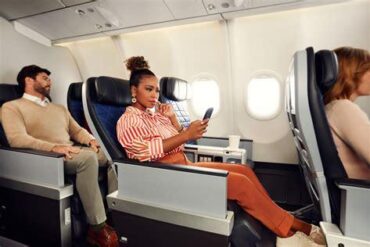
Premium economy occupies a middle ground. Layouts such as 2-4-2 or 2-3-2 reduce crowding compared to economy, yet still require compromises. Roughly half of passengers lack direct aisle access, introducing subtle friction into the experience—especially on overnight flights.
The psychological effect is profound. Business class feels quiet, controlled, and insulated, while premium economy, though calmer than economy, still carries the ambient rhythm of a shared space.
Even small details—like guaranteed overhead bin space or dedicated lavatories—contribute to this perception. In business class, these are standard. In premium economy, they are conditional.
Service Ratios: The Invisible Luxury Multiplier
One of the least discussed yet most impactful differences lies in crew-to-passenger ratios.
Business class cabins are smaller, often accommodating a fraction of the passengers found in premium economy. This enables a level of service that feels anticipatory rather than reactive. Meals are paced according to individual preference, drinks arrive without being requested, and cabin crew interactions feel personalized.
Premium economy delivers a step up from economy—priority attention, improved meals, and more attentive service—but remains semi-collective. Requests are handled efficiently, yet rarely with the same tailored nuance.
On ultra-long-haul flights, this difference compounds over time. A 14-hour journey includes multiple meal services, cabin transitions, and rest periods. In business class, the experience flows. In premium economy, it follows a structured cadence.
On-the-Ground Experience: Where the Journey Truly Begins
The contrast between these cabins begins long before boarding.
Business class passengers are ushered through a streamlined airport journey. Dedicated check-in counters eliminate queues, while fast-track security lanes reduce friction at major hubs like Heathrow Airport and John F. Kennedy International Airport. Priority boarding ensures early access to the aircraft, allowing passengers to settle in without rush.
Premium economy offers a partial upgrade. Many airlines provide priority check-in and boarding, but security screening often remains standard. The experience improves, but does not fully detach from the main passenger flow.
This difference is not trivial. Airports are often the most stressful component of long-haul travel. Business class effectively removes this stress, while premium economy reduces but does not eliminate it.
The Lounge Factor: A World Apart
Airport lounges represent one of the most visible—and aspirational—divides between the two cabins.
Business class passengers gain access to exclusive spaces designed to counteract the chaos of terminals. These lounges function as pre-flight sanctuaries, offering dining, relaxation, and even wellness facilities.
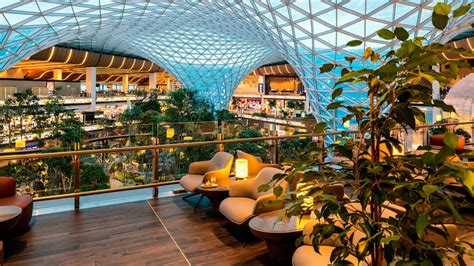
Among the most celebrated is the Al Mourjan Business Lounge at Hamad International Airport, operated by Qatar Airways. Known as “The Garden,” it spans an astonishing 79,000+ square feet, blending natural light, greenery, and architectural calm. Inside, travelers find spa treatments, quiet rooms, gourmet dining, and even fitness areas.
Premium economy access to lounges is inconsistent. Some airlines, including All Nippon Airways, extend access on select routes or through bundled fares. However, this remains the exception rather than the rule.
Without lounge access, the airport experience reverts to crowded seating areas and limited dining options—highlighting just how transformative lounge access can be.
Dining and In-Flight Experience: Elevation vs Enhancement
The difference between business class and premium economy dining is best described as elevation versus enhancement.
Business class transforms meals into an experience. Multi-course menus, plated service, and flexible dining times allow passengers to eat when and how they choose. Ingredients are often curated, presentation refined, and beverage selections extensive.
Premium economy improves upon economy with better ingredients, upgraded presentation, and sometimes dedicated menu options. Yet, meals are still served in structured waves, maintaining efficiency over personalization.
On ultra-long-haul flights, this distinction matters more than expected. Dining becomes a rhythmic anchor in the journey. Business class allows passengers to align meals with sleep and work schedules, while premium economy follows the airline’s timeline.
The Economics Behind the Cabin Divide
Despite its clear advantages, business class is not the dominant choice for most travelers. The reason lies in economics—both for airlines and passengers.
Premium economy occupies a strategic sweet spot. It requires only marginally more space than economy but commands significantly higher fares. On certain routes, airlines can generate over 250% more revenue per seat compared to economy, while sacrificing relatively little cabin density.
Business class, in contrast, consumes substantial space. Each seat represents a large footprint, often equivalent to multiple economy seats. While fares are higher, the economics depend heavily on demand—particularly from corporate travelers.
This dynamic explains why airlines continue to invest heavily in premium economy. It offers predictable demand and strong margins, while business class remains more sensitive to economic cycles.
Why Travelers Still Choose Premium Economy
If business class delivers a superior experience in nearly every dimension, why does premium economy continue to thrive?
The answer lies in perceived value.
For many travelers, the jump from economy to premium economy represents a dramatic improvement—more legroom, wider seats, quieter cabins, and better service. The jump from premium economy to business class, while substantial, comes at a disproportionately higher cost.
On ultra-long-haul routes, ticket prices can escalate rapidly. A premium economy fare might be double that of economy, while business class can be several times higher still. For leisure travelers, families, or those funding their own trips, premium economy becomes the rational compromise.
It offers comfort without extravagance, and improvement without excess.
Arrival Impact: The Hidden Cost of Comfort
Perhaps the most overlooked difference emerges after landing.
Business class passengers often arrive physically restored. Having slept horizontally, they step off the aircraft ready to engage—whether for meetings, exploration, or onward travel.
Premium economy passengers, while more comfortable than their economy counterparts, still experience fatigue. The inability to lie flat introduces cumulative strain, particularly on flights exceeding 12 hours.
This creates a hidden cost. Time lost to recovery—jet lag, stiffness, and fatigue—can offset the savings made on the ticket.
For business travelers, this trade-off is critical. For leisure travelers, it becomes a question of how much the first day of a trip matters.
The Strategic Future of Premium Cabins
The evolution of premium cabins suggests a future where the gap between business class and premium economy becomes both narrower and more defined.
Airlines are investing aggressively in premium economy, introducing features once reserved for higher classes—enhanced privacy shells, upgraded entertainment systems, and improved catering. At the same time, business class continues to push toward suite-style experiences, emphasizing exclusivity and personalization.
This dual evolution reflects a broader truth: the two cabins are not converging—they are specializing.
Business class is becoming a private, curated environment, while premium economy is refining its role as the accessible premium upgrade.
Choosing Between Them: A Question of Priorities
The decision between business class and premium economy ultimately comes down to what matters most on a long journey.
- If uninterrupted sleep, privacy, and seamless service are essential, business class justifies its premium.
- If improved comfort and value are the priority, premium economy delivers a compelling balance.
Ultra-long-haul travel magnifies every aspect of the flight experience. Seats become beds—or don’t. Space becomes freedom—or constraint. Time becomes restorative—or draining.
Understanding these differences transforms the decision from a simple upgrade into a strategic choice about how to travel—and how to arrive.