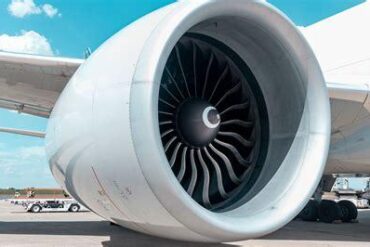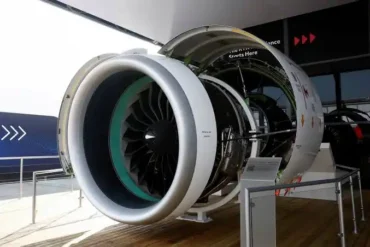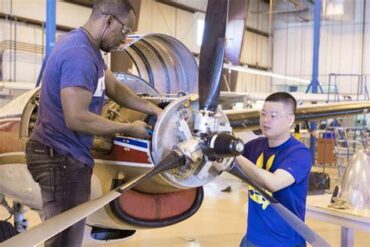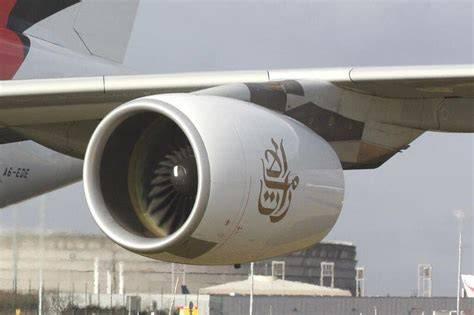
Emirates has committed $300 million to expand the Emirates Engine Maintenance Centre (EEMC) in Dubai, a move that will pull a significant share of specialized engine repair work away from external suppliers and into the airline’s own engineering operation. Under an agreement announced on May 14, 2026, GE Aerospace is supplying the technical consultancy, training, and knowledge transfer needed to establish comprehensive piece-part component repair capabilities for the GE90 engines powering Emirates’ Boeing 777 fleet and the Engine Alliance GP7200 engines fitted to part of its Airbus A380 fleet. The investment is less about adding floor space than about shifting the boundary between what Emirates fixes itself and what it sends out to engine manufacturers and specialist repair shops.
Emirates Brings GE90 and GP7200 Piece-Part Repairs Under Its Own Roof
The distinction between a module swap and a piece-part repair sits at the heart of the program. Removing an engine, replacing a module, and returning the powerplant to service is a well-established routine that most large airlines handle in-house or contract out on predictable terms. Piece-part repair operates at a finer level: once an engine is disassembled, individual components and sub-assemblies must be inspected against approved technical data, repaired through tightly controlled processes, and released only after verification. That work has historically sat with OEMs and a small group of specialist repair shops, partly because it demands proprietary process specifications and tooling, and partly because the regulatory approvals behind those processes are expensive to obtain and maintain.
Emirates already runs a substantial engine maintenance operation, which is why the new capability represents an extension rather than a start-up. According to Emirates Engineering, the EEMC has operated since 2014 and can complete 250 to 300 full-engine shop visits annually, handling induction, module replacement, cleaning, inspection, minor repairs, and recertification for both the GE90-115B and the GP7200. The facility’s scale is reinforced by an engine test cell occupying 258,334 square feet (24,000 square meters), equipped with six engine workstations and capable of testing engines producing up to 150,000 pounds (66,679 kg-force) of thrust. That test cell is certified by the UAE’s GCAA, EASA, and the FAA, and it accommodates both engine types, meaning Emirates can already validate the GE90 and GP7200 after maintenance without exporting that step to an outside provider.
Why GE Aerospace Is Helping Emirates Build Capability That Could Rival Its Own
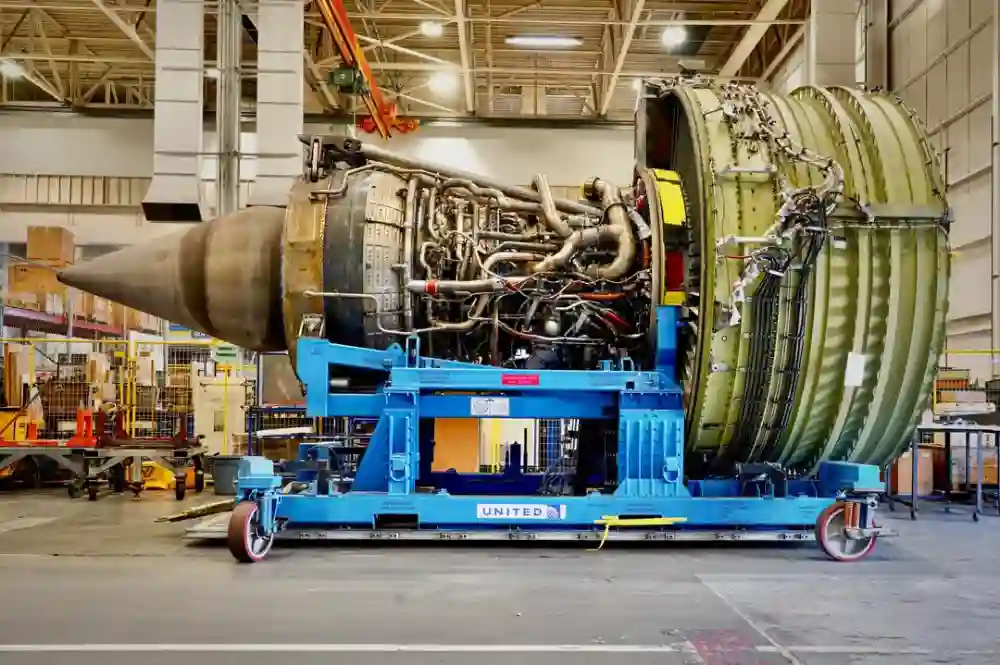
The partnership raises an obvious question: why would an engine manufacturer hand technical knowledge to a customer that intends to reduce its dependence on outside repair providers? The answer lies in what Emirates is actually buying. GE Aerospace is helping the airline establish repair processes rather than delivering equipment and departing. According to Aviation Week, the May 14 agreement supports the $300 million EEMC expansion and the development of piece-part repair capability for the GE90 and Engine Alliance GP7200. That framing puts GE in the role of process architect and trainer, transferring the specifications, work instructions, quality disciplines, and workforce competencies that make a repair acceptable to regulators.
The scope of what must be built around a single repaired component is easy to underestimate. A part has to be inspected against approved data, repaired with the correct consumables and tooling, and checked before release to service. Those steps require trained technicians, calibrated equipment, a documented quality system, and ongoing regulatory oversight. Emirates already possesses much of that surrounding infrastructure through its engine shops, technical services, and test facility. GE’s contribution covers the gap between disassembly and final test, where the most specialized and least commoditized work sits.
GE’s commercial logic is not as paradoxical as it first appears. Engine manufacturers earn heavily from aftermarket repair and from controlling the technical data that governs it. Training a high-volume operator to perform defined repair processes can still generate revenue through consultancy, approved materials, licensed data, and parts sales, while reducing warranty friction and keeping a strategically important customer engaged. The arrangement also differs from transferring full authority: Rolls-Royce, for instance, is retaining module repair capability within its global network even as Emirates prepares to handle Trent 900 fan-case repairs from 2027. The practical outcome is a negotiated split of tasks rather than a complete severing of ties.
The Economics of Keeping Widebody Engine Components in Dubai
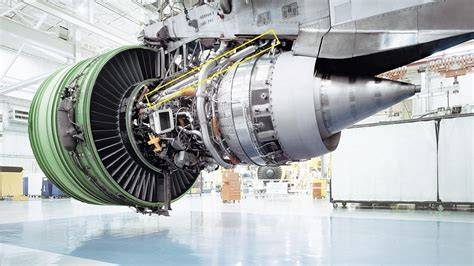
For Emirates, the immediate commercial prize is control over the maintenance cycle. A component sent to an outside supplier passes through several organizations before it returns: it is removed, packaged, transported, processed, returned, inspected, and installed again. Every handoff adds calendar time, freight and customs complexity, and cost, and every handoff introduces a dependency in a supply chain that is already intricate. Bringing piece-part repair inside the EEMC removes several of those stages and lets the airline schedule work around its own fleet requirements rather than a supplier’s queue.
The installed base makes the economics work. Emirates Engineering supports a fleet of more than 270 Boeing 777, Airbus A380, and Airbus A350 aircraft, and the GE90 and GP7200 power two of the airline’s most recognizable long-haul families. With 250 to 300 full shop visits a year and an average of 30 engines in process at any given time, the facility generates enough disassembled hardware to keep repair lines loaded. A steady internal workload is what allows a new capability to be developed and refined without depending on third-party customers for volume, and it gives Emirates a credible base for negotiating turnaround commitments with external providers as well.
Dubai South Extends Emirates’ Vertical Integration Strategy
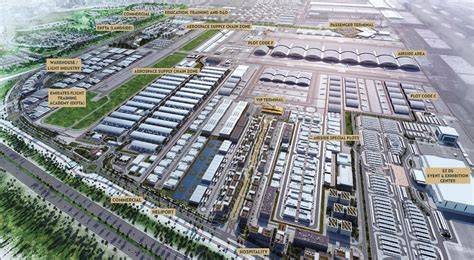
The engine program is one strand of a much larger engineering build-out. On May 18, 2026, four days after announcing the GE agreement, Emirates broke ground on a $5.1 billion engineering complex at Dubai South. The site will cover approximately 11.8 million square feet (1.1 million square meters) and include workshops, storage, logistics, office and training facilities, with a hangar complex designed to accommodate 28 widebody aircraft at once. Emirates expects the facility to become a major MRO center for the airline and potentially for the wider aviation industry, with opening targeted for 2030.
Aviation Week reported that the project follows the GE agreement and reflects Emirates Engineering’s strategy of expanding vertical integration, bringing more skills, infrastructure, parts production, and specialist capabilities under one roof. Read together, the two announcements describe a consistent direction: the airline wants more maintenance expertise and decision-making inside its own organization instead of sourcing every specialized task externally. The EEMC expansion supplies the engine repair capability, and Dubai South supplies the physical and human capacity to industrialize it.
GP7200 Work Sits Alongside Emirates’ Trent 900 Plans
The GP7200 is only part of Emirates’ A380 engine maintenance strategy because the airline also operates the Rolls-Royce Trent 900. In November 2025, Emirates and Rolls-Royce signed an agreement allowing Emirates to perform MRO on its own Trent 900 engines from 2027. Under that arrangement, Emirates will carry out fan-case repairs at a new facility, while Rolls-Royce retains module repair capability within its global network. Emirates confirmed the plan and cited its expectation of operating the A380 fleet into the 2040s as the rationale for building the capability.
The approach is consistent with the GE model: rather than take on every aspect of engine maintenance, Emirates works with each manufacturer to bring specific repair tasks in-house. Emirates is the world’s largest A380 operator, which gives it a far stronger incentive than most airlines to invest in specialist infrastructure for the type. Its long-term commitment to the A380 remains unusual given retirements elsewhere, and the airline is already undertaking major engineering work to keep dozens of the aircraft in service. Building A380-related capability in Dubai therefore has a longer payback horizon than it would for an operator planning near-term phase-out.
Could Emirates Emerge as a Third-Party Engine MRO Provider?
Emirates’ expanding maintenance capabilities could eventually support third-party MRO work, but that does not appear to be the primary objective. The airline has ample internal demand from hundreds of widebody aircraft and a growing list of maintenance tasks being brought in-house, and building capability around its own fleet gives it a stable workload while new repair processes mature. Any external business would most likely follow proven internal performance rather than lead it.
The more consequential development for now is the push toward greater vertical integration. The $300 million EEMC expansion, the GE Aerospace partnership, and the planned Trent 900 capability all point toward the same goal: retaining more maintenance expertise and decision-making inside the airline rather than relying on outside suppliers for every specialized task. Dubai South takes that approach further by adding capacity for 28 widebody aircraft alongside workshops, logistics, training, and other engineering facilities. Together with the expanded EEMC, it should give Emirates considerably more room to carry out maintenance within its own network.
The next few years will determine how much of that work Emirates can realistically absorb. The GE partnership must translate into approved repair processes, documented quality systems, and trained personnel, and the first Trent 900 induction is expected in 2027. If those programs perform as planned, Emirates should gain tighter control over component availability and repair turnaround, with fewer parts traveling to external MRO providers.
For passengers, the difference will be largely invisible. An Emirates A380 or Boeing 777 will look the same whether its engine component was repaired in Dubai or elsewhere. For an airline operating such a large long-haul fleet, that control carries real operational value. Emirates is unlikely to stop working with engine manufacturers altogether, but it is clearly trying to reduce its dependence on them for routine and specialized maintenance. The GE agreement could therefore be less about replacing outside suppliers outright and more about deciding exactly which parts of the maintenance process Emirates wants to own itself.