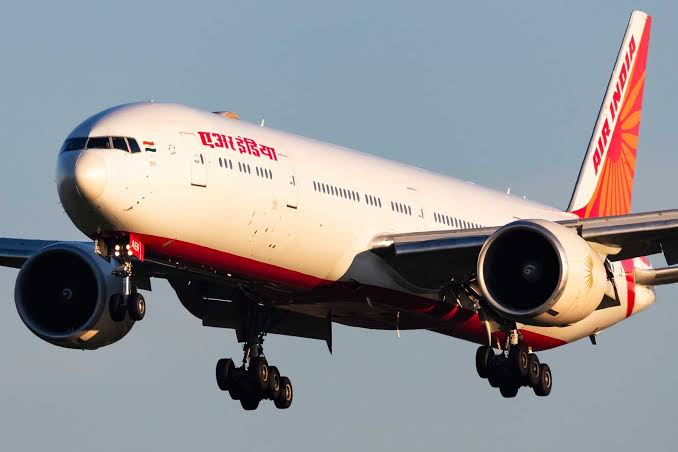
Air India will launch its first Mumbai–Toronto service on Wednesday, October 28, 2026, adding a westbound stop at Rome Fiumicino Airport (FCO) that stretches the total block time beyond 20 hours. The Star Alliance member, operating as India’s largest international airline, remains the only Indian carrier flying long-haul to North America and controls roughly 50–60% of combined seat capacity in the India–North America market. The new link arrives four days from now, as airlines worldwide switch to Northern Hemisphere winter schedules and Air Canada’s complete withdrawal from Toronto–Mumbai earlier this year leaves the market open.
Mumbai–Toronto Schedule: Rome Stop, Nonstop Return, Three Weekly Flights
Until recently, the route appeared in airline systems as a nonstop in both directions. The latest schedule reveals that only the return leg will operate without interruption. Westbound, flight AI193 leaves Mumbai at 12:25 AM local time, reaches Rome at 5:30 AM, departs FCO at 7:00 AM, and lands at Toronto Pearson International Airport (YYZ) at 11:00 AM. With the layover folded in, the total block time exceeds 20 hours. Flight AI192 returns nonstop from Toronto at 1:30 PM, arriving in Mumbai at 2:10 PM the following day.
The routing is dictated by geopolitics rather than aircraft performance. Air India must avoid Russian, Iranian, and Pakistani airspace, and its existing Mumbai–New York JFK and Mumbai–Newark services already refuel and change crew at Fiumicino for the same reason. Strong westbound headwinds compound the problem, further eroding payload and range margins on a sector that crosses two continents before it even reaches Canadian soil.
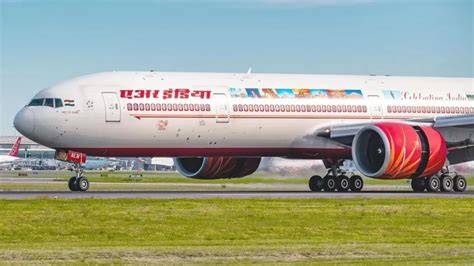
Air India Deploys the 328-Seat Boeing 777-300ER With Upgraded Cabin
The airline will fly its 328-seat Boeing 777-300ER, featuring the carrier’s upgraded cabin. Eight first-class suites with privacy doors sit in a 1-2-1 configuration, followed by 40 lie-flat business-class seats, also in 1-2-1. Economy holds 280 seats arranged mainly 3-4-3 with 31 inches of seat pitch. Three weekly frequencies fall on Wednesdays, Fridays, and Sundays, a pattern that suits the visiting-friends-and-relatives corridor and the student traffic that has long underpinned Toronto–Mumbai demand.
Air Canada Exit Leaves Toronto–Mumbai Market Open
Booking data shows more than 1.2 million round-trip passengers traveled between the two cities between June 2025 and May 2026. Toronto ranks third among Mumbai’s North American markets, behind New York JFK with 225,000 passengers and San Francisco with 143,000. Air Canada flew the route four times weekly with its Boeing 787-9 Dreamliner until March this year. The Canadian carrier ran the service via London Heathrow Airport (LHR) on a fifth-freedom basis after Russian overflight bans made nonstop operations unviable, having previously operated nonstops from 2017 to 2020. That Heathrow-connection proved unsustainable, prompting full withdrawal.
Air Canada still operates daily Delhi–Toronto flights, with the westbound leg routed through either Fiumicino or Vienna International Airport (VIE). Air India’s new Mumbai service fills a vacuum rather than contesting an incumbent.
Air India’s Wider Winter North America Network
Cirium data shows Air India operating more than 1,300 flights between India and North America this winter, offering around 436,611 round-trip seats. The airline had planned to resume nonstop Delhi–New York JFK and Delhi–Newark services with its Airbus A350-900, but the latest schedule keeps both on the Fiumicino stopover. Most of the carrier’s North American departures from India will involve a stop this winter. The exceptions are Delhi–San Francisco, up to five weekly with the 777-300ER, and Delhi–Vancouver, daily with the same aircraft type.
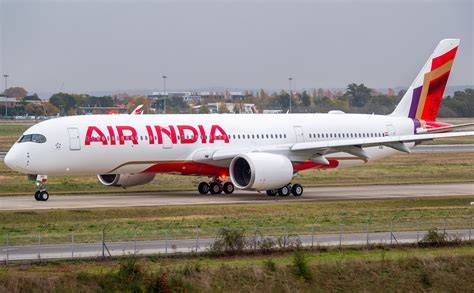
What the 20-Hour Westbound Journey Means for Passengers
For travelers, the westbound routing adds a fuel stop, an immigration-free transit formalities check, and a cabin-crew change at one of Europe’s busiest hubs. Every factor that lengthens the journey also narrows the margin Air India has over connections through Europe or the Gulf. Nonstop eastbound, the carrier holds a structural advantage no competitor can match, since the return leg faces no geopolitical detour.
The launch also underscores a broader pattern: ultra-long-haul flying between India and North America is no longer purely a range problem but an airspace problem. Until corridors reopen, one-stop services like Mumbai–Rome–Toronto will define how the market is served, and Air India, with its unmatched share of capacity, will keep setting the terms.