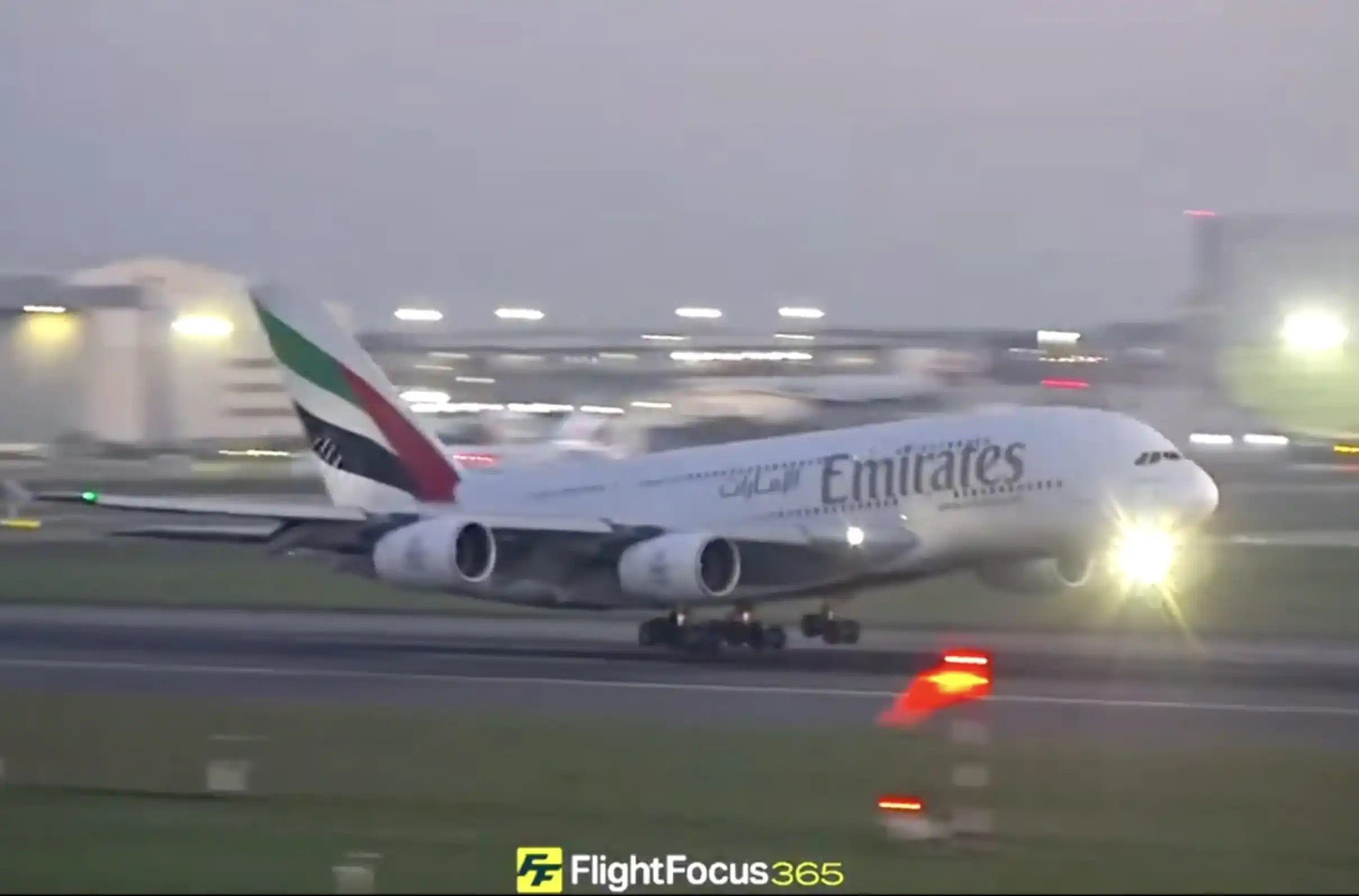
On the afternoon of December 31, 2025, what began as a routine long-haul journey from London Heathrow (LHR) to Dubai International Airport (DXB) turned into an unexpected mid-air incident for Emirates Flight EK2, operated by a nine-year-old Airbus A380-800 registered as A6-EUF. The aircraft, known for its massive double-decker design and flagship status in Emirates’ fleet, encountered a landing gear door malfunction that forced it to circle the skies of southeast London for nearly two hours before making a safe return to Heathrow.
A Routine Departure Turns into an Aerial Anomaly
Flight EK2 was originally scheduled to depart at 1:40 PM but was delayed, eventually taking off at 2:32 PM local time. Shortly after liftoff, witnesses on the ground noticed the aircraft flying with its landing gear doors stuck open, an unusual and alarming sight for such a large airliner. Video footage captured by Big Jet TV shows the A380 ascending while its gear doors remained visibly open, a detail that immediately pointed to an issue that couldn’t be ignored by the flight crew.
According to Flightradar24 data, the aircraft paused its climb at around 6,000 feet, eventually reaching only 10,000 feet while performing extended holding patterns over London suburbs. This maneuver wasn’t simply procedural — it was a calculated decision made by the crew to manage fuel weight, a crucial factor for a safe return.
Fuel Dumping Not An Option – Burning Off Fuel Over London
The Emirates A380 was fully fueled for a nearly seven-hour journey to Dubai. With a maximum takeoff weight (MTOW) of 1,268,000 pounds (575,000 kg) and a maximum landing weight (MLW) of 851,000 pounds (386,000 kg), attempting to land without reducing weight could pose serious structural risks to the airframe and landing gear assembly.
Given these parameters, the aircraft circled for approximately 90 minutes, allowing it to burn off sufficient fuel to reach a safe landing weight. This critical phase was visible to thousands of aviation enthusiasts and concerned onlookers alike — at one point, the flight became Flightradar24’s most-tracked live flight, amassing over 5,000 viewers.
The need to remain airborne while addressing the gear issue added complexity to the flight crew’s responsibilities, as they had to troubleshoot the gear door malfunction while coordinating with Heathrow air traffic control and Emirates operations.
A Safe Return Amid Global Attention
After completing the prolonged holding pattern, Flight EK2 made a safe landing back at London Heathrow almost two hours after its initial departure. No injuries were reported, and all passengers and crew disembarked safely. Emirates promptly issued a statement:
“Emirates flight EK2 departed London Heathrow for Dubai on December 31, 2025, after 1.40 pm as scheduled, but returned to LHR shortly after take-off due to a technical fault. The flight landed back in LHR and passengers and crew were safely disembarked. All passengers will be rebooked to depart on future Emirates flights from LHR.”
The Aircraft: A6-EUF – Workhorse of the Sky
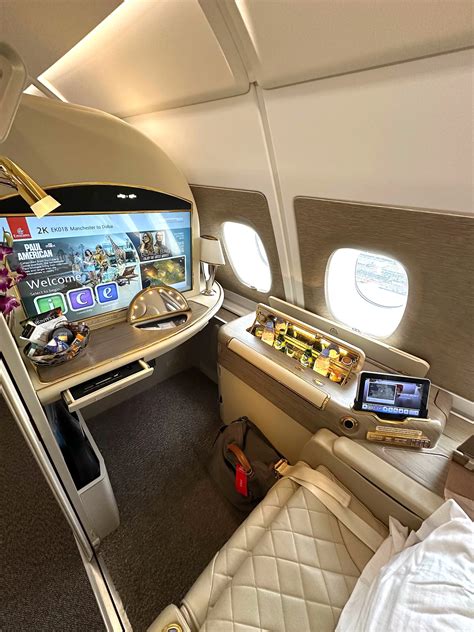
The aircraft involved, A6-EUF, has been part of the Emirates fleet since October 2016. Over its service life, it has accumulated over 34,000 flight hours and logged more than 4,000 flight cycles. Configured to carry 484 passengers, it boasts 14 first-class suites, 76 business class seats, 56 premium economy, and 338 economy class seats, representing the airline’s commitment to ultra-high-capacity luxury air travel.
While landing gear malfunctions are rare, they are not unprecedented. The complexity of the A380’s gear system, which includes 20 tires and numerous hydraulic components, makes it one of the most sophisticated gear assemblies in commercial aviation. When gear doors fail to close properly, it could indicate issues with hydraulic actuators, proximity sensors, or locking mechanisms.
Emirates, as the world’s largest operator of the A380, maintains rigorous maintenance and inspection routines. At present, A6-EUF remains grounded at LHR, awaiting technical assessment and potential repairs. Industry experts anticipate the aircraft will likely return to service within days, barring the discovery of deeper mechanical faults.
Emirates’ Confidence in the A380 Fleet Remains Unshaken
Despite the incident, Emirates’ commitment to the A380 remains firm. The Dubai-based airline currently operates nearly 100 active A380s, with plans to increase that number to 110 by the end of 2026. Although many global carriers have retired their A380s due to post-pandemic fleet restructuring, Emirates continues to invest in its superjumbo fleet, recognizing the aircraft’s popularity and capacity advantages on trunk routes like Dubai–London.
In fact, the Dubai–London route is one of the most competitive and high-traffic long-haul corridors in the world. Emirates’ A380s offer unmatched onboard experiences, from shower spas in first class to an onboard lounge for premium passengers. Such amenities set the airline apart and cater to discerning travelers, especially on long-haul flights.
The Technical Reality of Landing Gear Failures
Aircraft landing gear systems are governed by redundant hydraulics, electrical controls, and mechanical failsafes, designed to handle partial failures or malfunctions. When a gear door fails to close post-retraction, it introduces drag, reduces fuel efficiency, and may signal underlying faults in the retraction system.
In the case of A6-EUF, the failure did not inhibit gear extension or retraction, but rather the gear door closure mechanism. Flying with gear doors open — though not catastrophic — can increase aerodynamic drag and introduce operational uncertainties. The crew’s decision to return to the departure airport rather than continuing onward to Dubai reflects standard safety protocols in such scenarios.
These systems are meticulously tested during maintenance checks, and Emirates has one of the highest reputations for safety and reliability globally. Given the aircraft’s age and cycle count, this incident may prompt an inspection of similar systems across the fleet.
Passenger Experience: Calm Amidst the Delay
While many passengers were likely unaware of the technical specifics, a circling aircraft over a major city rarely goes unnoticed. Emirates’ cabin crew training plays a pivotal role in keeping passengers calm and informed during such operational events. No passenger reports of panic or unrest emerged, a testament to both communication and professionalism onboard.
The rebooking of affected passengers will likely involve same-day or next-day departures, given Emirates’ high frequency of flights between LHR and DXB. Business travelers, tourists, and transit passengers may have experienced delays, but no significant disruption to Emirates’ broader network was reported.
Conclusion: A Safe Outcome, A Minor Setback
The return of Emirates Flight EK2 to Heathrow due to a landing gear door malfunction highlights both the complexities of modern aviation and the exemplary training and procedures followed by airline crews. While the sight of an A380 circling above a major city may raise concern, this incident is a reminder of how redundancy, professionalism, and engineering converge to protect lives in the sky.
With the aircraft safely on the ground and no injuries reported, Emirates can now turn its attention to diagnosis and repair, ensuring that A6-EUF will soon resume service. In the meantime, the story of EK2 will remain a noteworthy chapter in the operational history of the A380 — a titan of the skies that, even in its challenges, commands global attention.