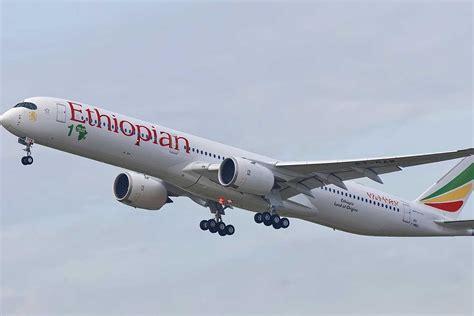
Ethiopian Airlines, Africa’s leading flag carrier, has once again made headlines—not for a long-haul intercontinental expansion, but for a record-breaking short-haul route. On July 2, 2026, the airline will launch a new service between Geneva and Lyon, covering a mere 53 nautical miles (98 kilometers) each way. This will not only become Europe’s shortest Airbus A350-operated flight, but also the continent’s briefest scheduled widebody operation, signaling a strategic, if unconventional, move in the airline’s evolving European footprint.
Strategic Expansion: Ethiopian Airlines Adds Lyon to its Growing French Portfolio
Ethiopian Airlines’ entrance into Lyon–Saint Exupéry Airport (LYS) marks a notable development in the airline’s continued European growth. Traditionally, its French operations were centered on Paris Charles de Gaulle (CDG), but that began to shift with the 2019 addition of Marseille-Provence Airport (MRS). The upcoming Addis Ababa–Geneva–Lyon service will make Lyon the third French destination in its network.
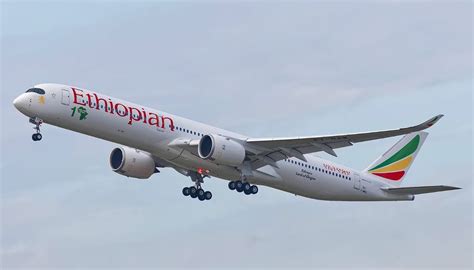
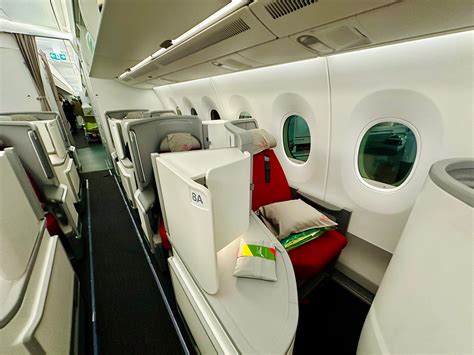
Operating thrice weekly, the route will depart from Addis Ababa Bole International Airport (ADD) to Geneva Airport (GVA) before proceeding on the ultra-short hop to Lyon. Ethiopian will deploy its Airbus A350-900, a widebody aircraft designed for long-haul luxury, on this route. The A350 is configured with 30 lie-flat business class seats and 318 economy class seats, offering far more capacity and comfort than any aircraft typically used for such a short intra-European leg.
Breaking Records: Europe’s Shortest Scheduled A350 Flight
Clocking in at just 53 nautical miles, the Geneva–Lyon sector slices through the Alps in a flight that could barely offer enough time to reach cruising altitude. This route will dethrone other short-haul widebody routes across the continent, notably beating the Milan–Zurich service, which was poised to claim the title.
What makes this even more remarkable is that this record-setting flight utilizes a full-sized widebody aircraft, something rarely seen for such short sectors. Ethiopian’s A350s are typically associated with intercontinental missions, flying between Africa and cities in Europe, Asia, and the Americas. Yet on this route, passengers will experience this long-haul comfort on a hop shorter than the average commuter train ride.
Timetables and Connectivity: A 45-Minute Hop That Powers a 24-Hour Network
The outbound Geneva to Lyon segment is scheduled for a 7:30 AM to 8:15 AM slot, with the return Lyon to Geneva set for 7:20 PM to 8:05 PM. These 45-minute block times reflect not just taxiing and ground handling, but the peculiarities of flying a large aircraft on such a short route.
But why go through the effort of operating such an odd pairing? The answer lies in hub optimization. Ethiopian’s strategic hub at Addis Ababa Bole Airport functions as the nerve center of pan-African connectivity. Most inbound flights from across Africa arrive in the evening, while outbound long-haul flights to Europe, Asia, and North America are scheduled to depart shortly after midnight. This rhythm requires European return legs to arrive in Addis by early morning to connect smoothly with African destinations.
To achieve this, Ethiopian positions its aircraft in Europe during the day. Instead of idling a widebody aircraft in Geneva for over 12 hours, it uses the Geneva–Lyon–Geneva tag flight to generate operational efficiency and marginal revenue, while also adding Lyon to its portfolio. This keeps the aircraft productively utilized and aligns with Ethiopian’s high-frequency, hub-driven business model.
Why Lyon? A City of Opportunity, Not Volume
Lyon isn’t a high-traffic destination for Ethiopian Airlines—at least not yet. Booking data from the year ending October 2025 suggests that demand from Lyon alone couldn’t justify a nonstop flight. However, by bundling Lyon with Geneva, Ethiopian gains market entry while mitigating risk.
The real strategic value lies in tapping secondary traffic flows to cities like:
- Cape Town
- Johannesburg
- Kinshasa
- Douala & Yaoundé
- Seychelles & Zanzibar
These are key African business and leisure markets that lack direct service from Lyon. Ethiopian’s model of one-stop connectivity, supported by its growing A350 fleet of 22 aircraft, opens up seamless travel options for these underserved corridors.

No Fifth Freedom Rights: A Missed Commercial Opportunity?
Despite the buzz around the Geneva–Lyon flight, there is one crucial caveat: lack of fifth freedom rights. Ethiopian Airlines cannot sell tickets solely between Geneva and Lyon, effectively eliminating local traffic revenue between the two cities. This restriction is common in Europe and limits foreign carriers from exploiting intra-European markets without bilateral permissions.
This means that all passengers on this sector will either be en route to/from Addis Ababa or beyond, or possibly non-revenue repositioning. While that limits profitability on this leg, Ethiopian likely views it as a network enabler, not a revenue generator.
European Tactics: One-Stop Strategies as a Key to Expansion
Ethiopian Airlines has refined the art of the one-stop route in Europe. Besides Geneva–Lyon, the airline has leveraged similar structures across the continent. As of July 2026, its network includes one-stop routes like:
- Porto via Madrid (added in 2025 due to lack of Lisbon slots)
- Warsaw via Vienna (linked to Star Alliance synergies)
- Zurich via Milan Malpensa
Some cities are served on a standalone basis, including London Heathrow, Paris CDG, Rome Fiumicino, Frankfurt, and Brussels. These airports provide sufficient passenger volumes to sustain direct service. However, the one-stop model has allowed Ethiopian to test and tap niche markets while controlling operational costs.
This strategy mirrors practices used by other globally networked carriers such as Icelandair, which often grounds aircraft abroad for extended hours to align with hub schedules.
The Aircraft Advantage: A350-900 Leads the Way
With 22 units now in operation, the Airbus A350-900 has overtaken the Boeing 787-8 to become Ethiopian’s primary widebody aircraft. The A350 offers fuel efficiency, passenger comfort, and the operational flexibility to serve both ultra-long-haul flights and unconventional short sectors like Geneva–Lyon.
Its advanced avionics, lighter composite materials, and optimized cabin pressure have earned high marks among passengers and analysts alike. Ethiopian’s configuration ensures premium service with lie-flat business class beds, even on routes where such comfort is rarely necessary.
Conclusion: A Short Flight With Long-Term Vision
The Geneva–Lyon tag is not a novelty—it’s a tactical move by a carrier that has proven itself adept at turning geographic and regulatory limitations into advantages. Ethiopian Airlines is not chasing headlines; it is crafting a highly interconnected network, linking Europe’s secondary cities with Africa’s rising metros, using strategic stopovers, and capitalizing on fleet versatility.
With this shortest A350 route in Europe, Ethiopian once again signals that aviation innovation isn’t just about ultra-long-haul endurance—but also about knowing how to make the short hops count.