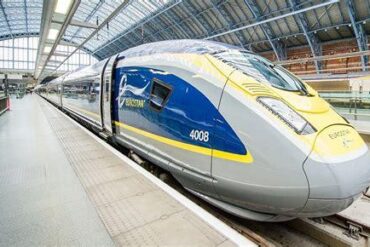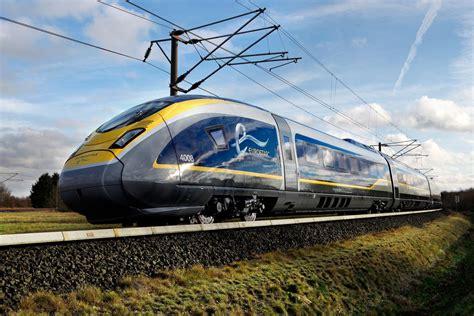
Eurostar is set to revolutionize cross-border transportation in Europe with its groundbreaking launch of direct high-speed trains from London to Frankfurt and Geneva in 2025. This bold expansion bridges the UK with key financial and cultural centers in Germany and Switzerland, signifying a strategic move to redefine how Europeans travel for business and leisure. Promising speeds that will complete the journey to Frankfurt in just five hours and to Geneva in under 5½ hours, Eurostar is not merely competing with air travel—it is rewriting the rules of international mobility.
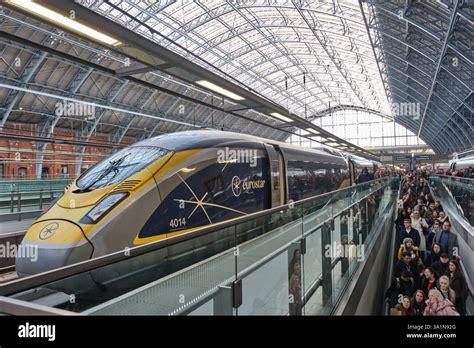
A Visionary Leap in European Rail Connectivity
For decades, Eurostar has been the backbone of high-speed travel from London to Paris, Brussels, and Amsterdam. But now, the company is forging new corridors of connection to continental Europe’s financial powerhouses. By extending its services to Frankfurt and Geneva, Eurostar responds to a clear demand: faster, greener, and more connected rail travel.
This development arrives at a pivotal time when environmental consciousness is transforming the travel industry. Eurostar Chief Executive Gwendoline Cazenave calls this moment “a new golden age of international sustainable travel,” recognizing that modern travelers are not just searching for speed—they’re seeking efficiency, comfort, and lower carbon footprints. Eurostar’s move taps into the surging preference for longer but more relaxed journeys, where the train becomes part of the travel experience, not just a means to an end.
Transforming Business and Leisure Travel Across Borders
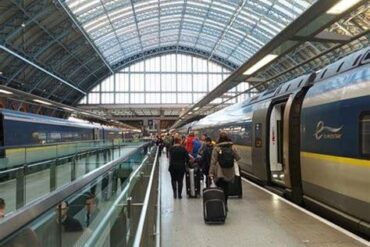
This expansion has deep implications for both business and leisure travelers. London, Frankfurt, and Geneva are all central nodes in Europe’s financial network. By connecting these hubs directly, Eurostar offers professionals a seamless, stress-free alternative to air travel. Unlike airports located miles from city centers, rail stations like London St Pancras, Frankfurt Hauptbahnhof, and Gare Cornavin in Geneva are embedded in the heart of the cities, shaving off precious hours in door-to-door travel.
For leisure travelers, the appeal lies in the panoramic routes, spacious seating, and reduced pre-departure procedures. Travelers will no longer have to contend with long airport security lines or restrictive baggage policies. Instead, they will enjoy a journey that blends luxury and landscape, allowing them to work, unwind, or simply enjoy the scenery.
New Trains, New Standards: Eurostar’s £1.7 Billion Investment
To support this ambitious expansion, Eurostar is investing £1.7 billion (AU\$3 billion) in a new fleet of 50 high-speed trains. This monumental upgrade demonstrates Eurostar’s long-term vision of creating a pan-European high-speed rail network that rivals airlines in speed and surpasses them in comfort and sustainability.
These new trains, expected to be operational by the early 2030s, are being designed with cutting-edge technology to offer:
- Reduced energy consumption
- Increased seating capacity
- Improved onboard connectivity
- Advanced noise insulation
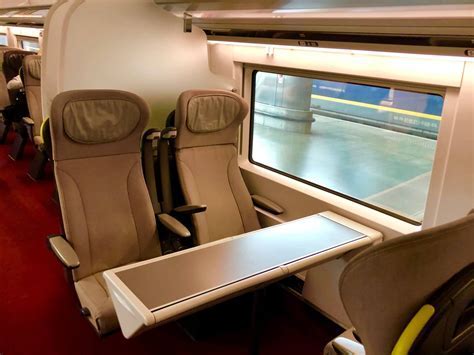
- Modernized interiors focused on traveler wellbeing
Even as the Frankfurt and Geneva lines are set to begin in 2025 using the current fleet, the introduction of this next-generation rolling stock will be a cornerstone of Eurostar’s competitive edge.
Navigating Routes and Strategic Stops: More Than Just A to B
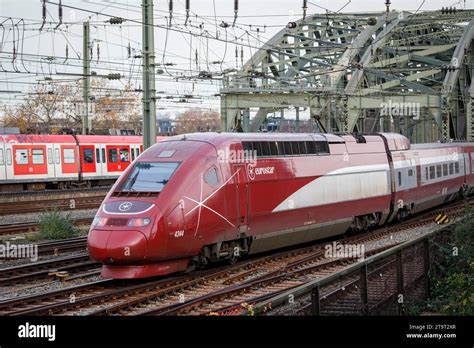
While Frankfurt and Geneva are the headline destinations, Eurostar has hinted at potential strategic stops en route. Destinations like Cologne are being evaluated as intermediary stations, a move that would cater to the business corridors between the Rhineland and the UK, as well as enhance regional tourism.
Such additions would not only broaden Eurostar’s passenger base but also maximize seat occupancy, making the routes financially sustainable and logistically sound. A London–Cologne–Frankfurt line could open doors for commuters, entrepreneurs, and students alike, further embedding rail travel into the fabric of European life.
Environmental Shift: Trains vs. Planes in a Changing World
The conversation around climate change has thrust the aviation industry under scrutiny, particularly short-haul flights, which are disproportionately high in carbon emissions per passenger-kilometer. Trains, by contrast, offer a carbon-efficient and scalable alternative. With direct connections to Frankfurt and Geneva, Eurostar empowers travelers to actively reduce their environmental impact without sacrificing convenience or time.
By offering journey times that are competitive with flights when accounting for airport transit, security, and boarding, Eurostar shifts the calculus in favor of trains. In fact, for many business travelers, the ability to work in peace with full Wi-Fi access and a table is a productivity boon unmatched by flying.
Business Implications: Time is Money, and Trains Are Earning It
The ability to travel between Europe’s financial centers without flying is a game-changer for industries that rely on frequent cross-border collaboration. In banking, legal, technology, and consulting sectors, time is money. The new Eurostar lines allow professionals to depart London in the morning, attend meetings in Frankfurt or Geneva, and return the same day, all without entering an airport.
This paradigm shift introduces greater flexibility into business travel planning. No more adjusting schedules to align with limited flight options. Trains offer hourly reliability, fewer weather-related delays, and a consistent passenger experience.

The Competitive Landscape: Rivals Approaching the Tunnel
As Eurostar expands, new competition looms. Its current monopoly on the Channel Tunnel may soon be challenged by Virgin Group, Evolyn (a French-Spanish rail venture), and UK-based Gemini Trains. These companies are exploring ways to enter the lucrative cross-channel market, promising more services and price competition.
The UK-Switzerland Memorandum of Understanding, signed earlier this year, provides diplomatic momentum and political will to enhance rail cooperation between nations. It lays the legal and logistical groundwork for not only Eurostar’s new routes but also potential rival services that may one day offer parallel options between Britain and Central Europe.
A Cultural and Economic Realignment Through Rail
Beyond the practical and environmental aspects, Eurostar’s expansion signals a cultural shift. High-speed rail is more than a transport mode—it’s a symbol of European integration and a driver of regional development. As London strengthens its ties with Frankfurt and Geneva, new opportunities in education, tourism, and entrepreneurship are bound to follow.
Cultural exchange is accelerated when cities are more easily connected. Students heading to universities in Geneva, tourists eager to explore the Rhine Valley, or Londoners seeking a weekend among the Alps, will find new travel patterns emerging—less constrained by airports, more open to discovery by rail.

The Long View: Eurostar and the Future of Mobility
With these new routes, Eurostar is not merely expanding service—it is laying the foundation for the future of European travel. As climate policies tighten, and public demand for eco-conscious alternatives increases, the role of high-speed rail will only grow more central. Governments are already signaling their support with infrastructure investments, cross-border cooperation, and environmental subsidies.
In a world where speed, sustainability, and comfort must coexist, Eurostar’s new London-Frankfurt and London-Geneva services are harbingers of what’s to come. More seamless connections, less carbon-intensive travel, and increased competition are converging to offer passengers a better way to move across the continent.
Final Tracks: A Turning Point in European Travel
As the countdown to 2025 continues, Eurostar’s initiative stands as a landmark moment in transportation history. Direct high-speed rail from London to Germany and Switzerland not only reshapes logistics—it reshapes expectations. The idea that one can have breakfast in London, lunch in Frankfurt, and dinner in Geneva is no longer a fantasy—it’s the new reality of European travel.
Whether for work or for wanderlust, passengers will soon be able to board a train in the UK and arrive in the heart of Central Europe, all without leaving the ground. It’s not just a new route—it’s a new way of thinking about distance, movement, and the future of travel.