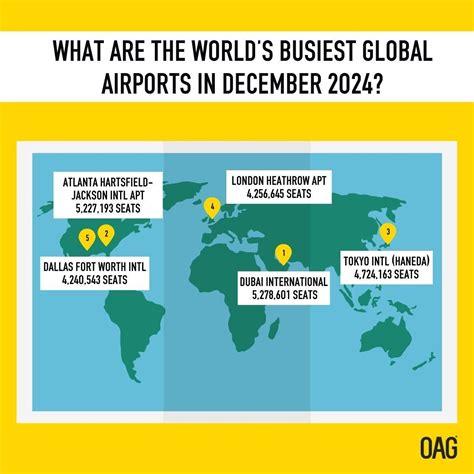
The race to become the world’s busiest airport is entering a fascinating new phase. For decades, the title has been dominated by enormous American hubs, first Chicago O’Hare and eventually Hartsfield-Jackson Atlanta International Airport. But the aviation landscape of 2036 is unlikely to look much like the one we know today. Passenger demand is expanding fastest in several emerging markets, airlines are ordering aircraft on an extraordinary scale, and airports across Asia and the Middle East are building infrastructure designed for traffic volumes that would have seemed almost unimaginable a generation ago.
In 2025, Hartsfield-Jackson Atlanta International Airport (ATL) remained firmly at the top, handling 106.3 million passengers. Dubai International Airport followed with 95.2 million, while Tokyo Haneda reached 91.7 million. Shanghai Pudong, Dallas/Fort Worth, Istanbul, Guangzhou Baiyun, Denver and several other giants were packed surprisingly close together. With seven airports already above 82 million annual passengers, the difference between being first and being seventh is no longer enormous.
That compression makes the next decade particularly difficult to predict. Atlanta has the strongest starting position, but Istanbul has perhaps the strongest combination of growth and available capacity. Dubai has an extraordinary new airport waiting in the wings, while Shanghai, Guangzhou and Delhi are benefiting from powerful regional demand. The crucial question is therefore not simply which airports are growing fastest today. It is which airports can concentrate that growth into a single facility by 2036.
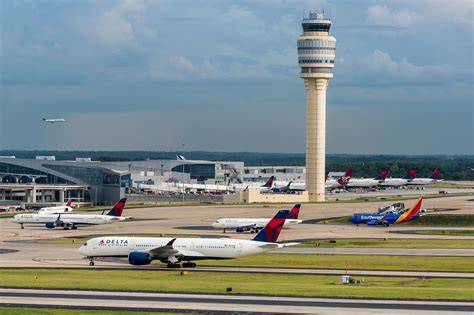
Atlanta Has Been the Airport to Beat
The historical dominance of American airports provides important context for the coming battle. Chicago Midway was the world’s busiest airport through much of the 1950s, before Chicago O’Hare took over as commercial aviation entered the jet age. O’Hare subsequently remained at or near the top for decades, reflecting the enormous scale of the United States domestic aviation market and Chicago’s importance as a national connecting hub.
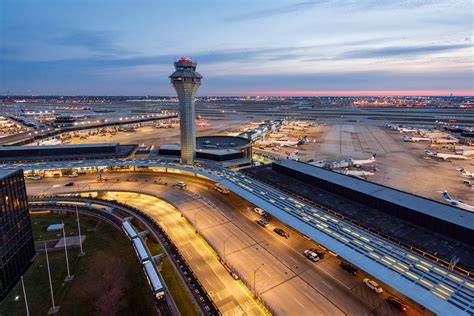
Atlanta eventually ended Chicago’s long reign. In 1998, ATL handled 73.5 million passengers and moved into first place. Apart from the extraordinary disruption caused by the COVID-19 pandemic in 2020, Atlanta has remained the world’s busiest airport virtually every year since. For modern aviation, ATL has become almost synonymous with the busiest-airport title.
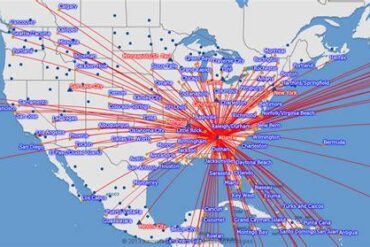
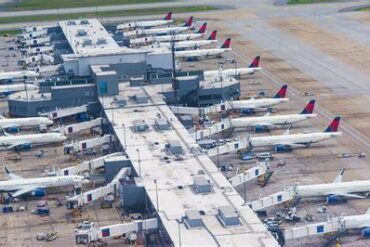
The reason for Atlanta’s success is not difficult to understand. Delta Air Lines has built one of the world’s most powerful connecting hubs there, while Atlanta’s geographic position gives the airport access to an enormous population within a few hours’ flying time. Its highly coordinated bank structure allows large numbers of passengers to connect through the airport every day. Importantly, Atlanta does not depend exclusively on international traffic. Its huge domestic market provides a foundation that many international connecting hubs cannot replicate.
That advantage remains substantial in 2026. ATL handled 106.3 million passengers in 2025, approximately 11 million more than Dubai and more than 20 million ahead of Dallas/Fort Worth. Even modest growth would keep Atlanta extraordinarily difficult to overtake. At an average annual growth rate of only 1.5%, ATL could reach approximately 125 million passengers by 2036.
Yet Atlanta’s recent numbers also reveal why the crown is no longer guaranteed. Its 2025 passenger total was still 3.8% below its 2019 record of 110.6 million. Domestic traffic was responsible for virtually all of that shortfall. Domestic passengers fell from 97.9 million in 2019 to 91.4 million in 2025, while international traffic actually increased from 12.7 million to 14.9 million.
This distinction matters because international aviation is growing particularly strongly in markets outside the United States. Atlanta can certainly regain its previous domestic traffic and continue expanding, but its competitors are sometimes starting from markets with substantially higher underlying growth rates.
Atlanta’s Infrastructure Gives It More Time
Atlanta is not simply waiting for its competitors to catch up. The airport has committed to an approximately $11.5 billion long-term capital program that includes improvements across its terminal and airfield system. Planned projects include widening Concourse D, upgrading the Plane Train, increasing parking capacity and adding or improving gates and other infrastructure.
The objective is to support approximately 125 million passengers annually. That figure is important because it closely matches the level Atlanta could reach through relatively moderate growth over the next decade. The airport therefore has a credible infrastructure pathway for remaining among the world’s busiest airports rather than being squeezed by physical constraints.
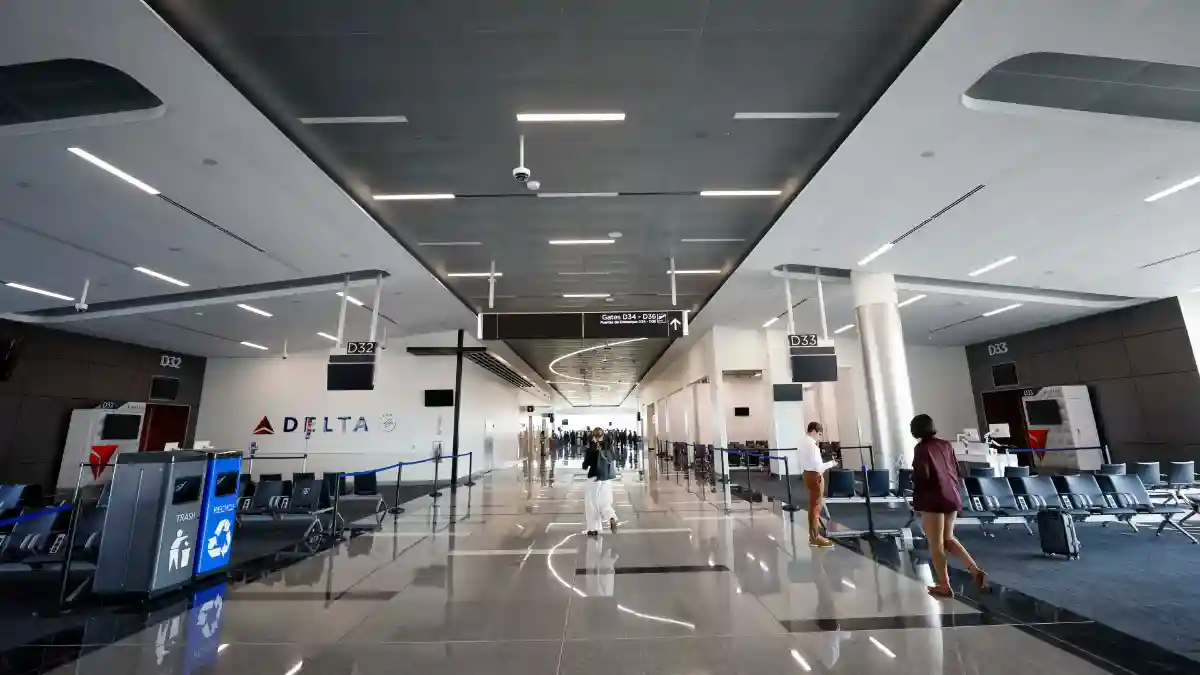
There is also a strategic advantage in Atlanta’s ability to absorb connecting traffic efficiently. An airport does not become the world’s busiest merely because millions of people live nearby. It needs airlines willing to schedule huge numbers of flights, enough gates and runways to operate them, and a network capable of continuously feeding connecting passengers into the system.
That is where Atlanta remains exceptionally difficult to challenge. The airport starts the 2036 race with more than 106 million passengers, a deeply established hub carrier and a large domestic market. For another airport to take first place, it would probably need not merely to grow faster than Atlanta but to grow dramatically faster.
Dubai Is Building Beyond Dubai International
If Atlanta represents the strength of an established aviation machine, Dubai represents the strategy of building an entirely new one.
Dubai International Airport, or DXB, handled 95.2 million passengers in 2025, putting it comfortably in second place. More importantly, its recovery has been considerably stronger than Atlanta’s when measured against pre-pandemic traffic. Dubai’s 2025 passenger total was 10.2% above its 2019 level, while Atlanta remained below its previous peak.
The gap between the two airports has therefore narrowed dramatically. In 2019, Atlanta was roughly 24 million passengers ahead of Dubai. By 2025, the difference had fallen to approximately 11 million. If DXB were the only airport involved, it would be reasonable to argue that Dubai could overtake Atlanta relatively soon.
But that is not the real story.
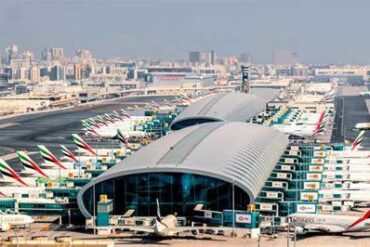
Dubai is preparing for the eventual transfer of its aviation center of gravity to Al Maktoum International Airport (DWC). The project is designed on a scale that makes today’s busiest-airport rankings look almost modest. Dubai Airports has outlined an expansion featuring five runways and an initial capacity of approximately 150 million passengers annually, with an ultimate ambition of around 260 million.
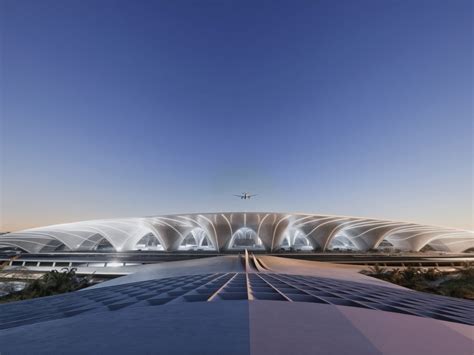
That capacity gives Dubai something Atlanta does not possess to the same degree: a planned infrastructure ceiling far beyond the traffic it currently handles. If the transfer from DXB to DWC proceeds smoothly and Dubai’s airlines continue expanding, the city could eventually operate an airport capable of handling substantially more than 140 million passengers annually.
The transition itself is the major uncertainty. Dubai does not simply need to build DWC. It needs to move one of the world’s largest aviation operations from an existing global hub to a new airport without creating years of inefficiency. Emirates’ network, connecting schedules, ground infrastructure and passenger flows all have to work together.
Geopolitical conditions also matter. The Middle East is one of the world’s most strategically important aviation regions, but it is also unusually exposed to airspace restrictions and regional instability. Disruptions in 2026 demonstrated how quickly those factors can affect traffic. Dubai’s long-term potential remains enormous, but the airport’s 2036 position will depend partly on how resilient international connecting demand remains.
Istanbul Could Be the Biggest Threat to Atlanta
Among all the candidates, Istanbul Airport (IST) arguably has the most convincing case for becoming the world’s busiest airport by 2036.
The airport handled 84.4 million passengers in 2025, a 5.5% annual increase and an extraordinary 61.8% increase compared with 2019. That is remarkable considering that Istanbul Airport only fully assumed its role as the city’s principal hub in 2019.
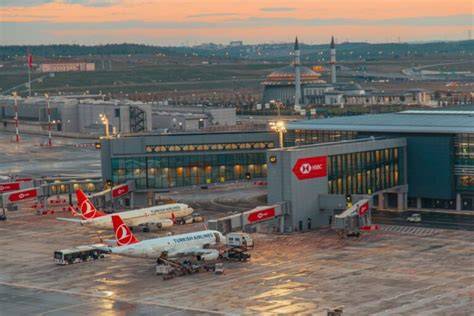
The airport’s growth is closely tied to Turkish Airlines, whose network has expanded into one of the world’s largest. Istanbul’s location between Europe, Asia, Africa and the Middle East gives the carrier an exceptionally useful geographical platform. Rather than depending primarily on one domestic market, Turkish Airlines can collect connecting passengers from an enormous geographic area.
In 2025, Turkish Airlines carried 92.6 million passengers across its network, representing 8.8% growth from the previous year. The airline has continued expanding during 2026, carrying approximately 54 million passengers during the first seven months, almost 6% more than during the corresponding period.
The fleet strategy is even more significant. Turkish Airlines has committed to hundreds of new aircraft, including major Airbus orders and subsequent agreements involving Boeing 787 Dreamliners and 737 MAX aircraft. The carrier has also considered additional widebody aircraft such as the Boeing 777-9 and Airbus A350-1000.
The scale of these commitments suggests that Istanbul is not simply benefiting from temporary post-pandemic growth. Turkish Airlines is attempting to build a much larger global network over the next decade. Its longer-term ambitions have included a fleet approaching 850 aircraft, compared with roughly 559 today.
If IST maintains approximately 5% annual passenger growth from its 2025 level, traffic would reach roughly 145 million passengers by 2036. At 6% annual growth, the number could approach 160 million.
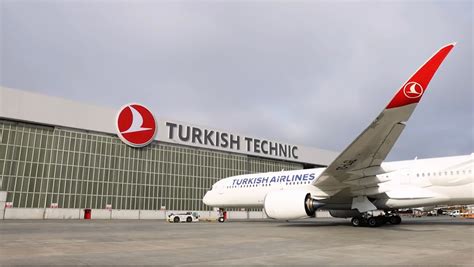
The airport itself provides room for this expansion. Istanbul Airport is ultimately designed for approximately 200 million passengers annually, supported by a huge terminal complex and six runways. That capacity is perhaps the most important part of the entire forecast.
An airport can have enormous demand and still fail to become the world’s busiest if it cannot physically accommodate that demand. Istanbul does not currently appear to have that problem. Its infrastructure was conceived around a scale that allows the Turkish Airlines network to keep growing without immediately running into a hard ceiling.
That makes IST different from several major Chinese and Indian airports. Those cities may have larger total aviation markets, but passenger demand is increasingly distributed among multiple airports.
China Has Enormous Demand but a Fragmentation Problem
China could easily produce several of the world’s busiest airports by 2036. The country’s enormous population, expanding middle class and continuing demand for domestic and international travel provide a powerful foundation for long-term aviation growth.
However, China’s airport strategy increasingly involves multiple-airport metropolitan systems. That means an enormous city can generate more than 150 or even 200 million annual passengers without concentrating them at one airport.
Beijing demonstrates the issue clearly. Beijing Capital International Airport handled 70.7 million passengers in 2025, while Beijing Daxing handled another 53.6 million. Daxing is ultimately designed for approximately 100 million passengers, meaning the two airports could collectively support a metropolitan aviation market approaching 200 million passengers.
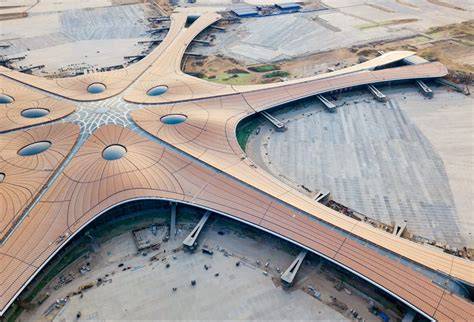
Shanghai presents an even stronger case for overall market growth. Shanghai Pudong International Airport handled approximately 85 million passengers in 2025, rising 10.7% in a single year. That made it the fastest-growing airport among the leading global airports in the reference group.
Pudong’s Phase IV expansion, including a new Terminal 3, is expected to lift capacity toward approximately 130 million passengers. Yet Shanghai Hongqiao already handles more than 50 million passengers annually, particularly on domestic and regional routes. As a result, Shanghai’s total aviation market could become enormous without Pudong necessarily reaching the 140-million-passenger threshold required to challenge for the global crown.
Guangzhou Baiyun International Airport is another fascinating candidate. It handled 83.6 million passengers in 2025, growing 9.5%. New Terminal 3 and a fifth runway will eventually give the airport capacity for approximately 140 million passengers.
But Guangzhou is also developing another major airport in Foshan. Once the wider Pearl River Delta is considered, passengers have multiple alternatives, including airports serving Shenzhen, Hong Kong and Zhuhai. The region could become one of the world’s largest aviation ecosystems while keeping individual airports below Istanbul’s potential concentration.
India Could Produce the Next Aviation Giant
India may ultimately have one of the world’s fastest-growing aviation markets, but its major cities are following a similar multi-airport model.
Indira Gandhi International Airport (DEL) in Delhi handled 78.1 million passengers in 2025. Expansion plans are expected to raise its capacity toward 125 million passengers by 2032. On paper, that provides a credible route toward the global top five.
Yet the opening and development of Noida International Airport changes the calculation. The new airport is designed to initially handle around 12 million passengers, with eventual capacity approaching 70 million.
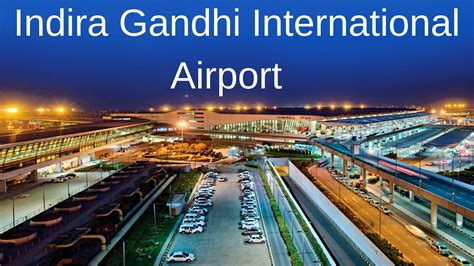
That second airport gives the Delhi metropolitan area substantially more room to grow. Instead of forcing every additional passenger through DEL, the region can distribute traffic between two facilities.
This is good news for India’s aviation industry and potentially excellent news for travelers. It is less helpful for DEL’s chances of becoming the world’s single busiest airport.
The same principle applies to other rapidly expanding Asian markets. A metropolitan area’s total passenger demand can grow spectacularly while individual airports remain below the levels required to take the global number-one position.
The Likely 2036 Top Ten
Based on current passenger volumes, growth rates, infrastructure plans, airline expansion and the degree to which traffic is concentrated at individual airports, the most plausible 2036 ranking looks considerably different from today’s table.
Istanbul has the strongest central case for first place, with a plausible range of roughly 130 million to 160 million passengers and a midpoint estimate around 145 million. Its principal advantage is the combination of Turkish Airlines’ aggressive fleet growth and an airport capable of eventually handling 200 million passengers.
Dubai Al Maktoum could finish anywhere from second to much higher depending on the speed of the DXB-to-DWC transition. Its plausible range is approximately 110 million to 150 million passengers. Few airports have greater upside, but few forecasts contain as many moving parts.
Atlanta should remain remarkably resilient. A plausible 2036 range of approximately 118 million to 130 million passengers places ATL firmly among the world’s elite, even if it eventually loses first place. Its best estimate is around 125 million.
Shanghai Pudong could reach approximately 124 million passengers in a central scenario. Its strong growth and expansion program make it one of the most credible challengers, although Hongqiao’s role limits how much traffic Pudong can absorb.
Guangzhou Baiyun could approach 122 million passengers, supported by its new terminal and runway capacity. Again, however, additional airports in the wider region create a natural ceiling.
Dallas/Fort Worth International Airport (DFW) has a credible path toward approximately 114 million passengers. Its position as a major hub for American Airlines, combined with North Texas population and economic growth, gives it one of the strongest American cases for continued expansion.
Delhi could reach roughly 110 million passengers, although the growth of Noida International will make it increasingly difficult for DEL to capture the entire region’s aviation expansion.
Denver International Airport (DEN) could approach 108 million passengers. Denver’s enormous geographic catchment area and continued domestic hub development give it a strong long-term foundation.
Tokyo Haneda Airport (HND) is likely to remain among the world’s busiest airports, but its mature market and limited expansion opportunities could constrain growth. A central estimate of approximately 106 million passengers by 2036 appears plausible.
Singapore Changi Airport (SIN) completes the projected top ten. Its future will be strongly influenced by the opening and ramp-up of Terminal 5, which is expected to add substantial capacity and strengthen Singapore’s position as Southeast Asia’s premier international aviation hub.
Airports That Could Break Into the Top Ten
The ranking should not be treated as a fixed prediction. Several airports outside the projected top ten have realistic opportunities to disrupt it.
Incheon International Airport (ICN) in Seoul is one of the most obvious candidates. South Korea has a highly developed aviation market, strong international connectivity and major airline groups capable of supporting long-term growth. If international passenger demand continues expanding, Incheon could push into the top tier.
Riyadh is potentially even more interesting. King Salman International Airport (RUH) is being developed on an extraordinary scale, with six runways planned and ambitions to create one of the world’s largest aviation hubs. Saudi Arabia’s national transformation strategy, tourism expansion and airline development could generate substantial additional traffic.
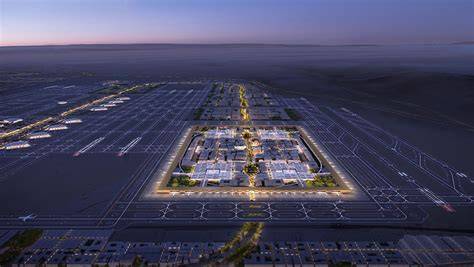
The key difference is timing. Infrastructure alone does not guarantee passengers. Riyadh needs airlines, routes, connecting traffic and sustained economic demand to fill its enormous planned capacity. Istanbul currently has that demand concentrated in a mature global carrier, while Riyadh is still building the ecosystem that would support comparable volumes.
What Will Determine the World’s Busiest Airport in 2036?
The biggest mistake in forecasting the world’s busiest airport would be to assume that today’s ranking simply continues with slightly larger numbers.
The decisive factor will be concentration. Beijing can have two airports handling more than 100 million passengers each. Delhi can have two enormous airports. Shanghai can support multiple facilities. The total aviation markets of these cities may eventually dwarf Atlanta’s, but the individual airports will not necessarily become number one.
The second factor is airline strategy. Istanbul’s position is so compelling because Turkish Airlines is simultaneously expanding its fleet, route network and passenger base. Dubai has Emirates and an aviation ecosystem built around connecting traffic. Atlanta has Delta. DFW has American Airlines. In each case, a powerful airline network converts geographic advantages into passenger volumes.
Infrastructure is the third factor. The airport that becomes number one must have somewhere to put all those passengers. Istanbul’s 200-million-passenger ultimate design, Dubai’s 150-million-passenger initial DWC expansion and Atlanta’s 125-million-passenger infrastructure program show three very different approaches to the same challenge.
Finally, geopolitical and economic stability cannot be ignored. Passenger forecasts stretching to 2036 inevitably contain uncertainty. Fuel prices, aircraft deliveries, airline profitability, wars, airspace restrictions, visa policies and changes in travel behavior could all alter the trajectory.
Istanbul Has the Best Path to the Crown
If we had to identify one airport most likely to become the world’s busiest airport a decade from now, Istanbul would be the strongest choice.
Atlanta remains the safest bet for staying near the top. Its current lead is enormous, its hub is mature and its infrastructure investments provide room for continued growth. It would be foolish to write ATL off.
Dubai arguably has the greatest upside. If Al Maktoum International becomes the massive global hub envisioned by Dubai’s government and the transfer from DXB occurs smoothly, DWC could eventually become almost impossible for competitors to match.
But Istanbul offers the most balanced proposition. It already has more than 84 million passengers, is growing rapidly, has a globally expanding airline based around it and possesses infrastructure designed for 200 million annual passengers. The mathematics are compelling: sustained 5% growth would put IST around 145 million passengers by 2036, while 6% growth could push it toward 160 million.
That is the critical threshold. To become the world’s busiest airport in 2036, an airport will probably need to reach well beyond 140 million annual passengers. Atlanta can get there only with stronger-than-moderate growth. Shanghai and Guangzhou face multi-airport fragmentation. Delhi faces the same challenge. Tokyo is constrained by maturity.
Istanbul, by contrast, has both the demand and the physical capacity to make that number realistic.
The aviation map of 2036 will therefore likely be defined by a shift from the historic dominance of American hubs toward a more competitive global system led by Istanbul, Dubai, Atlanta, Shanghai and Guangzhou. The final winner will depend on which airport can turn aircraft orders, infrastructure projects and passenger demand into sustained, concentrated traffic.
For now, Atlanta still wears the crown. But if current trends continue, Istanbul Airport may be the airport preparing most convincingly to take it away.