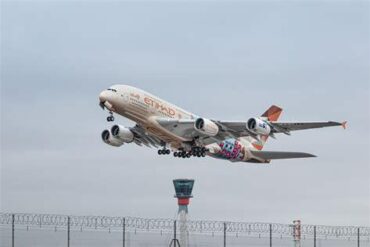
The world’s largest passenger aircraft has become a rarer sight than many aviation enthusiasts expected a decade ago. While the Airbus A380 once symbolized a new era of ultra-high-capacity air travel, changing airline economics and the rise of efficient twin-engine aircraft have significantly reduced its global footprint. Yet despite fleet retirements and production ending in 2021, the iconic double-decker remains an essential part of long-haul aviation at a select group of airports. Among them, one airport stands comfortably above all others: Dubai International Airport (DXB).
For travelers hoping to experience the Airbus A380 or planespotters eager to photograph multiple superjumbos in a single day, Dubai has become the undisputed capital of A380 operations. The airport’s dominance is not simply the result of geography—it reflects decades of strategic planning, enormous infrastructure investments, and the expansion of the world’s largest A380 operator. Examining the world’s busiest A380 airports provides valuable insight into how airlines deploy very large aircraft in today’s aviation landscape and why only a handful of global hubs continue to support them on such a remarkable scale.
Why Airbus A380 Flights Have Become Concentrated at a Few Airports
When the Airbus A380 entered commercial service in 2007, industry expectations were extraordinarily ambitious. Airlines envisioned hundreds of aircraft connecting the world’s busiest airports, solving congestion through higher-capacity flights instead of increasing frequencies. At its peak, fifteen airlines operated the aircraft across every inhabited continent.
Reality evolved differently.
The aviation industry gradually shifted toward fuel-efficient twin-engine aircraft capable of flying ultra-long routes with lower operating costs. Aircraft such as the Airbus A350 and Boeing 787 allowed airlines to serve more city pairs directly without relying exclusively on mega hubs. As a result, numerous A380 operators either retired their fleets entirely or significantly reduced operations following the pandemic.
Today, the aircraft survives because it excels in markets where exceptionally high passenger demand combines with limited airport slots. Instead of being distributed evenly throughout global aviation networks, the A380 has become concentrated at airports specifically designed to accommodate its size while serving airlines capable of consistently filling over 500 seats per departure.
After several paragraphs discussing the aircraft’s evolution, the scale of today’s operations becomes much easier to appreciate.
Dubai International Airport Is the World’s Busiest Airport for Airbus A380 Flights
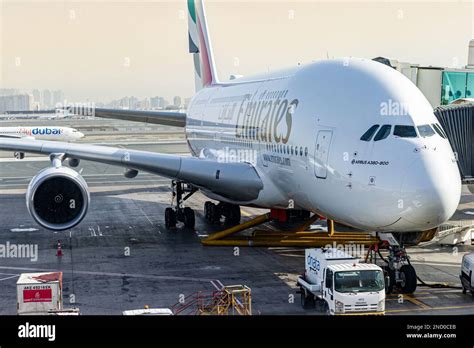
There is remarkably little debate regarding which airport leads global A380 operations. Dubai International Airport (DXB) sits comfortably at the top by an enormous margin.
Based on 2026 operational data, Dubai handles approximately 29,626 Airbus A380 flights, offering more than 15.1 million passenger seats and generating nearly 58.7 billion Available Seat Miles (ASMs). No other airport comes remotely close to matching those figures.
The gap becomes even more impressive when compared with the world’s other leading A380 hubs.
| Airport | Annual A380 Flights | Seats | Available Seat Miles |
|---|---|---|---|
| Dubai International (DXB) | 29,626 | 15,145,052 | 58.67 Billion |
| London Heathrow (LHR) | 6,974 | 3,369,199 | 14.94 Billion |
| Singapore Changi (SIN) | 5,684 | 2,727,719 | 11.61 Billion |
Dubai records more than four times the number of A380 flights handled by London Heathrow and more than five times the traffic seen at Singapore Changi. Combined, Heathrow and Singapore still struggle to approach Dubai’s extraordinary volume.
These numbers clearly demonstrate that modern A380 operations revolve around one airport more than any other.
Emirates Is the Driving Force Behind Dubai’s Dominance
Dubai’s remarkable position is inseparable from the growth strategy of Emirates, the airline that transformed the Airbus A380 into the flagship of its global network.
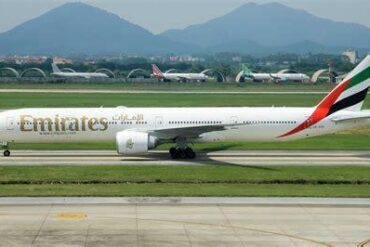
No airline has embraced the superjumbo with greater enthusiasm. Emirates currently operates approximately 116 Airbus A380s, making it by far the world’s largest operator. In fact, its fleet alone exceeds the combined A380 fleets of nearly every other airline still flying the aircraft.
Unlike most airlines, which deploy the A380 on only a handful of premium routes, Emirates built an entire hub-and-spoke system around the aircraft. Nearly every A380 begins or ends its journey in Dubai before connecting passengers to destinations across Europe, Asia, Africa, Australia, and North America.
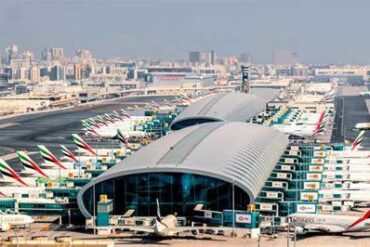
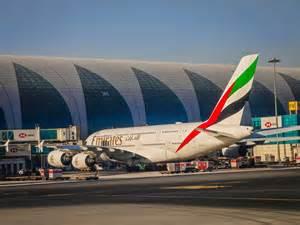
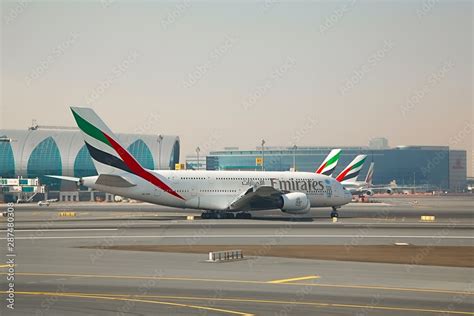
Instead of spreading aircraft across multiple operating bases, Emirates concentrates virtually its entire fleet at DXB. This creates a continuous flow of arrivals and departures throughout the day, with multiple A380s taxiing simultaneously during peak connection banks.
The result is a spectacle unmatched anywhere else in commercial aviation.
Infrastructure Built Specifically for the Airbus A380
Operating the world’s largest passenger aircraft requires considerably more than long runways.
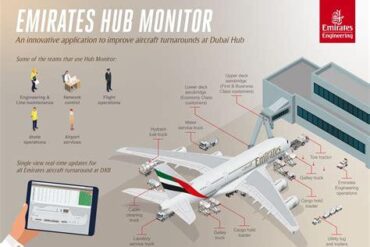
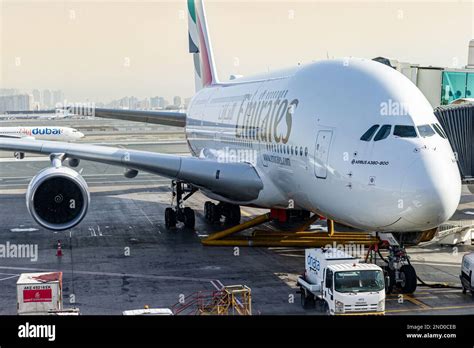
The Airbus A380 demands reinforced taxiways capable of supporting its immense weight, wider parking stands, specialized ground equipment, and dual or triple passenger boarding bridges that allow both decks to be boarded simultaneously.
Dubai anticipated these requirements long before the aircraft entered widespread service.
One of the airport’s most significant investments was Concourse A, a terminal designed specifically around Emirates’ expanding A380 fleet. The facility includes numerous A380-compatible gates, premium lounges directly connected to upper-deck boarding bridges, and operational systems optimized for rapid handling of hundreds of passengers.
These investments dramatically reduce turnaround times while allowing multiple A380s to operate simultaneously without creating congestion.
Many airports upgraded selected gates to accommodate occasional A380 service, but few were designed around the aircraft from the beginning. Dubai represents perhaps the purest example of infrastructure evolving alongside an airline’s fleet strategy.
London Heathrow Remains the Second-Largest A380 Hub
Although Dubai dominates by every measurable statistic, London Heathrow Airport (LHR) continues to play a major role in global A380 operations.
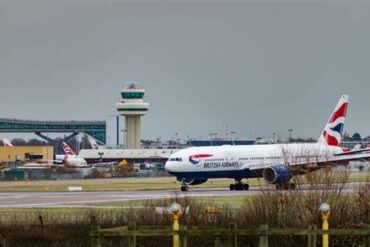
Unlike Dubai, Heathrow’s traffic comes from multiple airlines rather than one dominant operator. Emirates operates numerous daily services into London, while British Airways bases its own A380 fleet there. Singapore Airlines and Qantas also deploy the aircraft on selected Heathrow services, making London one of the few airports where passengers can regularly fly the A380 on several different airlines.
This diversity creates substantial traffic, but Heathrow faces a challenge that Dubai largely avoids: available slots.
As one of the world’s busiest and most capacity-constrained airports, Heathrow cannot simply add more departures whenever demand increases. Every additional flight requires an available slot, making expansion extremely difficult despite consistently strong passenger demand.
Consequently, Heathrow remains an important A380 destination without ever approaching Dubai’s extraordinary flight volumes.

Singapore Changi Preserves the Aircraft’s Historic Legacy
Few airports possess stronger historical ties to the Airbus A380 than Singapore Changi Airport (SIN).
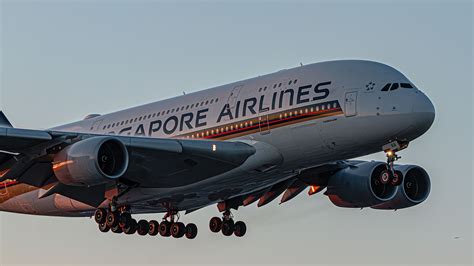
Singapore Airlines became the aircraft’s launch customer in 2007, introducing commercial A380 service and establishing Singapore as the aircraft’s first operational hub. Since then, Changi has remained one of the world’s most recognizable A380 airports.
Singapore Airlines now operates a smaller but highly refined fleet emphasizing premium travel rather than maximum passenger density. The carrier has reconfigured many aircraft with luxurious Suites, spacious Business Class cabins, and upgraded premium economy seating, making the A380 an important part of its long-haul premium strategy.
Routes linking Singapore with London, Sydney, Tokyo, and selected major cities continue to generate healthy demand for the aircraft. Nevertheless, the airline’s relatively modest fleet size naturally limits overall flight frequencies compared with Emirates.
Singapore therefore represents quality and premium positioning rather than sheer operational scale.
Fleet Size Directly Determines Airport Rankings
The busiest A380 airports closely mirror the fleet sizes of their dominant airlines.
| Airline | Primary Hub | Approximate Active A380 Fleet |
|---|---|---|
| Emirates | Dubai | 116 |
| Singapore Airlines | Singapore | 12 |
| British Airways | London Heathrow | 12 |
| Qantas | Sydney | 10 |
This relationship explains why airport rankings differ so dramatically.
An airline operating well over one hundred A380s inevitably generates far more daily departures than airlines operating only ten or twelve aircraft. Every additional aircraft increases scheduling flexibility, expands route options, and raises total annual movements through the primary hub.
Dubai benefits from this effect more than any other airport worldwide.
Geography Gives Dubai Another Powerful Advantage
Fleet size alone does not explain Dubai’s remarkable success.
Geography has played an equally significant role.
Dubai occupies an ideal location between Europe, Asia, Africa, and Oceania, allowing airlines to connect enormous numbers of passengers through a single transfer point. Travelers flying from Australia to Europe, Africa to Asia, or India to North America frequently connect through DXB.
This concentration of long-haul traffic naturally favors high-capacity aircraft.
Instead of operating several smaller aircraft between major destinations, Emirates often schedules multiple daily A380 services linking Dubai with cities such as London, Sydney, Singapore, Bangkok, Paris, New York, and Los Angeles.
These routes consistently generate enough demand to justify aircraft capable of carrying more than 500 passengers on each departure.
Few other cities occupy such a strategically advantageous geographic position.
Other Airports Where the Airbus A380 Remains a Regular Visitor
Although Dubai, London, and Singapore dominate the rankings, several additional airports continue supporting regular A380 operations.
Sydney remains one of the busiest destinations thanks to Qantas and Emirates services linking Australia with Europe, Asia, and the Middle East.
Frankfurt continues hosting Lufthansa’s restored A380 fleet following the airline’s decision to reactivate several aircraft as international demand recovered.
Seoul, Doha, Abu Dhabi, Los Angeles, Bangkok, and New York also continue welcoming scheduled A380 operations, although frequencies remain considerably lower than those seen at the leading hubs.
Collectively, these airports demonstrate that while the global A380 network has contracted, it remains active across strategically important long-haul markets.
Why Airlines Continue Flying the Airbus A380
Despite predictions of an early retirement, the Airbus A380 continues proving valuable under the right operating conditions.
Its enormous seating capacity allows airlines to maximize revenue on heavily traveled routes where airport slots are limited. Premium cabins also generate exceptional yields, especially aboard airlines such as Emirates and Singapore Airlines that have invested heavily in luxurious onboard products.
Passengers likewise continue expressing strong enthusiasm for the aircraft. The quieter cabin, spacious interior, smoother ride, and iconic upper deck remain distinctive advantages over smaller wide-body aircraft.
For airlines capable of consistently filling the aircraft, the economics remain attractive despite higher operating costs.
This explains why several carriers have reversed earlier retirement decisions and returned portions of their A380 fleets to service.
What the Future Holds for the World’s Busiest A380 Airport
The long-term future of Airbus A380 operations will depend largely on Emirates.
Production officially concluded in 2021, meaning no additional aircraft will enter airline fleets. Over time, maintenance costs will rise while replacement aircraft such as the Airbus A350 and Boeing 777X gradually assume larger roles within long-haul fleets.
Nevertheless, Emirates has repeatedly demonstrated its commitment to operating the A380 well into the next decade. Extensive cabin refurbishment programs indicate the airline intends to maximize the value of its existing fleet rather than retire it prematurely.
Another potential development involves Dubai’s future airport strategy. As Al Maktoum International Airport expands over coming years, Emirates may eventually relocate much of its operation there. Should that occur, the title of the world’s busiest A380 airport could technically shift within Dubai itself, even though Emirates would remain the dominant operator.
Until then, Dubai International continues serving as the undisputed global center of Airbus A380 activity.
Final Verdict: Dubai’s Lead Is Unmatched
Every meaningful statistic points to the same conclusion. Dubai International Airport is the busiest airport in the world for Airbus A380 flights, handling nearly 30,000 annual superjumbo movements, transporting more than 15 million passengers on the aircraft, and generating almost 59 billion Available Seat Miles.
Its dominance is driven by an exceptional combination of factors: Emirates’ unmatched fleet size, a hub specifically designed around connecting traffic, extensive A380-ready infrastructure, and one of the world’s most advantageous geographic locations for long-haul travel.
London Heathrow and Singapore Changi remain enormously important within the shrinking global A380 network, preserving the aircraft’s presence across Europe and Asia while serving premium long-haul markets. Yet neither airport can replicate the sheer concentration of superjumbo operations seen in Dubai.
For anyone wanting the greatest chance of flying aboard the Airbus A380—or simply witnessing dozens of the world’s largest passenger aircraft operating throughout the day—there is no destination that rivals Dubai International Airport. It remains the undisputed heart of A380 operations and, as long as Emirates continues to champion the superjumbo, it is likely to hold that title for years to come.