The Obsession to Be the Smallest
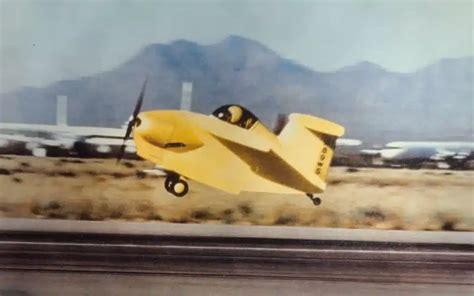
In the landscape of experimental aviation, few aircraft capture the imagination quite like the Starr Bumble Bee II—a machine conceived not for war, commerce, or pleasure, but for the singular, audacious goal of becoming the world’s smallest piloted airplane. Created by Robert H. Starr, a veteran of aviation oddities, the Bumble Bee II emerged as the pinnacle of compact aeronautical engineering. It was not merely a vehicle—it was a symbol of human ingenuity, persistence, and defiance of perceived physical limits.
The Bumble Bee II was born out of a fierce rivalry in the 1980s for micro-aircraft supremacy. Starr’s earlier aircraft, the Bumble Bee I, had once held the Guinness World Record for smallest airplane until it was dethroned by the Stits DS-1 Baby Bird. Not to be outdone, Starr returned to his workshop in Phoenix, Arizona, determined to reclaim the title with a biplane that would not only be smaller, but also fly better.
Engineering a Miracle of Miniaturization
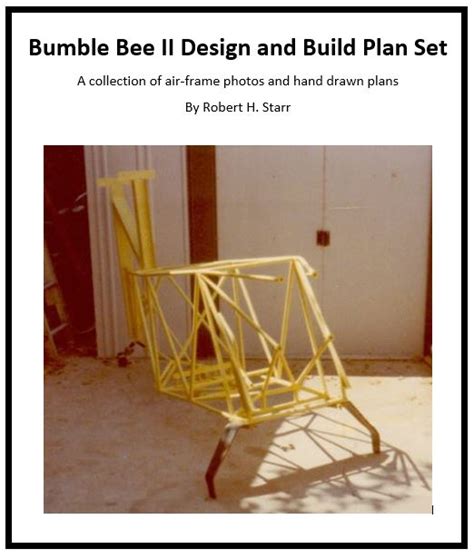
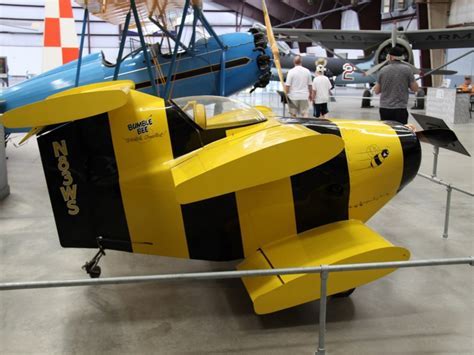
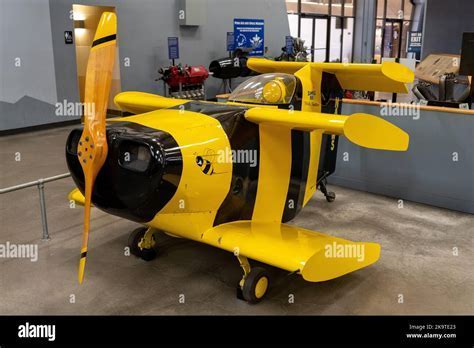
The Bumble Bee II did not follow traditional aircraft design philosophy. Everything about it was radical. Negative-staggered biplane wings, a configuration rarely seen in aviation history, gave it a distinctive profile. The aircraft’s upper and lower wings were cantilevered—eliminating the need for external struts or braces—and were deliberately misaligned to balance lift and control in an ultra-compact frame. The wings themselves were covered in aircraft-grade plywood, while the fuselage was fabricated from welded steel tubing, then clad in sheet metal for strength and minimal weight.
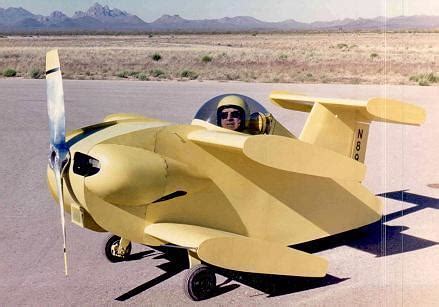
One of the most astonishing aspects of the Bumble Bee II was its tiny cockpit. Wedged between the wings, the pilot’s seat offered only the most essential space. The rudder pedals were located beneath the engine compartment, pushing the pilot’s legs toward the nose in a configuration that defied ergonomic norms but maximized compactness.
Power in a Small Package: Continental C85 Engine
Despite its minute dimensions, the Bumble Bee II was powered by a Continental C85 engine, a four-cylinder, air-cooled, horizontally opposed engine that produced 85 horsepower (63 kW). This boxer-style motor, more commonly found in light general aviation aircraft, gave the Bumble Bee II a maximum speed of 190 mph (165 knots) and a climb rate of 4,500 feet per minute—figures that would be impressive even for aircraft several times its size.
The upper wings were fitted with flaps, while the lower wings housed the ailerons, enabling precise control in flight. To boost lift despite the small wing area, Starr integrated tip plates at the ends of each wing surface—a technique that increased lift coefficient and made the aircraft more stable during flight. These innovations allowed the Bumble Bee II to sustain flight even when, by most textbook aerodynamics, it shouldn’t have.
Specifications That Dwarf Giants
When measured, the Bumble Bee II’s dimensions are nothing short of staggering:
- Length: 8 ft 10 in (2.7 m)
- Wingspan: 5 ft 6 in (1.68 m)
- Height: 3 ft 11 in (1.2 m)
- Empty Weight: 396 lb (180 kg)
- Max Takeoff Weight: 574 lb (260 kg)
- Fuel Capacity: 3 US gallons (11.35 liters)
- Cruise Speed: 150 mph (130 knots / 241 km/h)
- Stall Speed: 86 mph (75 knots / 139 km/h)
- Service Ceiling: 14,000 ft (4,270 m)
These numbers, verified by sources including Guinness World Records and Disciples of Flight, remain a benchmark in the annals of micro-aviation.
April 2, 1988: Flight into the History Books
The defining moment for the Bumble Bee II came on April 2, 1988, at Marana Airport, just northwest of Tucson, Arizona. The conditions were optimal. The engine roared to life, and the miniature aircraft surged down the runway under Starr’s skilled hands. Against all odds—and conventional aerodynamic wisdom—it took flight.
Observers at Marana witnessed the Guinness World Record being shattered in real-time. Bumble Bee II, with its astonishingly small wingspan, had now officially claimed the crown of smallest piloted airplane ever to fly. It was a moment of triumph for Starr, who had dedicated years to the pursuit of an aircraft that, according to many, simply shouldn’t be airborne.
Tragedy on the Third Flight
Just over a month after its historic achievement, the Bumble Bee II met a tragic end. On May 5, 1988, during only its third flight, disaster struck. As Starr was flying on the downwind leg of a traffic pattern, the engine failed at approximately 400 feet of altitude. With little time to react, the tiny aircraft plummeted to the ground, crumpling upon impact.
Though the aircraft was destroyed beyond repair, Starr miraculously survived the crash, albeit with severe injuries. He would eventually make a full recovery, but the Bumble Bee II’s flying days were over. The wreckage was never restored, and unlike its predecessor, it never found a place in a museum.
The Bumble Bee I: A Survivor and a Symbol
While the Bumble Bee II was lost to history, its older sibling, the Bumble Bee I, remains a testament to Starr’s legacy. It is currently on public display at the Pima Air & Space Museum in Tucson, Arizona. Visitors can marvel at the craft up close, gaining a profound appreciation for the complexity and compactness of Starr’s work. It stands not only as a relic of a record but as a monument to one man’s determination to challenge what was considered possible in flight.
Defying Aerodynamics and Doubters
The name “Bumble Bee” was not selected lightly. It drew inspiration from a popular legend in which engineers and scientists claimed that a bumblebee’s wing area was insufficient for flight—yet the bee flies. The analogy was apt: Starr’s aircraft, like the insect, flew in defiance of conventional aerodynamic theory.
Skeptics had dismissed the Bumble Bee I and II as impractical, even dangerous. Yet, both flew. Their existence served as a rebuke to textbook physics, a reminder that with enough passion, intelligence, and determination, even the smallest wings can carry dreams aloft.
Legacy of the Starr Bumble Bee II
Although it flew only three times, the impact of the Starr Bumble Bee II resonates far beyond those brief moments in the sky. It forced the aviation world to reconsider its boundaries. It inspired future generations of homebuilders and experimental aircraft designers. And it cemented Robert Starr’s place in aviation history not as a daredevil, but as a visionary.
In a time when the aerospace industry was scaling up with massive passenger jets and supersonic ambitions, the Bumble Bee II stood apart. It wasn’t fast enough to break sound barriers or big enough to carry passengers. But it did something far more profound: it proved that even the smallest machine, in the hands of the right mind, can make history.