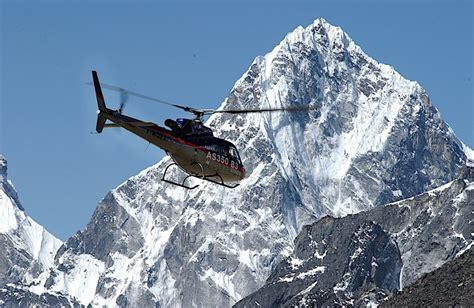
In the pantheon of aviation’s boldest feats, one name resonates through the thin air of the Himalayas: Didier Delsalle, the French test pilot who achieved what many deemed impossible. On May 14, 2005, Delsalle became the first and only pilot to successfully land a helicopter on the summit of Mount Everest, the highest point on Earth at 29,030 feet (8,848 meters). This extraordinary accomplishment rewrote the limits of both aerodynamics and human daring, forever embedding Delsalle’s name in aviation history.
The Mountain and the Machine: A Unique Challenge in Aviation
Mount Everest towers above the world as an unforgiving monolith of snow, ice, and ferocious wind. Its deadly combination of thin air and unpredictable weather makes it a treacherous arena for even the most experienced mountaineers. For helicopters, the challenge is magnified exponentially. At high altitudes, air density decreases, dramatically reducing lift and engine performance. Simply hovering becomes a mechanical and aerodynamic balancing act.
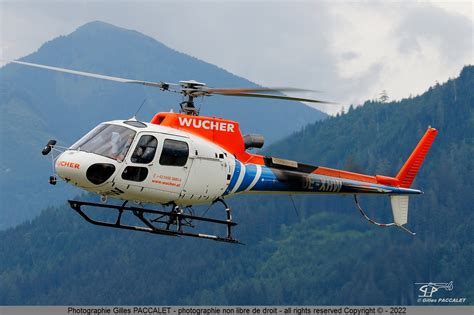
Delsalle flew the Eurocopter AS350 B3 Écureuil, a high-performance helicopter engineered for precision and power in extreme conditions. This aircraft, developed by Eurocopter (now Airbus Helicopters), boasted a lightweight frame, powerful turboshaft engine, and exceptional control agility. It had already set records for high-altitude performance, but no one had ever dared to bring it to the very apex of the Earth.
Preparation and Precision: Engineering the Impossible
Long before Delsalle approached Everest, a meticulous process of planning and technical adaptation was underway. Every element, from fuel loads to weather patterns, had to be scrutinized. Engineers removed non-essential components from the helicopter, such as passenger seats, to minimize weight and maximize power-to-weight ratio. At this altitude, every kilogram counted.
Delsalle’s team coordinated with authorities in Nepal and assembled an international group of observers to verify the mission under the Fédération Aéronautique Internationale (FAI), which would authenticate any record set. Delsalle himself trained at progressively higher altitudes, calibrating his own endurance and the helicopter’s responsiveness. His familiarity with mountain wind dynamics and updraft behaviors was essential for what lay ahead.
The Ascent and Landing: Dancing with the Sky
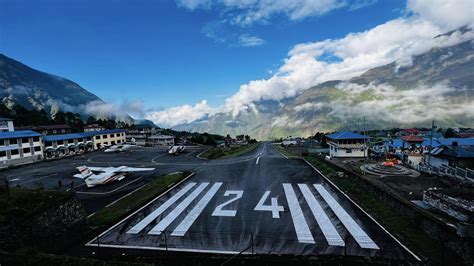
In the dawn of May 14, 2005, Delsalle rose from Tenzing-Hillary Airport in Lukla, weaving his way up the mountain’s flanks. As the helicopter climbed past the so-called “death zone” above 8,000 meters, every input on the controls required precision. The rotor blades fought for bite in the rarefied air. Then came the most dangerous phase: the final approach.
In an interview with Vertical magazine, Delsalle described how updrafts surged around the summit, threatening to toss the helicopter like a toy. “When you reach the summit you reach the updraft point, and of course the updraft winds have enough force to throw you away as soon as you put the collective down,” he recalled. With no visual cues or reference points, he essentially had to guess the summit’s exact location from free air.
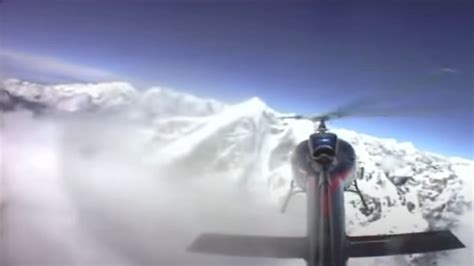
With unparalleled focus, Delsalle managed to plant the skids directly onto the snowy peak, leaning forward to use the rotor’s thrust as an anchor. He remained there for three minutes and 50 seconds, exceeding the minimum two-minute contact required for a certified landing. “I asked the mountain to accept me,” he said later, reflecting on the emotional and spiritual gravity of the moment.
A Second Flight: Reproving the Record
True to his testing ethos, Delsalle did not stop at a single successful landing. The very next day, on May 15, 2005, he piloted the AS350 B3 back to the summit to demonstrate repeatability. This time, he hovered at the top of Everest for four full minutes before descending safely. It was not just a proof of concept — it was a statement: the impossible had become operationally feasible.
This second landing dispelled any doubts from skeptics who might have claimed luck or favorable wind conditions. It showed that with the right technology, training, and audacity, the limits of manned aviation could be pushed far beyond conventional assumptions.
Engineering Triumph: The Eurocopter AS350 B3
The success of Delsalle’s Everest mission cemented the AS350 B3 Écureuil’s reputation as one of the most capable high-altitude helicopters ever built. The aircraft featured a Turbomeca Arriel 2B engine, equipped with a full authority digital engine control (FADEC) system. This allowed it to adapt engine performance instantaneously to atmospheric changes, a crucial feature at high elevations where engine output can vary wildly.
With maximum takeoff weight of 2,250 kg and a service ceiling of approximately 7,010 meters, the helicopter far exceeded its published operational ceiling. The real-world performance during Delsalle’s mission pushed the envelope of aviation engineering, showcasing the Eurocopter’s true altitude capabilities.
Aerodynamic Obstacles: Thin Air, Rotor Dynamics, and Human Limits
Helicopter flight at such high altitudes is beset by aerodynamic instability, making Delsalle’s achievement as much a scientific breakthrough as a piloting milestone. At 8,848 meters, the air density is only about one-third of that at sea level. Rotor blades must spin faster or be larger to generate sufficient lift, but mechanical limitations prevent simple adjustments.
Additionally, pilot health is a serious constraint. Hypoxia, or oxygen deficiency, can cloud judgment and slow reflexes. Delsalle mitigated these risks through oxygen support systems, intense altitude training, and decades of experience as a test pilot. But even these safeguards could not fully eliminate the inherent danger.
Aftermath and Legacy: A Moment That Redefined What’s Possible
Didier Delsalle’s dual Everest landings remain an enduring testament to human ingenuity, courage, and precision. No one has repeated the feat since, not due to a lack of interest, but because of the sheer complexity and risk involved. The flight inspired future research into high-altitude search and rescue operations, particularly in the Himalayas, where stranded climbers often await helicopters that cannot reach them.
Delsalle’s accomplishment has also become a case study in extreme aeronautics, cited in both aviation manuals and rescue logistics planning. The mission proved that with adaptive technology and elite piloting, vertical lift aircraft can go where even oxygen-starved climbers struggle to survive.
Conclusion: A Summit, A Skid, A Silent Revolution
There are few moments in aviation history that so perfectly capture the union of machine and mountain, of man and physics, as Delsalle’s Everest summit landing. It was not a stunt. It was a demonstration of what is achievable when cutting-edge engineering meets visionary ambition. The skids of a helicopter pressed gently into the highest snow-covered rock on Earth — a place where even birds fear to fly.
To this day, Didier Delsalle’s flights to the roof of the world remain unmatched, both in altitude and audacity. His name is etched into the clouds that swirl around Everest’s summit, a lasting symbol of the heights human flight can reach.