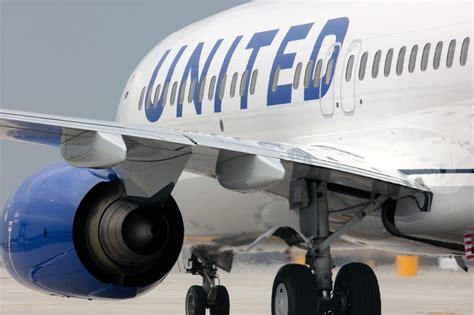
Transatlantic travel is undergoing a monumental transformation, and United Airlines is leading the charge with unprecedented growth across Europe’s most strategic aviation hubs. In a bold and calculated move, United has surged ahead of its competitors, redefining not just how frequently passengers fly between the U.S. and Europe, but also how seamlessly they can do so. The airline’s aggressive expansion has touched down across key economic and cultural capitals like London, Frankfurt, Paris, Rome, Barcelona, and a constellation of new leisure-oriented markets that extend the reach of U.S.-European connectivity to unprecedented levels.
By June 2025, United Airlines now averages 103 daily transatlantic departures, a leap from 99 the previous year and a staggering 35% increase from pre-pandemic levels. More significantly, the airline now accounts for over one in every six U.S.-Europe flights, a position that no other carrier can match.
London Heathrow: United’s Crowning European Jewel
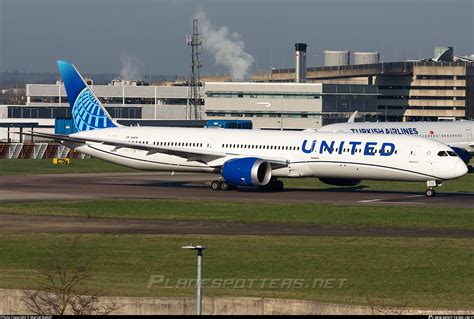
The United-London Heathrow axis remains the carrier’s most dominant corridor. With 20 daily flights to London from seven U.S. gateways—Newark, Chicago O’Hare, Los Angeles, San Francisco, Denver, Washington Dulles, and Houston Intercontinental—Heathrow is not just a major international airport, but the epicenter of United’s European strategy. Seven of those flights originate from Newark alone, most utilizing the Boeing 767-300ER, a jet tailored to premium transatlantic travel with a compact 167-seat configuration that prioritizes comfort, especially in Polaris business class.
This network design, with high-frequency, mid-capacity flights, reflects United’s nuanced understanding of the business and premium leisure segments, where timing and service matter more than just scale. The decision to allocate more flights instead of merely increasing aircraft size at Heathrow ensures flexibility, reliability, and a premium-centric experience that appeals to high-value travelers.
Frankfurt: Scale, Efficiency, and Strategic Positioning
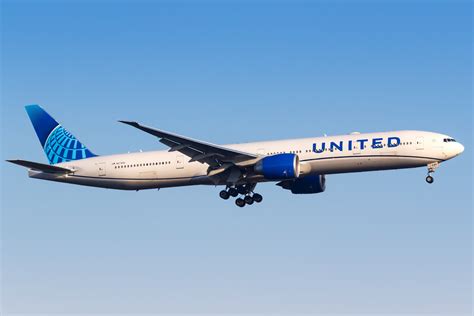
Germany’s financial hub Frankfurt has emerged as United’s second-largest European operation with an average of 10 daily departures from five major U.S. cities: Newark, Chicago, Washington Dulles, San Francisco, and Houston. The airline deploys high-capacity widebodies like the Boeing 777-300ER and Boeing 787-10, which often seat over 300 passengers.
What sets Frankfurt apart is its dual strategic value—not only is it a high-demand destination in its own right, but it also serves as a critical Star Alliance transfer hub, thanks to United’s longstanding partnership with Lufthansa. This partnership ensures that passengers landing in Frankfurt can effortlessly connect to dozens of European, Middle Eastern, and Asian cities, amplifying United’s global footprint.
The combination of scale, aircraft efficiency, and interline connectivity has made Frankfurt one of United’s most profitable transatlantic markets, serving both corporate and leisure demographics with equal precision.
Rome and Paris: Cultural Gateways with Explosive Growth
United Airlines has doubled down on Southern and Western Europe, most notably Italy and France. Rome’s Fiumicino Airport now enjoys seven daily departures, more than double the service level of 2019. This surge reflects a booming interest in Italian cultural tourism, as well as cruise-related travel that begins and ends in the Eternal City.
Paris Charles de Gaulle (CDG) remains a linchpin in United’s network. With six daily departures, the French capital represents a vital node for both transatlantic business travelers and tourists alike. Paris serves as both a standalone destination and a gateway city, allowing United’s customers to link seamlessly through the Star Alliance network to cities across Europe and North Africa.
These two hubs illustrate United’s commitment to offering multi-frequency service, which is critical in managing demand spikes, cancellations, and providing customers with a flexible booking experience.
Spain and Portugal: Rising Stars of Leisure Aviation
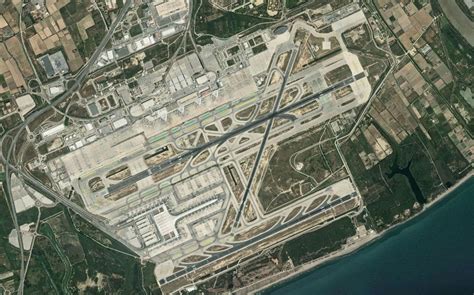
United Airlines has shown an acute awareness of evolving travel trends, particularly the growing appetite for Southern European leisure travel. Barcelona, once a modest presence in United’s network, now boasts four daily flights—making it one of the airline’s top 10 European destinations. The surge is largely attributed to an influx of cruise passengers, digital nomads, and summer vacationers from North America.
Similarly, Lisbon and Porto in Portugal have seen expanded seasonal service, while new routes to Faro and Funchal have broadened the airline’s reach into the Iberian Peninsula. Although the initially planned relaunch of flights to Tenerife South was shelved, United’s penetration into Portugal and Spain remains the most aggressive of any U.S. airline.
These expansions underscore United’s strategic shift to balance business-heavy routes like London and Frankfurt with high-volume leisure markets, enabling year-round revenue optimization.
Secondary Growth Cities: Venice, Dublin, and Beyond
Not content with just the capitals and top-tier hubs, United Airlines has also reinvigorated connections to mid-tier European cities. Venice, served daily from both Newark and Chicago, is gaining traction thanks to increased U.S. interest in Northern Italy. Likewise, Dublin has benefitted from four daily flights, serving not just tourists but a significant share of tech and pharmaceutical professionals commuting between U.S. and Irish headquarters.
These routes, while not as headline-grabbing as Heathrow or Frankfurt, play a pivotal role in solidifying United’s comprehensive European coverage and allow the airline to tap into diverse revenue streams that larger hubs can’t entirely capture.
New Markets, New Frontiers: Four Additions in 2023–2024
United’s expansion spree continued with the launch of flights to Bilbao (Spain), Faro (Portugal), Palermo (Italy), and Funchal (Madeira). These additions mark the first time United has served more than 30 airports in Europe, currently totaling 32 destinations across 14 countries. Each of these markets brings something unique:
- Bilbao opens access to Spain’s Basque Country, a rich cultural region.
- Faro acts as the gateway to the Algarve, one of Europe’s most scenic coasts.
- Palermo unlocks Sicily, long underserved by direct U.S. flights.
- Funchal, the capital of Madeira, is a top emerging destination for nature and luxury tourism.
United’s push into non-capital, regional leisure destinations showcases a willingness to innovate, meet unmet demand, and exploit new revenue frontiers.
Operational Backbone: Aircraft Efficiency and Route Strategy
Much of United’s success in transatlantic dominance lies in its fleet optimization strategy. The heavy reliance on Boeing 787 Dreamliners and 777 variants provides not only the range and capacity for these routes, but also the fuel efficiency needed to keep margins healthy. The use of the 767-300ER for high-frequency routes, particularly from Newark, allows United to maintain premium-heavy configurations that deliver better yields without overextending capacity.
Additionally, United’s strategic choices—such as offering multiple daily flights instead of fewer high-capacity ones—provides passengers with flexibility and reliability. This frequency-first model enhances customer satisfaction and encourages repeat premium business travel.
Resilience in a Competitive Market
Despite the entrance of new players like JetBlue on transatlantic routes, United has demonstrated remarkable resilience and foresight. Rather than retreating, the airline has expanded with intent, bolstered by its Star Alliance partnerships, strong brand trust, and operational consistency.
Even post-pandemic, where volatility in international travel remains, United has not only recovered but surged past its pre-2020 network. It has mastered the delicate balance of capacity planning, passenger demand, and profitability, a testament to its leadership in the sector.
Conclusion: A Transatlantic Titan Reimagined
United Airlines has engineered a quantum leap in transatlantic air travel, reshaping the skies between the U.S. and Europe. With a network now encompassing 32 destinations across 14 countries, the airline’s vision of accessible, high-frequency, premium-grade global travel is now a reality.
Whether it’s the business traveler jetting to London, the cruise-bound tourist landing in Barcelona, or the cultural explorer heading to Palermo, United has architected a route map that caters to every traveler type, while reinforcing its position as the undisputed transatlantic leader.
As demand continues to climb and global mobility expands, United Airlines is not merely adapting—it is defining the future of how the world connects across the Atlantic.