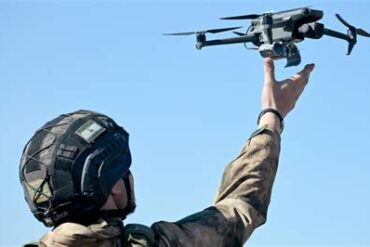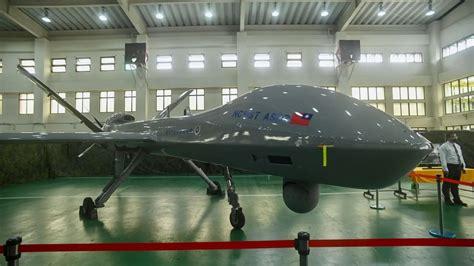
Taiwan has unveiled an ambitious military drone acquisition program, signaling a monumental leap in its defense strategy and technological posture. The move encompasses the procurement of more than 100,000 unmanned aerial systems (UAS)—a number unprecedented in Taiwan’s defense history and one of the most significant drone expansions globally.
The announcement was made during a high-profile industry briefing on July 29, 2025, organized by the Executive Yuan’s Aerospace Program Office in conjunction with the Armaments Bureau. This sweeping initiative includes both an additional 50,000 UAS and the previously announced 48,750 military-grade drones, highlighting the government’s resolve to solidify domestic drone production capacity and reinforce its national security infrastructure over the coming years.
Taiwan’s Distributed Drone Strategy: A New Era of Defense Resilience
This mass procurement effort is far from symbolic. At its core, it forms a pillar of Taiwan’s evolving total defense concept, which is now being materially transformed through layered unmanned capabilities. Officials confirmed that these drones will not only bolster military operations but also play critical roles in civil defense, including the surveillance of energy networks, transportation corridors, and key urban assets.
The dual-use strategy reflects Taiwan’s recognition of the changing face of modern warfare—one increasingly driven by asymmetric tactics, real-time intelligence gathering, and distributed networked systems.
Inside the Procurement: Categories, Budgets, and Industrial Surge
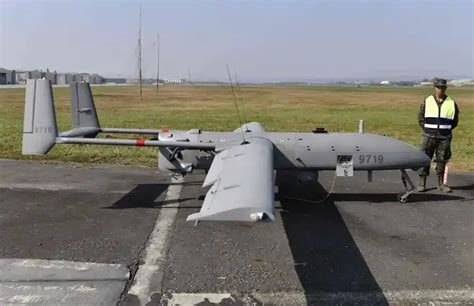
The Ministry of National Defense’s procurement program outlines five distinct categories of drones:
- Micro surveillance drones for covert ISR missions
- Attack drones with strike capabilities
- Medium-range reconnaissance drones
- Electronic warfare-capable drones
- Swarm-enabled drones for networked operations
The total military procurement budget alone is projected to exceed NT$50 billion, signaling robust investment in autonomous aerial defense technologies.
Taiwan’s drone makers are mobilizing with urgency. Thunder Tiger Technologies, a prominent UAS manufacturer, declared its intent to bid across all categories. The company, known for its modular drone platforms and AI integration capabilities, is already engaged in capacity ramp-up. Century Minsheng, another leading firm, announced expanded facilities and broader ambitions, including exports to European and American defense markets.
These developments are triggering a ripple effect throughout Taiwan’s industrial base. At the 202nd Plant in Nangang, where the industry meeting took place, more than 400 representatives from across the aerospace, electronics, materials, and communications sectors gathered to study technical specs and bid requirements.
A Fragmented but Accelerated Supply Chain Model
One key strategic component of this initiative is the adoption of a “multi-award” procurement model. Rather than relying on a single supplier, the Ministry of National Defense will award contracts to multiple vendors, each tasked with fulfilling a portion of the overall order. This approach achieves three critical goals:
- Accelerated delivery timelines
- Mitigated supply chain risks
- Stimulated competition and innovation
In an era where global supply chains remain volatile and the threat of blockade looms in the Taiwan Strait, this decentralized production strategy represents more than logistical pragmatism—it is an act of strategic foresight.
From Domestic Security to Global Impact
While the primary focus remains national defense, Taiwanese officials and industry leaders are also eyeing global drone markets. Century Minsheng, for example, is positioning itself as a provider of defense-grade UAVs suitable for export under allied frameworks. Executives have emphasized how geopolitical tension and the global autonomy race have made drone self-sufficiency a prized national asset.
This moment is seen as a pivotal opportunity not just for Taiwan’s defense establishment, but for its technology and aerospace sectors at large. Officials suggest that sustained demand over the next five years will fully occupy domestic drone production lines, effectively securing thousands of jobs and reshaping the island’s manufacturing landscape.
Drones Tailored for Taiwan’s Terrain and Threat Landscape
Though technical specifications remain classified, industry insiders expect that the drones will integrate advanced autonomous flight control, encrypted data transmission, and terrain-aware navigation systems. Given Taiwan’s mountainous geography and dense urban centers, these features are seen as essential.
In particular, the focus on swarming functions—which allow multiple drones to operate in a synchronized, decentralized manner—is expected to be a game changer. Swarm technology not only enhances battlefield survivability through redundancy but also enables new forms of dynamic electronic warfare, multi-angle surveillance, and saturation attacks.
Civilian Applications and Infrastructure Surveillance
The Executive Yuan emphasized that the 50,000 newly ordered drones will not be confined to military operations. A significant portion will be deployed for civil protection missions, particularly around critical infrastructure. These include:
- Power plants and transmission networks
- Railway and highway monitoring
- Port security and maritime observation
- Emergency disaster response
By incorporating these unmanned systems into civilian frameworks, Taiwan is creating a dual-layered drone infrastructure capable of operating continuously during both peacetime and wartime scenarios.
This model aligns with the doctrine of “defense-in-depth”, which seeks to ensure national security even in the event of limited communication or conventional force setbacks.
Implications for Cross-Strait Dynamics
Taiwan’s surge in drone procurement will undoubtedly be interpreted through the lens of its tense relationship with mainland China. Analysts believe that the expansion is aimed not only at boosting self-defense capabilities but also at enhancing deterrence by demonstrating readiness across all domains—including air, land, sea, cyber, and space.
Drone warfare has emerged as a defining element in contemporary conflicts, from Ukraine to the Middle East, where relatively low-cost UAVs have achieved strategic effects disproportionate to their size. Taiwan’s adoption of this model is a clear message: in the next war, the asymmetry of unmanned systems could tip the balance.
Building the Future of Taiwan’s Defense Economy
With over 100,000 drones in the pipeline, Taiwan is not just preparing for a future of technological warfare—it is building a sustainable national defense economy. The scale of the procurement ensures that research, development, and talent pipelines across robotics, AI, sensors, and communications will receive long-term investment.
Moreover, the strategic coupling of civilian and military drone applications opens the door to emerging dual-use technologies, from environmental monitoring to smart logistics. Taiwan’s engineers and technologists, already world-renowned for semiconductor and electronic design, are now entering a new phase as global leaders in autonomous systems.
Conclusion: A Turning Point in Defense and Sovereignty
Taiwan’s historic drone procurement campaign is more than a defense purchase—it is a strategic reset, reshaping how the island nation views deterrence, sovereignty, and technological independence. With contracts underway and production lines heating up, Taiwan is betting on unmanned aerial dominance as a cornerstone of its 21st-century security posture.
As geopolitical fault lines deepen and the rules of warfare evolve, Taiwan’s move signals that the era of massed autonomous defense networks is no longer theoretical—it has begun.