Croatia is poised to undergo a transformative leap in maritime defense with the procurement of two new multipurpose corvettes, marking the largest naval acquisition in the nation’s history. This pivotal move underscores not only Croatia’s strategic ambitions in the Adriatic Sea but also its commitment to bolster NATO and EU maritime capabilities in an increasingly contested global maritime environment.
The announcement, confirmed in early January 2026, reveals that the new corvette program is valued between €660 million and €1.6 billion, depending on final configuration and industrial offsets. The ships—destined to become the largest warships ever operated by the Croatian Navy—will represent a significant leap in surface warfare, air defense, and anti-submarine capabilities.
Strategic Context: Securing the Adriatic and Beyond
Croatia’s maritime strategy has long revolved around protecting its territorial waters in the Adriatic Sea, a narrow maritime corridor flanked by friendly NATO-aligned coasts. However, the increasing sophistication of naval threats—especially from submarines and unmanned maritime systems—has prompted Croatian defense planners to reimagine the role of their naval fleet. The two new corvettes will serve as the cornerstone of this modernization effort.
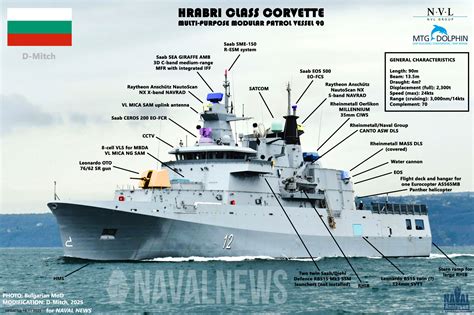
Unlike previous Croatian patrol vessels, these corvettes are designed not just for coastal surveillance but for full-spectrum maritime warfare. The vessels will be optimized for regional sea control, featuring a blend of advanced sensor systems, anti-ship missiles, and defensive suites. Their deployment will significantly improve Croatia’s capacity to defend its maritime domain, participate in multinational missions, and deter underwater and aerial threats.
Design Philosophy: Beyond Patrol, Short of Frigate
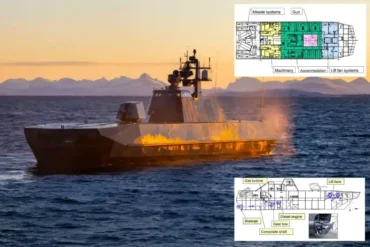
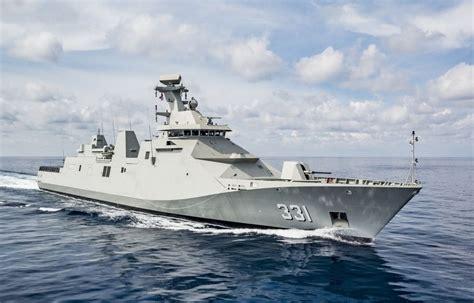
The upcoming Croatian corvettes will be positioned between offshore patrol vessels (OPVs) and full-fledged light frigates, reflecting a deliberate balance between operational capability and cost efficiency. These ships are expected to displace between 1,000 and 3,500 tonnes and measure around 80–120 meters in length—a size ideal for the shallow, confined waters of the Adriatic but still capable of extended missions into the Mediterranean Sea and potentially to the Red Sea or Suez Canal.
Their mission profile includes:
- Engaging hostile surface vessels
- Defending against aircraft and missile threats
- Conducting anti-submarine warfare operations
While the vessels will not carry the long-range air-defense systems typical of frigates, their modular design allows integration of medium-range surface-to-air missiles (SAMs) such as the CAMM-ER or RIM-162 ESSM, with engagement ranges up to 60 kilometers. Short-range protection could come from the RIM-116 RAM system, offering a close-in defense against missile threats.
Combat Capabilities: Missiles and Modularity
The corvettes are expected to be equipped with a proven and potent suite of anti-ship missiles, with leading contenders including:
- Naval Strike Missile (NSM) from Norway: 180–200 km range, precision strike on both naval and land targets.
- RBS-15 Mk IV from Sweden: Heavier warhead, near 300 km range.
- Exocet Block 3c from France: Versatile, with limited land-attack capabilities.
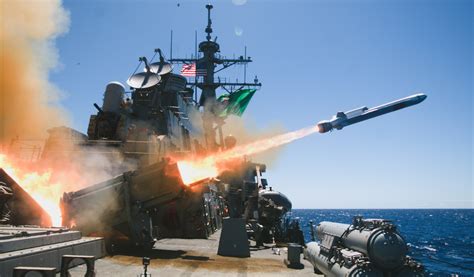
Croatian planners are weighing how many launchers—typically four or eight—will be included per vessel, acknowledging that firepower density is a critical factor in regional deterrence.
Corvette modularity is another defining trait. Unlike older warships with fixed systems, these new hulls will likely support plug-and-play configurations, allowing Croatia to swap out radar, sonar, and weapon systems as operational needs evolve. This modularity ensures adaptability in the face of emerging threats, such as underwater drones, kamikaze boats, and long-range torpedoes—as evidenced by recent developments in the Ukraine conflict.
Anti-Submarine Focus and Drone Integration
While aerial threats remain a concern, submarine detection and neutralization are expected to be the Croatian Navy’s primary concern. The shallow and acoustically challenging Adriatic Sea remains susceptible to covert submarine incursions. Therefore, these corvettes will emphasize advanced sonar systems, helicopter hangar capability, and towed sonar arrays.
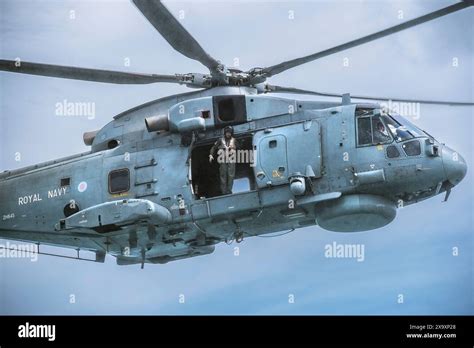
Additionally, the ships are expected to act as command hubs for unmanned systems. The Croatian Navy plans to integrate unmanned surface vessels (USVs) and underwater drones (UUVs) for surveillance and reconnaissance. This vision aligns with the growing global trend toward networked maritime warfare, where ships act as multi-domain control nodes rather than standalone combatants.
Industrial Ambitions and Domestic Challenges
While Croatia seeks to include domestic shipbuilding in the project, past difficulties in naval construction programs have introduced caution. Croatian shipyards possess the capacity to build hulls, but given that high-tech systems—sensors, electronics, missiles—account for 75% of a corvette’s value, the final assembly is expected to involve international cooperation.
The government is exploring offset arrangements and partial assembly within Croatian territory, balancing national industry support with the need for timely and technically mature delivery. The procurement is therefore both a military acquisition and an industrial policy decision, with ramifications for Croatian defense manufacturing capabilities.
International Competition: A Crowded Field
The Croatian corvette tender has attracted interest from eight countries and twelve shipyards, highlighting Europe’s prominence in the multipurpose corvette market. Leading contenders include:
- France: Gowind-class corvette, strong in anti-air and anti-ship warfare, modular with potential for Exocet and MICA systems.
- Germany: Braunschweig-class, optimized for coastal defense, but limited in air defense.
- Italy: Offers either the European Patrol Corvette (uncertain development) or the Al Zubarah-class, closer to a light frigate.
- Spain: Avante 2200, similar in capability to Gowind.
- Netherlands: SIGMA platform, notable for flexibility but rarely configured for high-end warfare.
- Türkiye: Ada-class, cost-effective and specialized in anti-submarine warfare, with the Atmaca missile.
- South Korea: Incheon-class (FFX-I) and Daegu-class (FFX-II), larger ships with modern sensors, competitive pricing, and industrial collaboration.
- United States: LCS-derived designs, but viewed with skepticism due to early retirements in U.S. service.
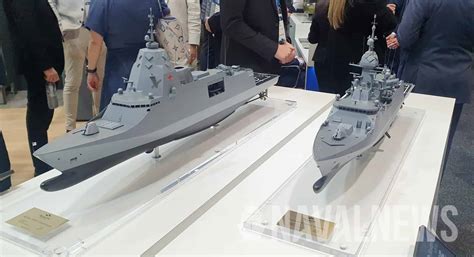
Each contender brings unique strengths, with European designs being especially attractive due to geographic proximity, existing NATO standards, and potential for offset cooperation.
Operational Vision: Beyond Today’s Navy
The acquisition is more than a response to current maritime needs; it is a blueprint for the future structure and doctrine of the Croatian Navy. These corvettes will serve as central platforms around which future unmanned systems, network-centric warfare doctrines, and multinational missions are built.
One of the defining features of the upcoming ships will be their ability to remain operational amid drone-saturated environments, coordinating electronic warfare, radar sweeps, and allied ship movements. This evolution could lead to a paradigm shift in how Croatia projects maritime power and aligns with NATO joint command structures.
Crucially, by acquiring two ships instead of one, Croatia ensures redundancy and availability, allowing one ship to remain in operation while the other undergoes maintenance or upgrades. This dual-ship approach maximizes return on investment and operational readiness.
Final Verdict: A Naval Renaissance in Motion
The 2026 corvette procurement program signals Croatia’s most significant naval leap since its independence. Beyond acquiring steel and sensors, the initiative reflects a transformation in doctrine, defense posture, and industrial ambition. It showcases a country that, while small in geography, is strategically vital in regional security and increasingly sophisticated in its defense planning.
Whether Croatia opts for European modularity, Korean robustness, or Western integration, the outcome will redefine its naval identity for the next three decades. Success hinges not only on the choice of shipyard but on Croatia’s ability to fuse strategy, technology, and logistics into a coherent maritime force ready to meet the challenges of the 21st century seas.