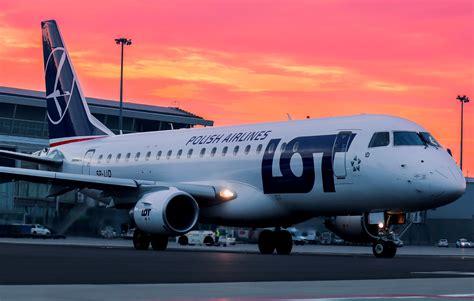
LOT Polish Airlines is undergoing a bold transformation, marking a pivotal shift in its operational strategy as it accelerates efforts to expand and modernize its fleet. The airline’s recent decision to order up to 84 Airbus A220 aircraft during the 2025 Paris Air Show has placed it squarely at the forefront of Central European aviation ambition. But this order is not just a fleet refresh — it is the cornerstone of a comprehensive growth strategy that will shape the future of Poland’s flag carrier well into the next decade.
LOT’s Airbus A220 Bet: A Break from Tradition and a Step Toward Scale
The commitment to the Airbus A220 family, comprising 40 firm orders and 44 options, reflects a significant departure from LOT’s previous reliance on Embraer regional jets, which have long served as the backbone of its short-haul fleet. The decision to choose Airbus over Embraer — a manufacturer with proven operational history at LOT — has raised eyebrows in both aviation and political circles. While Embraer’s E2 series seemed like a natural progression for fleet renewal, the A220-100 and A220-300 variants will not only introduce new efficiencies but also push LOT into larger regional jet categories, increasing available seat kilometers (ASK) and improving route economics.
The move is widely interpreted as politically influenced, particularly given Poland’s warming diplomatic relationship with France. Analysts have highlighted the symbolic significance of Airbus finally breaking into LOT’s historically Boeing-centric fleet. LOT CEO Michał Fijoł, however, maintained that both manufacturers presented highly competitive offers, stating:
“This deal is signed and the pre-delivery payments are already paid. So this is not something which is questioned by anybody in Poland.”
From E-Jets to A220s: Operational and Economic Shifts
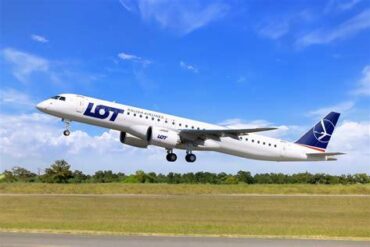
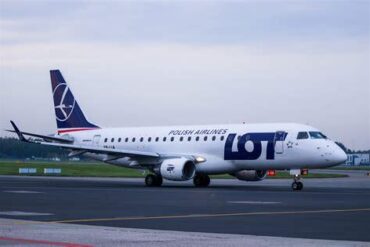
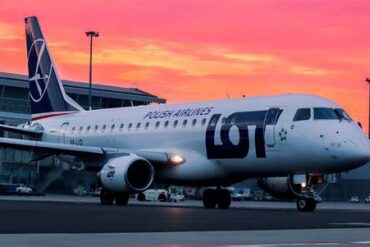
LOT’s aging Embraer E1 fleet — which includes E170s, E175s, and E190s — currently totals 44 aircraft. These will be phased out as the A220s enter service, introducing significant operational changes. The A220-300, being larger than any of the outgoing E1s, offers more range and better fuel efficiency per seat. Fijoł emphasized the unit cost advantage of operating larger aircraft, comparing it to previous transitions, such as when LOT introduced Boeing 737s into service.
“The economics of the bigger aircraft is really much better.”
This shift in fleet size and capability reflects LOT’s intent to strengthen its role not only in Poland but also across Europe, particularly in underserved secondary cities and niche routes where frequency and economics are crucial. The A220s are expected to facilitate expansion into such markets without compromising profitability.
The Larger Vision: “More Aircraft of All Types”
Beyond the headline-grabbing Airbus order, Fijoł made it clear that the A220s are just the beginning. LOT, he says, needs more aircraft of all types — a revealing comment that underscores the multidimensional growth strategy in motion. This includes enhancing both the short-haul and long-haul segments, potentially through additional narrowbody and widebody acquisitions.
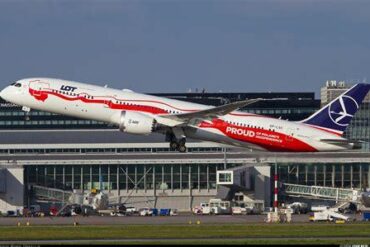
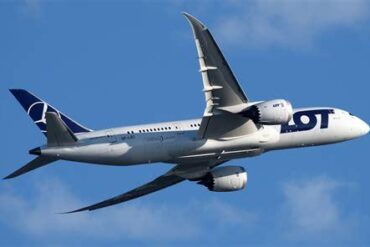
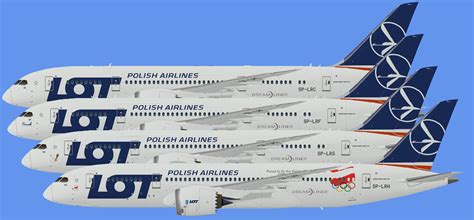
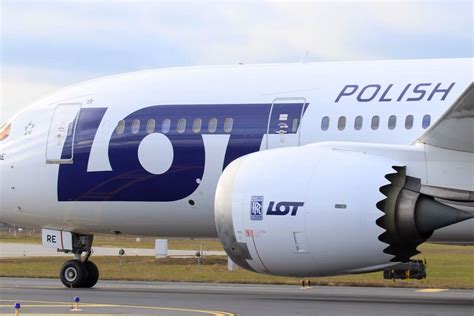
LOT currently operates a fleet of Boeing 787-8 and 787-9 Dreamliners on long-haul routes, with 13 aircraft split between the two types. However, delivery delays with the 787 program have prompted LOT to continue wet-leasing a EuroAtlantic Boeing 777 to maintain service on key transatlantic routes, particularly New York JFK. This underscores a clear demand for additional widebody lift, especially as global travel demand rebounds post-pandemic.
While Fijoł reiterated the airline’s historical preference for Boeing on long-haul routes, he also hinted at an open door to Airbus, suggesting a potential order of larger Airbus aircraft could be on the horizon:
“We will see. It’s too early to comment on that.”
Growth Constrained by Infrastructure — For Now
Even as LOT looks to acquire more aircraft, Warsaw Chopin Airport, the airline’s main hub, is reaching saturation. With limited gate availability, restricted runway operations, and a growing mix of low-cost and legacy carriers, the need for a new aviation hub is urgent. The solution lies in the Centralny Port Komunikacyjny (CPK) — or Central Communication Port — an ambitious intermodal mega-hub slated for completion by 2032. Once operational, CPK will radically alter the capacity landscape, giving LOT the room it needs to scale up its operations.
Until then, LOT must carefully balance expansion against current capacity constraints. The introduction of the A220s, with their improved range and lower takeoff footprint, is particularly timely, as these jets are ideally suited for maximizing the efficiency of limited airport infrastructure.
Competitive Landscape: Holding Ground Against LCCs
While legacy carriers dominate many European aviation markets, Poland presents a unique scenario. LOT is in direct competition with low-cost carriers, particularly Ryanair and Wizz Air, which control nearly double the combined market share of LOT, according to Cirium data. This intense competition forces LOT to think creatively and efficiently, particularly in its route network planning.
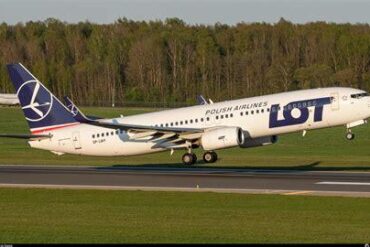
Fijoł pointed to LOT’s service to Tashkent — operated with a narrowbody Boeing 737 — as a perfect example of the airline’s nimble strategy. Where others might deploy widebodies, LOT leverages its smaller aircraft with longer range capabilities to access emerging markets across Central Asia. This flexibility is a key differentiator and allows LOT to tap into unique geographical markets underserved by both legacy and budget rivals.
A Hub-and-Spoke Model Poised for Global Reach
LOT’s growth is deeply intertwined with its hub-and-spoke model centered in Warsaw. By consolidating connecting traffic from regional cities into long-haul flights, the airline can optimize aircraft utilization and load factors. This model will be further enhanced once the new CPK airport hub opens, streamlining transfers and increasing overall passenger throughput.
In the meantime, the A220 fleet will be critical for LOT’s regional feed, feeding both intra-European and transcontinental departures. The type’s compatibility with shorter runways and underserved airports provides LOT with strategic flexibility unmatched by many of its regional peers.
Fleet Breakdown: Current Inventory vs Future Needs
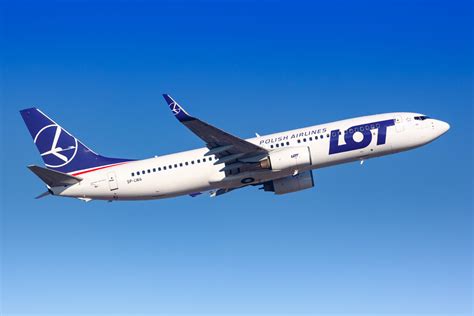
As of mid-2025, LOT’s fleet includes:
- 17 Boeing 737 MAX 8
- 6 Boeing 737-800
- 6 Boeing 787-8 Dreamliners
- 7 Boeing 787-9 Dreamliners
- 44 Embraer E1s (slated for retirement)
With the Embraers being phased out, the arrival of up to 84 Airbus A220s will redefine the airline’s short- and medium-haul operations. Simultaneously, the continued use and potential expansion of the 787 fleet for long-haul services indicates the need for further investment in widebody capacity, particularly as LOT seeks to grow its U.S. and Asia networks.
The airline’s CEO has made clear that stagnation is no longer acceptable:
“There was a time in history when LOT did not grow when it should have grown. Now it’s a time of growth.”
Final Approach: A Carrier Reclaiming Its Future
LOT Polish Airlines’ aggressive move to modernize its fleet and expand its capacity is more than a response to competition — it is a declaration of intent. From strategic aircraft orders to network innovations and a soon-to-be-transformed home airport, LOT is laying the foundation to become Central Europe’s premier carrier.
The emphasis on acquiring “more aircraft of all types” is not a vague aspiration — it is a clear blueprint for layered expansion across regional, medium, and long-haul sectors. The choices made today will define the next generation of LOT passengers, routes, and partnerships. As Central and Eastern Europe continue to integrate into the global economy, LOT’s vision — backed by fleet modernization and network agility — may finally allow the airline to fulfill its long-overdue potential.