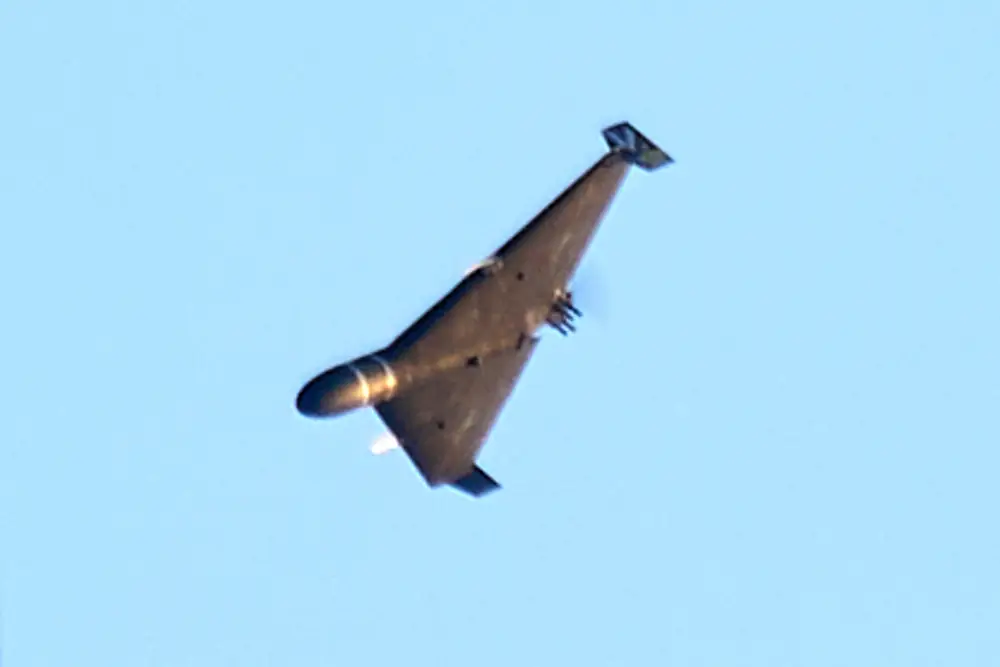
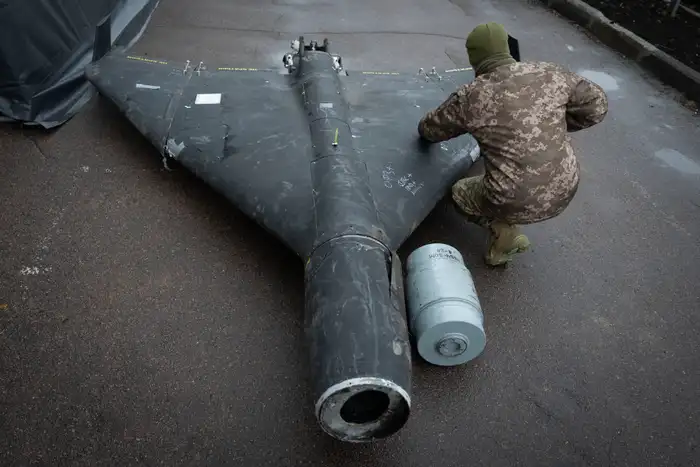
Russia’s aggressive integration of thermobaric warheads into its Shahed-series drones is rapidly escalating an already brutal warfront in Ukraine, transforming once-tactical drone strikes into devastating assaults with area-denial capability and terrifying human impact. These one-way, Iranian-designed loitering munitions, widely known as Shahed-136 drones, have become delivery vehicles for one of the most controversial weapons in modern warfare: vacuum bombs, or thermobaric munitions.
For Ukraine’s defenders and emergency responders, this represents a sharp and horrifying turn. Thermobaric warheads, with their ability to produce high-temperature blast waves and prolonged fireballs, are being used with greater frequency, range, and destructive capacity, according to those fighting to protect Ukrainian skies and cities.
Growing Payloads, Growing Destruction
According to Oleksiy, the deputy commander of a Territorial Defense Forces mobile air defense unit near Kyiv, Russia began integrating thermobaric payloads into Shahed-style drones as early as 2023. But by late 2024 and into 2025, the payloads grew significantly—from around 40 kilograms to nearly 90 kilograms, effectively doubling their lethality.
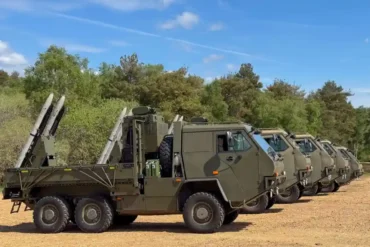
“Accordingly, the destructive force is much greater,” Oleksiy told Business Insider. These upgraded drones are reportedly evading conventional interception, especially for ground-based units like his, which rely on truck-mounted machine guns. While his team hasn’t yet downed one of the larger thermobaric drones, sightings and confirmed impacts have sharply increased across Ukrainian military reports.
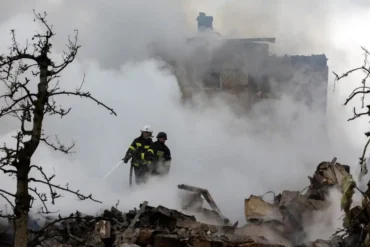
A thermobaric munition doesn’t just explode — it first releases a fine aerosol of explosive material, saturating the surrounding air. It then ignites, generating a fiery shockwave and vacuum effect that sucks oxygen from enclosed spaces, leaving behind obliterated buildings and scorched ruins. The blast temperature can exceed 4,000 degrees Fahrenheit, capable of melting metal and incinerating everything nearby.
From Theory to Tactical Terror
What makes thermobaric munitions particularly feared is their ability to kill not just with shrapnel but with heat and pressure, especially in enclosed structures like bunkers, residential buildings, and reinforced shelters. A Ukrainian first responder interviewed anonymously by Business Insider confirmed this, saying the weapons can “burn everything” within their blast radius.
Oleksiy emphasized that these bombs can flatten small homes and bring down multi-story buildings. While direct military casualties are concerning, it’s the attacks on civilian infrastructure, apartment complexes, and emergency shelters that paint an even grimmer picture.
Although details of each strike are difficult to independently verify, several sources confirm that these drones are being used in both urban assaults and front-line strikes, suggesting a growing normalization of what was once a specialized siege weapon.
The Shadow of TOS-1A and Evolving Doctrine
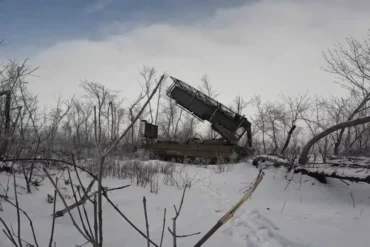
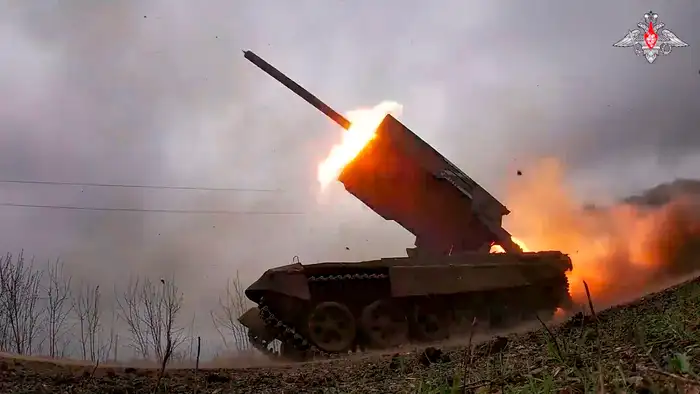
Russia’s military has long been accused of deploying thermobaric munitions in Ukraine, most notably with its TOS-1A heavy flamethrower system—a tank-mounted rocket launcher capable of leveling entire blocks. Used previously in Chechnya and Afghanistan, the TOS-1A’s battlefield reputation as a scorched-earth weapon is well documented.
Now, Moscow appears to be adapting that battlefield doctrine by miniaturizing the payload and equipping cheap, expendable Shahed drones with vacuum bombs instead. This shift in delivery system offers a strategic edge: it allows Russia to conduct high-impact strikes without risking costly systems or exposing troops to retaliation.
Kateryna Stepanenko, Russia deputy team lead at the Institute for the Study of War, told Business Insider that the transition to Shahed delivery began at scale in mid-to-late 2024, marking a new phase in the war. These weaponized drones were used just last week in Kharkiv, targeting civilian power infrastructure.
“The integration of thermobaric warheads onto cheaply made drones may allow Russia to increase the number of strikes that previously would’ve required a larger and more detectable system,” she said. These drones are now being fine-tuned for greater precision, enabling pinpoint devastation even in urban centers.
Strategic Saturation and Psychological Warfare
Russia’s drone warfare strategy is now increasingly focused on volume, confusion, and exhaustion. In a recent attack, the Ukrainian Air Force reported that nearly 270 Shahed and decoy drones were launched in a single day. More than two-thirds were intercepted, but the remainder caused destruction across multiple cities. The goal is not just physical — it’s also psychological attrition, forcing Kyiv to deplete its limited air defense stockpiles.
Shaheds, which loiter above targets before crashing into them, are ideal for softening defense lines, crippling infrastructure, and terrifying populations. Thermobaric upgrades enhance their role as tools of demoralization and urban disruption. In military doctrine, these are no longer reconnaissance assets — they are now frontline weapons of mass terror.
Counterstrikes and Ukrainian Resistance
In response, Ukraine has escalated its own long-range strike capabilities. Earlier this month, Kyiv’s military targeted a Russian factory manufacturing thermobaric warheads for Shahed drones. This marks a strategic shift from purely defensive interception to proactive neutralization of enemy production facilities.
Ukraine’s broader strategy involves sabotaging supply chains, deploying counter-drone technologies, and improving civilian alert systems to reduce casualties. But with Russia now able to mass-produce Shahed drones domestically, the scale of the threat grows weekly.
Thermobaric payloads are also increasingly being customized for strategic targets, including energy grids, communication centers, and military bunkers. The versatility and devastation of this modified Shahed system present a new challenge for Ukraine and its Western allies.
International Implications and War Crimes Concerns
Thermobaric weapons are not banned under international law, but their use in civilian areas can violate the Geneva Conventions and may constitute war crimes. Organizations like Human Rights Watch and Amnesty International have long decried their use in past conflicts due to the indiscriminate nature of their destruction.
Despite mounting evidence, Russia’s defense ministry remains silent, offering no comment on the Shahed thermobaric warhead program. Meanwhile, global watchdogs and intelligence services scramble to assess the scale of deployment, effectiveness, and potential spillover risks to neighboring nations.
Conclusion: A New Era of Low-Cost High-Impact Warfare
What began as sporadic reports of drone-dropped explosives has evolved into a sophisticated campaign of thermobaric terror, blending asymmetric warfare tactics with brutal legacy munitions. The combination of low-cost Shahed drones and high-yield thermobaric warheads signals a deeply concerning trend in Russia’s military strategy: efficient lethality at scale.
As Ukraine continues to fight back with limited resources and international support, the world watches with growing concern. This is not just a test of military endurance, but a preview of future warfare, where unmanned systems deliver devastating payloads with lethal precision and little warning. The rules of engagement are being rewritten in real time — and Ukraine is the battlefield where those rules are tested, broken, and reborn.