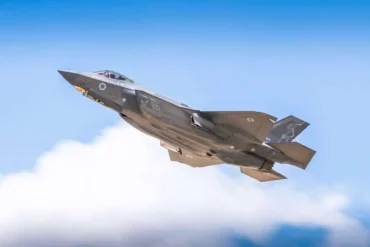
The Lockheed Martin F-35 Lightning II, as a fifth-generation stealth fighter, has revolutionized air combat with its low observable features, sensor fusion, and multirole capabilities. However, its limited combat radius, approximately 1,200 kilometers, has persistently raised operational concerns among its international operators. Nations such as Israel and the United States have responded by exploring and implementing external fuel tank solutions. These enhancements offer extended reach but introduce intricate trade-offs between stealth preservation and operational range.
The Dual Nature of External Fuel Tanks
Wing-Mounted Drop Tanks
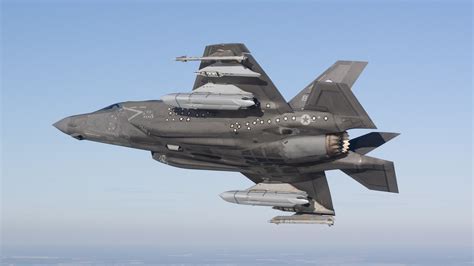
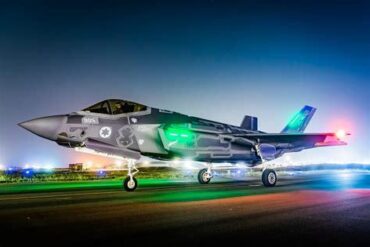
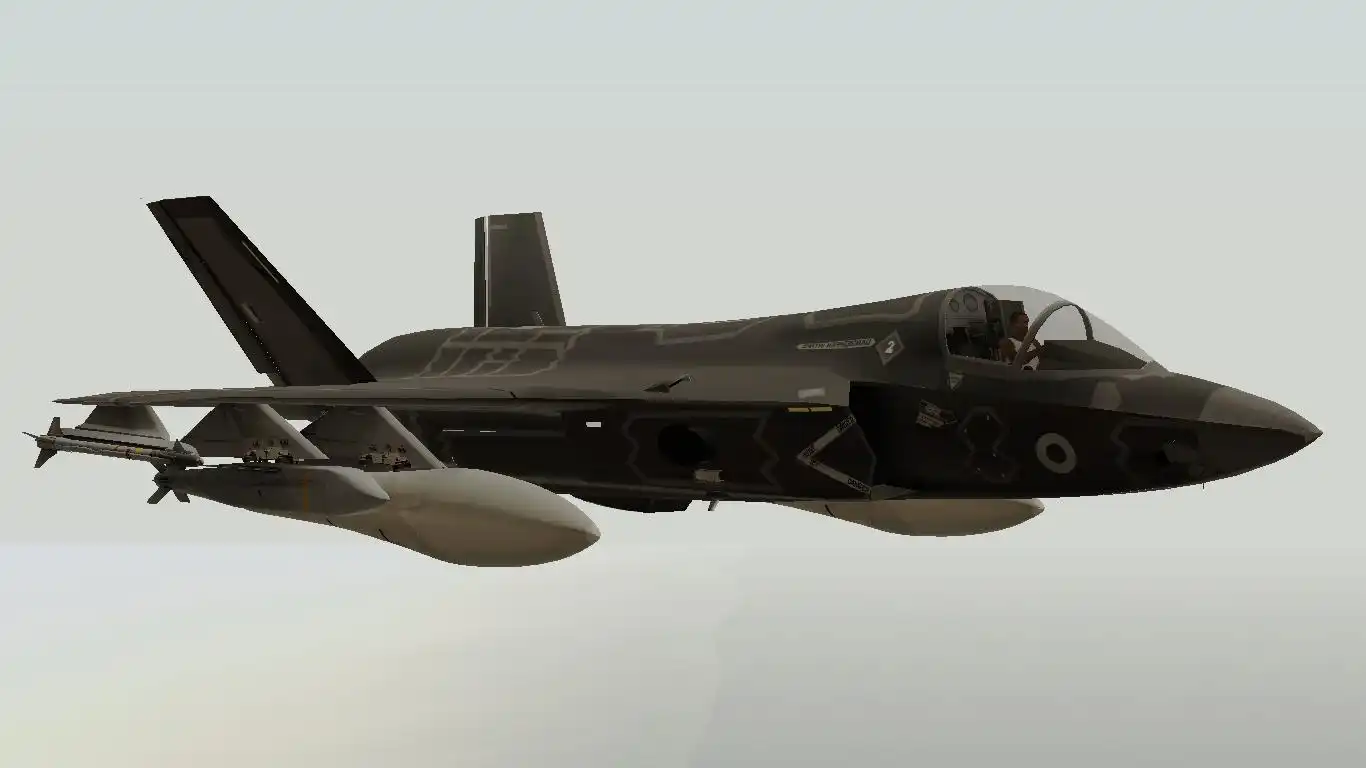
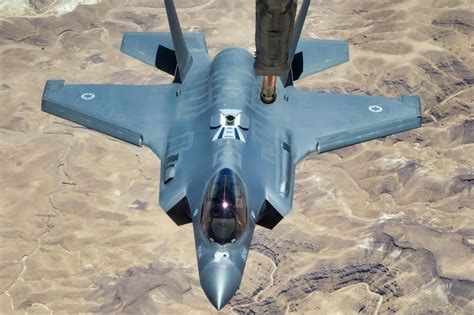
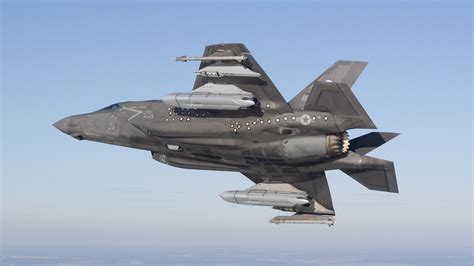
Among the most straightforward modifications are wing-mounted external fuel tanks, a concept traditionally employed by fourth-generation fighters. The Israeli Air Force (IAF) has been a leading proponent in adapting this solution to the F-35I “Adir” variant. Israeli engineers developed 600-gallon (approx. 2,270 liters) external tanks mounted under each wing. These tanks extend the aircraft’s fuel capacity by approximately 40%, enabling more extensive reach into adversarial territories.
However, these tanks introduce a significant challenge: they compromise the F-35’s radar cross-section (RCS). This undermines the platform’s stealth advantage, which is its core tactical value in contested airspaces. As a result, the tanks are designed to be jettisoned prior to entering enemy radar coverage, a tactic that restores the aircraft’s stealth profile before penetration missions.
Conformal Fuel Tanks (CFTs)
In response to the stealth degradation caused by underwing tanks, conformal fuel tanks have emerged as a more elegant engineering solution. Unlike external drop tanks, CFTs are aerodynamically blended into the aircraft’s fuselage, maintaining low observability while extending range.
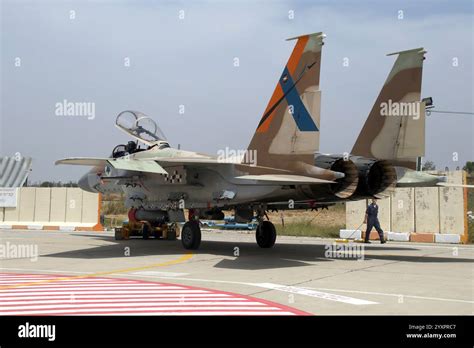
The Israeli-developed 800-gallon CFT system for the F-35I leverages lessons from its experience with aircraft like the F-15I Ra’am and F-16I Sufa, which already employ such tanks. These CFTs allow for long-range missions without sacrificing stealth. The advanced materials and tailored aerodynamics require extensive engineering refinements and higher maintenance investments, but the performance gain is significant, especially in the context of strategic targets located in nations like Iran.
Israel’s Strategic Integration and Combat Doctrine
Autonomous Modifications and National Security
Israel remains the only nation outside the U.S. with full software and hardware modification rights to its F-35 fleet. This autonomy has enabled customized integration of Israeli systems, including:
- SPICE-series precision-guided munitions
- Python-5 air-to-air missiles
- Indigenous electronic warfare suites
- Proprietary external fuel delivery systems
These capabilities support Israel’s unique doctrinal needs, particularly regarding long-range precision strikes against high-value strategic targets. In recent years, tensions with Iran have prompted the Israeli Defense Forces (IDF) to develop mission profiles capable of reaching over 1,600 kilometers, a range made possible by combined use of CFTs and multiple wing tanks.
Operational Validation: Exercise “Chariots of Fire”
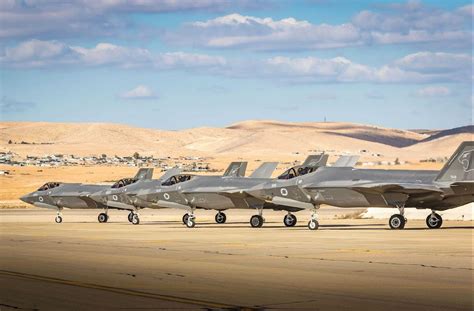
In 2022, during the massive multi-branch exercise “Chariots of Fire”, Israeli F-35I units successfully simulated deep penetration bombing raids on Iranian nuclear sites. The simulation validated the aircraft’s extended reach using four wing tanks and two CFTs, a configuration designed to eliminate reliance on aerial refueling platforms, which would introduce operational complexity and vulnerability.
The Stealth Paradox: Balancing Fuel and Signature
RCS Penalty of External Tanks
The integration of external tanks remains a delicate compromise. The stealth geometry of the F-35 was carefully engineered to minimize its radar signature. Any deviation, including protruding fuel pods, disrupts planform alignment, increases surface reflectivity, and makes the aircraft more detectable to modern air defense systems, especially X-band radar arrays.
For this reason, Israeli and American developers have adopted a “fuel-first, stealth-second” approach in the early legs of missions, shedding the tanks before the aircraft enters contested zones. This technique, while effective in the current threat environment, may not be sustainable in future theaters dominated by omni-directional low-band radar networks.
Advantage of Conformal Integration
The CFT architecture, although structurally more complex, avoids these pitfalls. By hugging the aircraft’s fuselage, these tanks maintain the integrity of the radar-absorbing shape, offering a long-range solution that complies with stealth constraints. In fact, Lockheed Martin has considered similar CFT solutions for its F-22 Raptor modernization program, recognizing that this might be the only viable path to expand operational flexibility without compromising survivability.
International Collaboration and Adaptation
Joint Development: Lockheed Martin and Israel
Since 2019, Lockheed Martin has collaborated with Israel Aerospace Industries (IAI) and Elbit Systems to develop a universal external fuel tank solution for the F-35 platform. The joint effort aimed to roll out by 2023, with provisions for potential retrofitting across various F-35 variants. While the F-35A remains the most adaptable version for such upgrades, exploratory discussions have considered potential applications for carrier-based F-35C and STOVL F-35B models.
Global Implications and Regional Relevance
While the U.S. Air Force has not publicly committed to adopting external fuel solutions for its F-35A fleet, strategic theaters such as the Indo-Pacific have begun to shape American interest. In the context of potential flashpoints like Taiwan, South China Sea, or the Korean Peninsula, extended range without mid-air refueling could prove decisive. Similarly, Japan, South Korea, and Australia, with expansive operational zones, are closely monitoring these developments, as they seek greater strategic autonomy and operational reach.
The Path Forward: Engineering and Strategic Innovation
Propulsion and Efficiency Enhancements
Future developments aim to optimize the F-35’s powerplant to maximize fuel efficiency. Israel, with Lockheed Martin’s support, is exploring software tuning of the Pratt & Whitney F135 engine, potentially offering fuel burn reductions through intelligent throttle and flight path management systems. These advancements would increase endurance without necessitating physical fuel volume increases.
Modular Upgrade Framework
Learning from the F-15EX Eagle II’s modular conformal tank system, developers may implement a plug-and-play fuel pod configuration for F-35s. This approach would reduce maintenance downtime and enhance battlefield adaptability, aligning with NATO’s evolving doctrine of flexible force deployment.
Such innovations represent the inevitable shift toward hybrid stealth-strike platforms, which blend low-observable signatures, long endurance, and precision lethality—a paradigm vital for air dominance in contested battlespaces through 2030 and beyond.
FAQ
How do external fuel tanks affect the stealth of the F-35?
External fuel tanks, particularly wing-mounted variants, increase the aircraft’s radar cross-section, thereby compromising its low observability. This limits their use in contested airspace, prompting the use of jettison mechanisms before stealth penetration. Conformal tanks, however, maintain a stealth-friendly profile due to their integrated design.
Why is Israel leading in F-35 external fuel tank development?
Israel has full sovereignty over its F-35I systems, allowing it to integrate local weaponry, modify software, and develop custom hardware such as external and conformal fuel tanks. Given its unique regional threats, especially from Iran, Israel has invested in extending operational range without aerial refueling.
Will the U.S. adopt external fuel tanks for its F-35 fleet?
While not officially adopted for the U.S. Air Force, there is increasing interest in such systems for Pacific operations. Lockheed Martin’s cooperation with Israel indicates a growing recognition of the need for long-range strike capabilities, particularly in scenarios where air refueling assets may be vulnerable or unavailable.