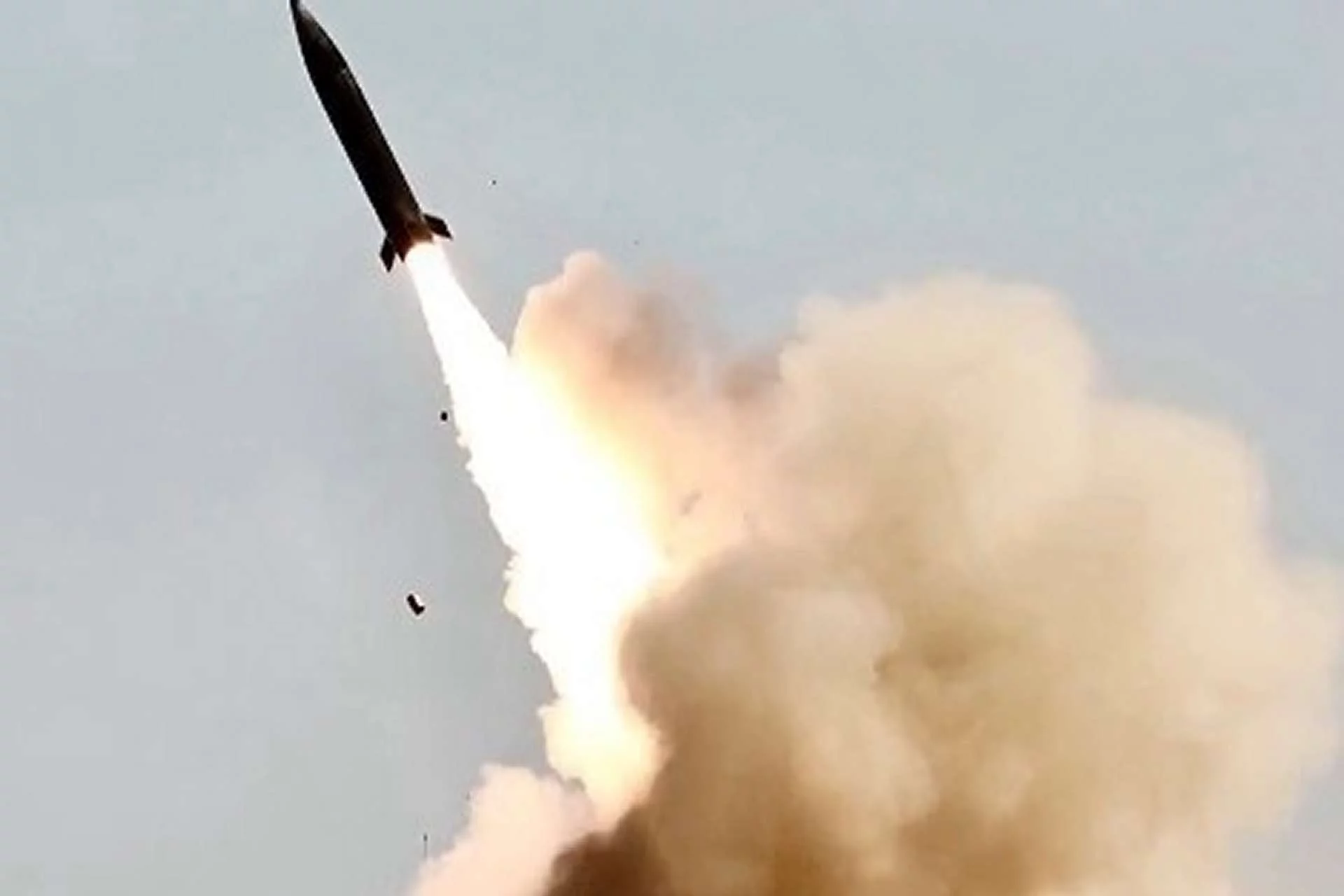
The United States has confirmed the first combat use of the U.S. Army’s Precision Strike Missile (PrSM) during coordinated strikes on Iranian military targets, marking a pivotal shift in how ground forces deliver deep, theater-level fires. Employed under U.S. Central Command during the opening phase of a broader campaign, the deployment of the 500-kilometer-class ballistic missile signals more than the arrival of a new munition. It represents a structural transformation in American strike doctrine—one that reduces reliance on air and sea-launched cruise missiles and expands the Army’s direct role in shaping high-intensity regional conflict.
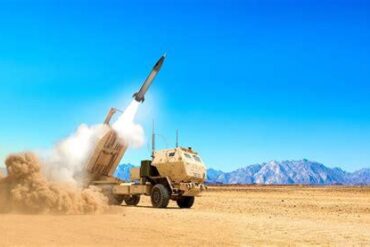
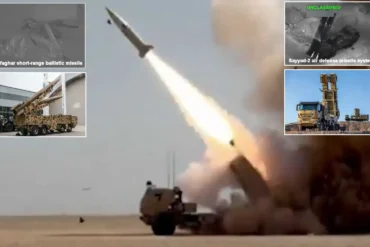
CENTCOM imagery released during the initial 24 hours of the operation shows HIMARS launchers equipped with the distinctive two-missile PrSM pod, a configuration visually different from the single-round ATACMS pod it replaces. While officials stopped short of naming the missile explicitly in early statements, the launcher loadout and mission profile strongly indicate that PrSM was the system employed. The targets reportedly included command-and-control facilities, integrated air defense systems, and missile infrastructure—precisely the categories for which the missile was designed.
The significance of this first strike lies not in novelty but in capability. For decades, long-range precision attack against hardened or time-sensitive targets largely fell to aircraft armed with standoff munitions or naval cruise missiles. The PrSM shifts that burden, giving Army rocket artillery the capacity to conduct rapid, high-velocity, precision deep strikes from dispersed ground positions.
First 24 hours of Operation Epic Fury:
“The President ordered bold action, and our brave Soldiers, Sailors, Airmen, Marines, Guardians, and Coast Guardsmen are answering the call,” – Adm. Brad Cooper, CENTCOM Commander pic.twitter.com/McrC7xeM0A
— U.S. Central Command (@CENTCOM) March 1, 2026
Precision Strike Missile: A New Standard in Ground-Launched Deep Fires
The Precision Strike Missile Increment 1 is the U.S. Army’s replacement for the MGM-140 Army Tactical Missile System (ATACMS). Designed under the Army’s Long Range Precision Fires modernization initiative, PrSM extends engagement reach beyond 400 kilometers, with demonstrated performance in the 500-kilometer range class under representative conditions. This extended reach effectively doubles the operational envelope previously associated with ATACMS variants, commonly cited at approximately 300 kilometers.
Beyond raw distance, PrSM’s most immediate tactical advantage is its slimmer design. Two missiles fit into a single standard launch pod compatible with both HIMARS and M270 MLRS platforms. This configuration doubles ready-to-fire ballistic missile capacity per launcher compared to ATACMS, increasing “magazine depth” without requiring structural modifications to launch vehicles or fire-control systems.
In high-intensity conflict scenarios, magazine depth is not a trivial metric. It determines how many precision engagements can be executed before reload, a process that may be constrained by logistics, enemy surveillance, or counterbattery risk. Doubling available rounds per launcher transforms how commanders allocate assets, enabling either broader target coverage or concentrated salvos against heavily defended nodes.
Operational Impact in the Iran Strike Scenario
In the context of the Iran operation, PrSM offered advantages that go beyond reach and payload. A HIMARS battery can deploy from dispersed locations, launch in minutes, and displace before adversary reconnaissance assets or counterfire systems can respond. This “shoot-and-scoot” survivability profile complicates enemy targeting cycles, particularly in environments saturated with unmanned aerial surveillance.
Ballistic flight characteristics further compress engagement timelines. Unlike subsonic cruise missiles, which fly terrain-following profiles at lower speeds, a short-range ballistic missile ascends and reenters at high velocity. The result is reduced reaction time for point-defense systems and increased kinetic energy at impact. Against hardened facilities or reinforced command structures—common within Iranian basing networks—this high terminal velocity enhances destructive effect.
The opening phase of the campaign reportedly involved strikes on more than 1,000 targets across a mix of air, sea, and land domains. In such a dense suppression effort, the PrSM becomes a tool for rapidly degrading integrated air defense networks (IADS) and missile support infrastructure. By targeting radar nodes, command centers, and launch facilities from ground-based platforms, the Army contributes directly to corridor creation for follow-on air operations.
From Modernization Concept to Combat Reality
The appearance of PrSM in combat reflects years of deliberate modernization planning. After the Cold War and through counterinsurgency campaigns, the Army’s emphasis shifted away from large-scale, theater-depth fires. Airpower absorbed much of the responsibility for long-range precision strike. However, as peer and near-peer threats invested heavily in anti-access and area-denial systems, the need for ground-based deep fires returned to the forefront of U.S. defense planning.
PrSM achieved Milestone C approval in July 2025, transitioning the program into production and deployment. That milestone signaled that the system had matured beyond developmental testing and into operational fielding. Substantial procurement contracts followed, enabling stockpiling sufficient quantities for real-world employment.
The Iran operation appears to be the first scenario in which commanders possessed both the inventory and the operational requirement to employ the missile at scale. The campaign’s emphasis on dismantling air defenses and missile infrastructure aligns precisely with the mission profile envisioned during PrSM’s development.
Strategic Messaging and Deterrence Implications
While the immediate tactical objective centered on Iranian targets, the broader strategic message extends well beyond the region. Demonstrating combat use of a ground-launched ballistic missile with 500km reach reinforces the United States’ capacity to impose precision effects deep into contested theaters from mobile land forces.
For adversaries observing from other regions, the implications are clear. Concentrating high-value assets within a few hundred kilometers of U.S. positions no longer guarantees sanctuary behind layered defenses. The mobility of HIMARS and MLRS platforms complicates targeting calculus, while the missile’s velocity challenges interception.
This development also redistributes strike responsibilities within the joint force. By enabling the Army to conduct theater-level suppression independently, air and naval assets can be reserved for missions requiring unique platform capabilities, such as stealth penetration, maritime control, or persistent ISR. The result is a more diversified and resilient strike architecture.
Replacing Constraints, Expanding Options
The replacement of ATACMS is not merely generational; it is structural. ATACMS provided a valuable precision ballistic capability but imposed limitations in both range and launcher efficiency. Each missile consumed an entire pod, reducing sustained-fire potential. In high-tempo operations, reload frequency can become a vulnerability.
PrSM mitigates this constraint. Two missiles per pod mean fewer launchers are required to service the same number of targets. Alternatively, existing launcher densities can generate larger salvos, increasing the probability of overwhelming defenses. This flexibility enhances operational planning, particularly when confronting layered air defense networks supported by electronic warfare and decoys.
Moreover, PrSM’s architecture anticipates growth. Future increments are expected to incorporate advanced seekers and potentially expanded mission sets, including engagement of moving maritime targets. Such evolution would further integrate Army rocket forces into joint theater denial strategies.
A Defining Moment for Long-Range Precision Fires
The first combat use of the Precision Strike Missile marks a defining moment in the evolution of U.S. ground-based strike capability. It validates the Army’s investment in long-range precision fires as a central pillar of modernization and demonstrates that ground forces can now deliver rapid, high-impact effects traditionally associated with air and naval platforms.
In operational terms, the Iran strikes illustrate how dispersed launchers, extended range, and high-velocity impact combine to compress enemy decision cycles. In strategic terms, they underscore a rebalanced joint force in which land-based ballistic missiles play a central role in the opening hours of regional conflict.
As production continues and additional increments mature, the PrSM is positioned to become not merely a replacement for ATACMS but a foundational element of U.S. theater deterrence. Its combat debut transforms it from a program milestone into an operational precedent—one likely to shape doctrine, procurement, and adversary planning for years to come.