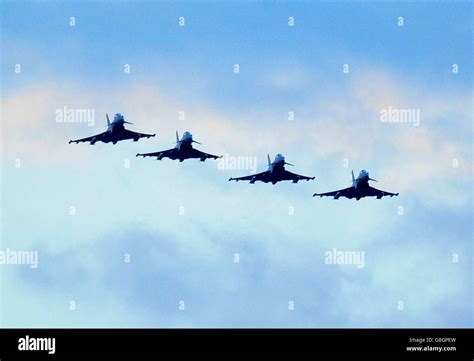
The United Kingdom has initiated a significant military deployment to the eastern Mediterranean, sending BAE Systems’ Eurofighter Typhoon jets and Airbus Voyager aerial refueling aircraft to RAF Akrotiri in Cyprus, a strategic move prompted by escalating hostilities between Iran and Israel. This development marks one of the most assertive British military postures in the region in recent years, as the government responds to direct threats from Tehran against British military installations and broader Western interests.
On June 14, 2025, Prime Minister Keir Starmer confirmed the deployment ahead of the G7 summit, describing the action as “contingency support” amid a rapidly deteriorating Middle Eastern security environment. This move aligns with the UK’s ongoing commitment to allied defense and international stability, but also underscores the tangible risk facing British assets as Iran expands its rhetoric and reach.
Tensions Rise: Iran’s Threats Ignite Western Military Mobilization
The latest crisis erupted following a surge in Iranian ballistic missile launches, many of which targeted Israel directly or threatened regional U.S. and allied interests. In response, Israel conducted retaliatory airstrikes across suspected IRGC (Islamic Revolutionary Guard Corps) facilities, prompting Tehran to escalate its threats even further. Among Iran’s list of potential retaliation targets are Western military bases, including the vital British airbase at Akrotiri, situated on the southern coast of Cyprus.
While the UK has traditionally maintained a visible but restrained posture in Middle Eastern conflicts, the current situation has forced a more active military stance. Tehran’s unprecedented explicit threats toward British sovereign territory, combined with the destabilization of maritime traffic and regional airspace, have compelled the UK to visibly assert its defensive readiness and deterrence capability.
RAF Akrotiri: Britain’s Forward Operating Spearhead
RAF Akrotiri plays a central role in the UK’s military footprint beyond Europe. Long a launchpad for Operation Shader, the British component of the coalition campaign against Daesh in Iraq and Syria, Akrotiri has seen multiple waves of Typhoon and Tornado deployments in the past decade. Its proximity to the Levant, access to the Mediterranean, and NATO-aligned infrastructure make it a natural hub for forward contingency operations.
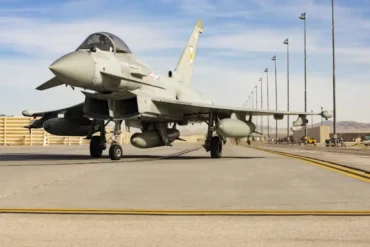
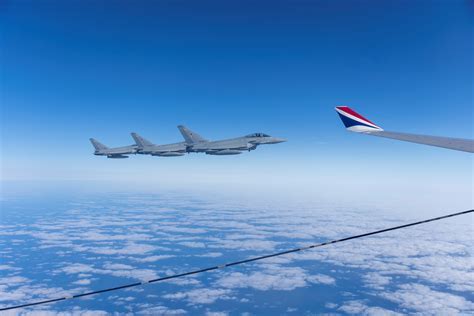
By deploying Typhoon FGR4 fighter jets and Voyager KC2/KC3 tankers, the UK is reinforcing this already critical outpost. These aircraft enable the RAF to perform a wide range of missions including Combat Air Patrols (CAP), defensive counter-air, and precision strike operations, all of which are relevant in the context of rising regional hostility.
Typhoon FGR4: Versatility and Lethality in the Skies
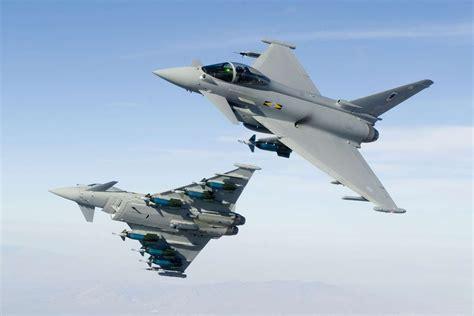
The Eurofighter Typhoon, designed by a European consortium with the UK’s BAE Systems as a key stakeholder, remains the backbone of British combat air power. The FGR4 variant, deployed in this crisis, is equipped with a multi-role avionics suite and integrated with advanced systems such as the CAPTOR-E AESA radar and PIRATE infrared search and track (IRST). These capabilities enable the Typhoon to engage multiple airborne threats simultaneously, support close air support operations, and deliver precision-guided munitions in strike missions.
Its modular design allows it to switch rapidly between air dominance and ground attack roles. This flexibility is crucial in a region where mission profiles may shift by the hour—from patrolling disputed airspace to delivering kinetic strikes on hostile infrastructure.
The FGR4 is often armed with:
- Meteor beyond-visual-range air-to-air missiles (BVRAAM) for high-speed aerial engagements,
- Paveway IV laser-guided bombs for precision ground targeting,
- Brimstone missiles for armored ground targets,
- And ASRAAM missiles for short-range air defense.
This array ensures it can simultaneously deter Iranian fighters, suppress radar installations, and provide airborne overwatch for special forces or humanitarian missions.
Voyager Tankers: Strategic Endurance and Operational Reach
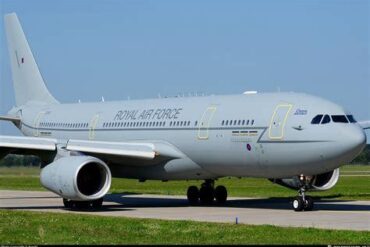
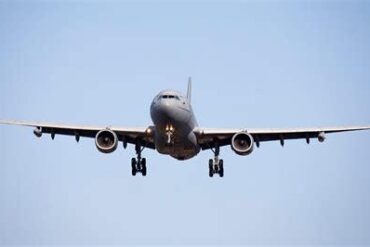
Alongside the Typhoons, Voyager KC2 and KC3 aircraft have been deployed to provide aerial refueling support, a mission-critical function that extends the Typhoons’ operational range, loiter time, and mission diversity. Based originally at RAF Brize Norton, these aircraft are modified Airbus A330 MRTTs (Multi-Role Tanker Transports), capable of refueling RAF, NATO, and allied aircraft, while also transporting personnel or equipment.
Voyagers enable persistent air presence over high-risk zones, which is critical for enforcing air exclusion zones, conducting ISR (intelligence, surveillance, reconnaissance), and maintaining QRA (Quick Reaction Alert) coverage should Iranian fighters or drones breach regional air boundaries.
Forward Deterrence: Strategic Signaling and Alliance Cohesion
The decision to publicly disclose this deployment ahead of the G7 summit sends a calculated signal to both allies and adversaries. It reinforces the UK’s status as a pillar of NATO’s southern flank and a committed participant in international crisis management. It also assures Gulf Cooperation Council (GCC) nations that Britain remains a reliable security partner, particularly at a time when Iran is seeking to fracture Western resolve through asymmetric threats.
The strategic placement of British jets within easy reach of Syrian and Iraqi airspace, the Levant corridor, and Eastern Mediterranean shipping lanes allows London to protect maritime traffic, reassure regional partners, and, if necessary, support coalition airstrikes. This forms part of a layered deterrence posture, combining military visibility with diplomatic signaling to reduce the likelihood of Iranian miscalculations.

Iran’s Calculus and the Risk to British Sovereignty
Iran’s messaging around RAF Akrotiri is unambiguous and deeply concerning. In threatening a direct strike on British soil, Iran risks elevating the conflict to a state-on-state confrontation. While much of Tehran’s military activity has historically focused on proxy warfare and indirect conflict, its willingness to target Cyprus-based infrastructure would mark a dangerous escalation.
Akrotiri, though sovereign UK territory, sits in a politically sensitive part of the island—near the Greek-Cypriot and Turkish-Cypriot buffer zones. A missile strike there could cause civilian casualties, draw in EU institutions, and provoke a NATO-wide response, potentially activating Article 5 consultation clauses depending on the nature and scale of the attack.
The UK’s military presence in Cyprus is also underpinned by decades-old treaties with the Cypriot government, meaning any Iranian attack could be interpreted as a broader assault on European sovereignty.
Operational Readiness and Coalition Interoperability
RAF Typhoons deployed to Akrotiri are part of No. 903 Expeditionary Air Wing, an agile and combat-experienced formation with multiple deployments in the Middle East. The integration between British, American, and French air forces is already well-established through NATO exercises and coalition operations, allowing for joint taskings, interoperable logistics, and common air picture sharing.
Should the conflict escalate, this interoperability ensures:
- Rapid integration into multinational air tasking orders (ATO),
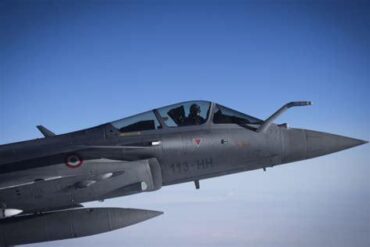
- Seamless refuelling of allied jets, including U.S. F-15s, F-35s, and French Rafales,
- Coordinated strike packages, and
- A unified rules of engagement (ROE) structure for threat engagement.
A Shift in British Defense Doctrine Under Starmer
Under the new Labour government, led by Prime Minister Keir Starmer, there is a clear pivot in British defense posture: from reactive to proactive engagement. The emphasis on “scalable deployments” and flexible power projection signals a return to Cold War-era principles of forward deterrence, tailored to meet 21st-century threats from hybrid actors like Iran.
Starmer’s government has stressed the importance of:
- Sustained global presence in key theaters,
- Investment in interoperable air and naval assets, and
- Strengthening alliances through visible contributions to regional stability.
This crisis, therefore, represents not just a flashpoint with Iran but a litmus test for British defense policy, testing its responsiveness, global reach, and strategic clarity.
Conclusion: A Calculated Move Amid Regional Volatility
The deployment of RAF Typhoon jets and Voyager tankers to Cyprus marks a deliberate and strategic escalation by the UK in response to direct Iranian threats and growing instability in the Middle East. It reflects a defense apparatus that is not only well-equipped but politically aligned with allied efforts to preserve regional balance.
With RAF Akrotiri at risk, and Iran emboldened by geopolitical distractions elsewhere, the UK’s decision to forward-deploy combat-ready aircraft demonstrates resolve, deterrence, and preparedness. Whether this show of force will deter further Iranian adventurism remains uncertain. What is clear, however, is that Britain is no longer a passive actor in Middle Eastern security but a central player willing to protect its assets and affirm its role on the global stage.