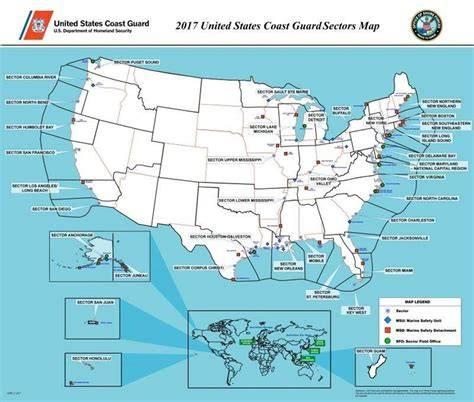
The United States Coast Guard operates one of the country’s most geographically dispersed aviation rescue networks. Its aircraft may be called upon to find a missing sailor, evacuate an injured fisherman, recover survivors from a sinking vessel, or assist another agency during an emergency far from shore. The scale of these missions varies dramatically, but several air stations stand out because of the extraordinary areas and workloads they must cover.
What makes these bases particularly important is not simply the number of aircraft stationed on their ramps. Their significance comes from the combination of search-and-rescue demand, geographic isolation, harsh weather, enormous areas of responsibility, and limited alternative aviation assets. In some locations, a Coast Guard helicopter is the only practical way to reach a person in distress before the situation becomes fatal.
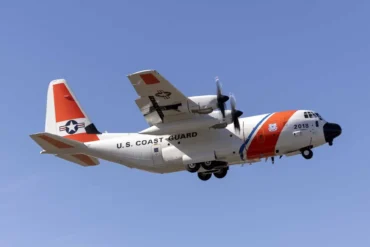
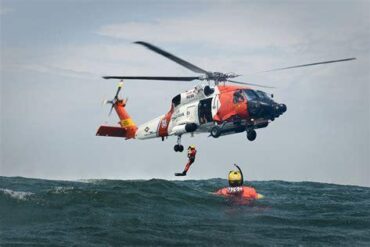
The aircraft themselves are built around this demanding mission. The fleet includes long-range fixed-wing platforms such as the Lockheed HC-130J Super Hercules, alongside helicopters including the Sikorsky MH-60 Jayhawk and MH-65 Dolphin. Each aircraft fills a different role, allowing crews to search huge stretches of ocean, locate survivors, coordinate rescue operations, and provide medical evacuation when necessary.
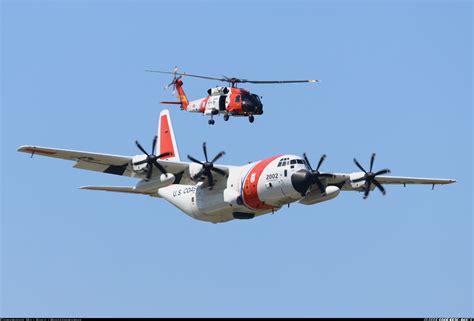
The five air stations examined here demonstrate just how different Coast Guard aviation responsibilities can be. Air Station Cape Cod provides a critical safety net for the northeastern United States, while Air Station Sitka operates across Alaska’s isolated southeastern coastline. Air Station Kodiak tackles some of the most dangerous maritime conditions in the North Pacific and Arctic. Air Station Clearwater faces an exceptionally intense operational tempo around Florida and the Caribbean. Meanwhile, Air Station Barbers Point has an enormous Pacific responsibility that can send crews thousands of miles from Hawaii.
5. Air Station Cape Cod
Coast Guard Air Station Cape Cod occupies a unique position within the northeastern United States because it is the only Coast Guard aviation facility serving the region between New Jersey and the Canadian border. From its location at the former Otis Air Base, the station provides aviation coverage across more than 2,000 miles of coastline, making its availability especially important during emergencies in New England.
The station’s operating environment combines dense coastal populations with some of the Atlantic’s notoriously changeable weather. Fishing vessels, commercial shipping, recreational boats, and aircraft all contribute to the demand for emergency response. Cape Cod itself is surrounded by heavily traveled waters, while the station’s wider responsibility extends north toward the Canadian border and westward toward areas such as Lake Champlain in New York.
Around 200 Coast Guard personnel support the station’s aviation mission. Its reported fleet includes three MH-60 Jayhawk helicopters and three HC-144A Ocean Sentry aircraft, giving the unit both rotary-wing and fixed-wing capabilities. The combination is important because helicopters provide rapid response and hoisting capability, while fixed-wing aircraft can search much larger areas and remain airborne for extended periods.
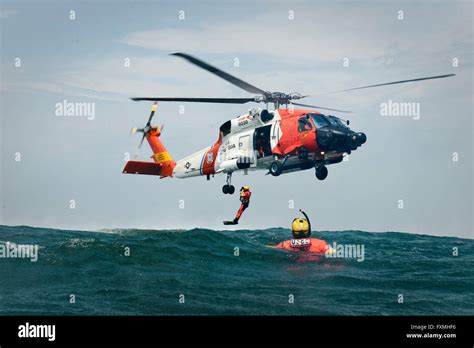
One of the station’s defining characteristics is the limited availability of nearby Coast Guard aviation alternatives. If its aircraft are grounded because of maintenance or severe weather, another Coast Guard aviation asset may be hundreds of miles away. That makes reliability more than an engineering concern; it becomes an operational necessity.
Cape Cod maintains a 24-hour, 365-day readiness posture, with crews expected to launch assets rapidly after an emergency call. The station averages roughly 250 missions annually, ranging from maritime search and rescue to medical evacuation and other emergency-response tasks. In a region where weather can deteriorate quickly, the ability to move from standby to airborne operations can make the difference between finding survivors and arriving too late.
4. Air Station Sitka
Farther north, Coast Guard Air Station Sitka operates under circumstances that are dramatically different from those at Cape Cod. The station is smaller in personnel and aircraft, but its responsibility encompasses approximately 12,000 miles of rugged Alaskan coastline. Much of this territory consists of isolated islands, mountainous terrain, narrow waterways, and communities that have limited transportation connections.
Approximately 130 Coast Guard personnel operate three MH-60 helicopters from Sitka. Those aircraft are tasked with an unusually broad range of emergencies. Although maritime search and rescue remains central to the station’s mission, crews also conduct inland rescues involving hikers, hunters, and other people stranded in remote areas.
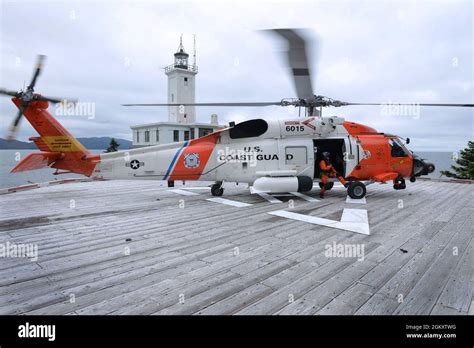
The geography makes medical evacuation particularly important. In many parts of southeastern Alaska, reaching a larger city by road is impossible because there simply are no roads connecting remote communities. A seriously injured person may therefore depend on a Coast Guard helicopter to reach appropriate medical care. Crews can evacuate patients from isolated villages and regional clinics to hospitals in Sitka, Juneau, and Ketchikan.
The station also supports Alaska’s maritime infrastructure by inspecting and servicing approximately 75 aids to navigation scattered across remote locations. These markers help mariners avoid reefs, rocks, and hazardous channels, but maintaining them can require aviation access because many sites are inaccessible by conventional transportation.
Sitka’s aircraft additionally contribute to maritime law enforcement and environmental protection. Alaska’s commercial fishing industry is enormously valuable, and Coast Guard crews conduct low-level patrols over remote waters to monitor fishing activity. They may check whether vessels are operating during authorized fishing periods or entering conservation areas that are closed to harvesting.
The station therefore illustrates an important characteristic of Coast Guard aviation: a rescue helicopter can simultaneously function as an emergency-response platform, medical evacuation aircraft, infrastructure-support asset, and maritime law-enforcement tool.
3. Air Station Kodiak
Few Coast Guard aviation facilities operate in an environment as demanding as Air Station Kodiak. Based on Alaska’s Kodiak Island, the station covers an immense maritime region encompassing the Gulf of Alaska, Bering Sea, Aleutian Islands, Chukchi Sea, and Beaufort Sea.
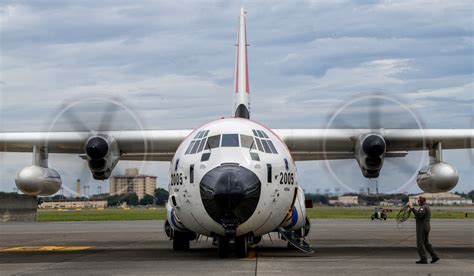
With roughly 400 personnel and 14 aircraft, Kodiak represents one of the Coast Guard’s most substantial aviation commands in the Pacific. Its reported fleet includes five HC-130J Super Hercules aircraft, five MH-60 Jayhawks, and four MH-65 Dolphins. Together, these aircraft allow the station to combine long-range surveillance and search capability with helicopter rescue operations.
The distances involved are enormous. Commercial fishing vessels can become disabled or sink hundreds of miles from the nearest community. Crews may have to locate survivors in freezing water while operating around powerful winds, heavy seas, mountainous terrain, and rapidly changing weather. A rescue that appears straightforward on a map can become a highly complex aviation operation once those environmental factors are considered.
Kodiak also uses forward operating locations, including places such as Cold Bay and Kotzebue, to position aircraft closer to areas where emergencies are likely to occur. This approach can substantially reduce response times in Alaska, where simply reaching the general vicinity of an incident can consume hours.
The station’s responsibilities extend beyond traditional rescue work. Coast Guard aircraft patrol Alaska’s enormous Exclusive Economic Zone, supporting fishing enforcement and maritime safety while watching for illegal foreign activity. The same aircraft may also support national-security missions when foreign military aircraft or vessels are detected in sensitive areas.
The opening of Arctic shipping routes adds another layer to Kodiak’s workload. As seasonal ice conditions change, more vessels may operate through waters that historically saw less traffic. That creates additional demands for maritime awareness, emergency response, and coordination with other federal agencies.
Kodiak is therefore not simply a rescue base. It is a critical aviation node connecting search and rescue, fisheries enforcement, Arctic security, maritime safety, and national defense across an exceptionally large operating environment.
2. Air Station Clearwater
Coast Guard Air Station Clearwater stands apart from the other stations because of its exceptionally high operational tempo. Located in Florida, Clearwater supports a region where recreational boating, tourism, commercial activity, offshore energy operations, migrant interdiction, and maritime law enforcement all generate substantial demand for Coast Guard aviation.
The surrounding waters are among the busiest recreational maritime environments in the United States. Millions of visitors travel to Florida’s coastline, while residents operate boats, participate in diving and watersports, and venture into the Gulf of Mexico. Every additional vessel represents another potential emergency, and the sheer density of maritime activity can create a steady flow of search-and-rescue calls.
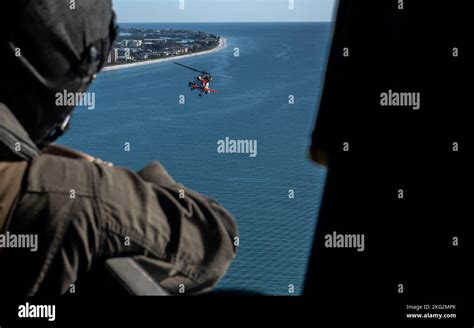
Clearwater reportedly averages more than 300 sorties per year while maintaining a rapid-response posture. Its approximately 500 active-duty personnel support a large helicopter force, including around ten MH-60 Jayhawks, alongside a varying number of fixed-wing aircraft such as the HC-130 and HC-27J Spartan.
The station’s workload extends well beyond recreational boating accidents. The Gulf of Mexico’s offshore oil infrastructure creates another category of potential emergency. Workers operating on platforms can require urgent evacuation, while accidents at sea can place Coast Guard aircraft in situations where speed and endurance are essential.
Clearwater also supports military activities in the Gulf. Naval and Air Force training areas occupy portions of the region, and when military aircraft experience accidents over water, Coast Guard units can become important participants in the resulting search-and-rescue operation.
Perhaps most significantly, Clearwater combines rescue work with maritime interdiction missions. Migrant vessels attempting dangerous sea crossings from the Caribbean can become overloaded, unstable, or otherwise unseaworthy. Coast Guard crews may consequently find themselves shifting rapidly between law-enforcement responsibilities and life-saving operations.
The same principle applies to counter-narcotics missions. Coast Guard aviation assets help locate and track vessels suspected of carrying illegal drugs, contributing to broader federal interdiction operations. This combination of missions makes Clearwater one of the Coast Guard’s most operationally demanding aviation facilities.
Its aircraft must remain ready for the possibility that the next call could involve a recreational boater in distress, offshore workers, migrants in an overloaded vessel, suspected traffickers, or survivors from an aviation accident. That extraordinary variety helps explain why Clearwater ranks among the busiest Coast Guard air stations.
1. Air Station Barbers Point
At Coast Guard Air Station Barbers Point on Oahu, the defining challenge is scale. The station supports aviation operations across the Coast Guard’s Fourteenth District, an enormous Pacific region encompassing more than 12 million square miles of ocean, islands, and atolls.
That responsibility is so extensive that a single mission may require aircraft to travel more than 2,000 nautical miles. Unlike a coastal rescue in Florida or New England, there may be no nearby land, harbor, hospital, or alternate aircraft within practical reach. The Pacific can offer nothing but open water in every direction.
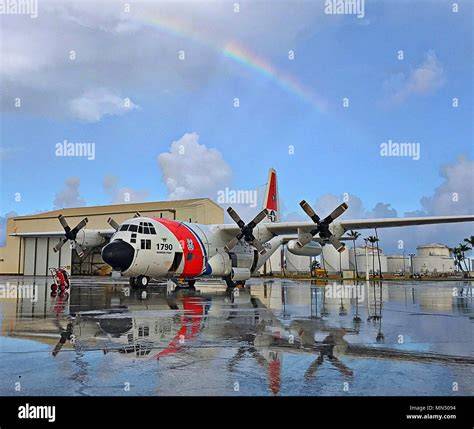
The station’s fixed-wing HC-130J Super Hercules aircraft are essential for these long-distance missions. Their range and endurance allow crews to reach remote areas, search vast ocean sectors, coordinate survivor recovery, and remain on station far longer than a helicopter could normally manage alone. The station also operates MH-65 Dolphin helicopters for shorter-range rescue and response missions.
Around 200 to 250 personnel maintain the station’s reported fleet of four HC-130 aircraft and four MH-65 helicopters. Despite that relatively compact force, crews conduct approximately 1,200 search-and-rescue flight hours each year, save an average of 50 lives, and assist more than 700 people annually.
The geographic scope is remarkable. Barbers Point supports operations throughout the Hawaiian Islands, Marianas, Guam, Saipan, Carolines, and Marshall Islands. The station is effectively a critical aviation safety net spread across an ocean rather than a conventional coastal region.
Its crews also work with other military assets when a search becomes too large for Coast Guard aircraft alone. US Navy P-8 Poseidon maritime patrol aircraft, including those operating from locations such as Okinawa, can provide additional search capability during complex survivor-recovery operations.
The importance of Barbers Point ultimately comes down to a simple geographic reality: distance is itself a threat to survival. A person in the middle of the Pacific cannot simply reach a nearby harbor after an accident. Coast Guard aviation may need to cover thousands of miles of ocean to locate them, establish contact, and coordinate a rescue.
The Coast Guard’s Most Demanding Aviation Missions
These five stations demonstrate that the biggest search-and-rescue responsibility cannot be measured by one statistic alone. Cape Cod faces the challenge of being a crucial aviation resource for a densely populated northeastern coastline. Sitka covers an enormous and isolated Alaskan region with a relatively small force. Kodiak combines extreme distances with some of the world’s harshest maritime conditions.
Clearwater faces perhaps the most diverse operational workload, where rescue missions exist alongside migrant interdiction, counter-narcotics operations, offshore energy support, and military search-and-rescue requirements. Barbers Point, meanwhile, confronts the ultimate Pacific challenge: enormous distances over open water with very few alternatives when something goes wrong.
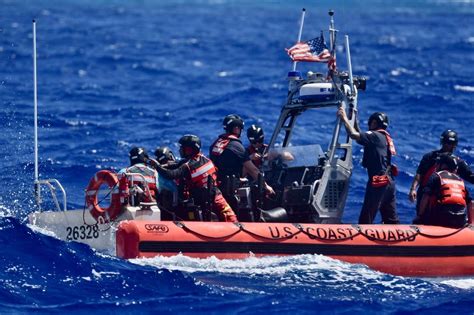
What connects all five is the requirement for constant readiness. Coast Guard aviation is not simply about having aircraft available; it is about keeping crews, maintenance teams, communications systems, and aircraft prepared to launch when an emergency occurs without warning.
That readiness becomes particularly valuable because Coast Guard crews often operate where other rescue resources cannot. They can reach offshore fishermen, isolated communities, stranded hikers, recreational boaters, injured workers, and survivors of aviation accidents. In many cases, the aircraft arriving overhead is not merely another emergency resource. It is the resource that makes rescue possible at all.
The five air stations therefore represent different versions of the same mission. From the frigid waters around Alaska to the tropical Pacific and the crowded waterways of Florida, Coast Guard aviation provides a nationwide and overseas safety network where speed, endurance, geography, and human judgment all determine whether a distress call ends in tragedy or survival.