The aircraft fuel injection system stands as one of the most essential and precisely engineered components of modern aviation. Unlike traditional carbureted systems, which rely on basic mechanical principles to mix air and fuel outside the engine, fuel injection systems are refined mechanisms that deliver atomized fuel directly into the combustion chamber. This direct-injection process not only enhances fuel efficiency but also ensures optimal combustion, especially under variable atmospheric conditions encountered during flight.
Understanding how this system works—and why it is integral to engine performance and flight safety—provides deeper insight into the meticulous engineering that keeps aircraft flying reliably at high altitudes.
What is an Aircraft Fuel Injection System?
At its core, an aircraft fuel injection system is a technology that precisely meters and atomizes fuel before injecting it directly into each cylinder of the engine. This process ensures a uniform and efficient combustion cycle, minimizing wasted fuel and maximizing power output. The system operates under pressure, governed by engine performance parameters such as RPM, manifold pressure, and atmospheric conditions.
Unlike carbureted systems, which pre-mix air and fuel outside the engine before induction, fuel injection systems control this process internally. This allows for:
- Improved fuel-air mixture accuracy
- Enhanced throttle response
- Better cold starting performance
- Resistance to engine icing
These systems are particularly advantageous in aviation, where altitude and temperature variations demand adaptable fuel delivery strategies.
How Do Aircraft Fuel Injectors Work?
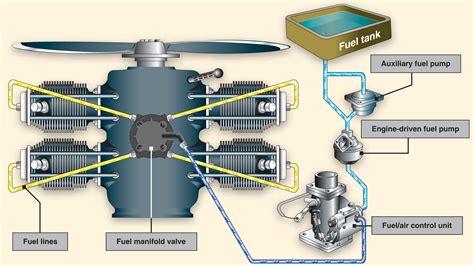
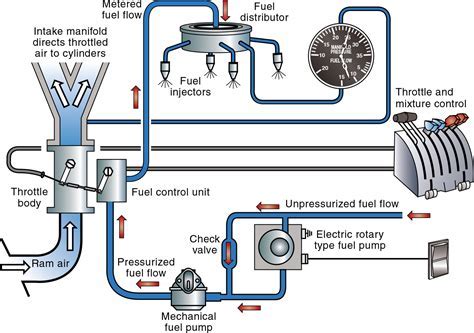
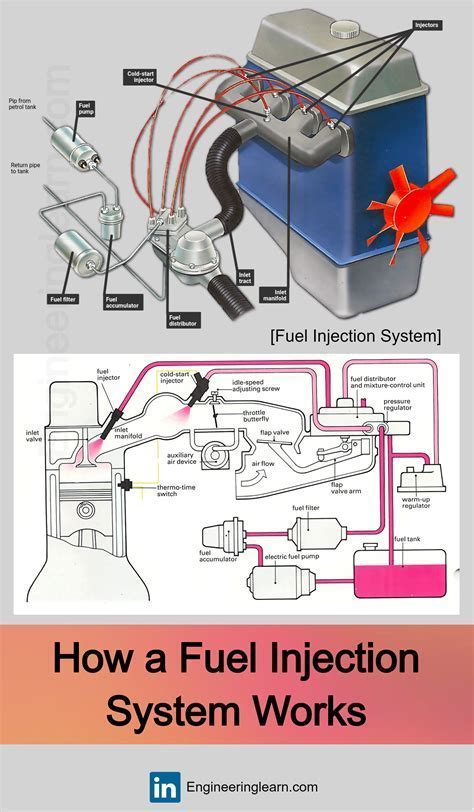
Aircraft fuel injectors operate through a pressure-driven delivery system that sprays fuel as a fine mist directly into the engine’s intake ports or cylinders. Controlled by a fuel control unit—sometimes integrated with an Engine Control Unit (ECU)—the system continuously adjusts the fuel flow in real-time based on engine demands.
The system comprises several critical components:
- Fuel pump – pressurizes fuel from the tanks
- Fuel control unit – regulates flow based on throttle input and sensor data
- Fuel manifold – distributes fuel to each cylinder
- Injector nozzles – atomize and deliver the fuel into the intake or cylinder
This mechanism eliminates lag in fuel delivery, allowing precise tuning for varying altitude, power settings, and environmental factors. The atomized spray leads to more complete combustion, reducing emissions and improving fuel economy.
Types of Aircraft Fuel Delivery Systems
Fuel delivery in aircraft falls into two broad system types: gravity-feed and pump-feed systems.
Gravity-Feed Systems
These are the simplest and most common in light aircraft such as Cessnas or Pipers. Positioned above the engine, the fuel tanks utilize gravitational force to move fuel into the engine without mechanical aid. Their simplicity reduces potential failure points but limits application to aircraft where tank-to-engine elevation permits natural flow.
Pump-Feed Systems
Used predominantly in larger or high-performance aircraft, these systems rely on mechanical or electrical pumps to draw and pressurize fuel from tanks to the engine. They provide superior control, enabling consistent performance at varied attitudes and under high-G conditions. Pump-fed systems are further categorized into:
- Engine-driven pumps – the primary fuel pressure source
- Boost pumps – auxiliary pumps for priming and redundancy
Pump-feed systems support the more advanced fuel injection architectures essential for multi-engine and high-altitude aircraft.
The Importance of Fuel Injection in Aviation
The importance of a robust fuel injection system in aircraft cannot be overstated. It plays a vital role in engine health, fuel economy, environmental compliance, and—most crucially—flight safety.
Without proper fuel delivery:
- Power output declines, limiting climb performance and speed.
- Fuel burn increases, raising operational costs and reducing range.
- Combustion becomes erratic, risking misfire or detonation.
In-flight engine failure due to improper fuel metering is a serious hazard. Fuel injection systems mitigate these risks through real-time fuel-air ratio management, adjusting automatically to varying air pressures and engine temperatures. For high-performance operations—such as rapid altitude changes or maneuvering—this adaptability becomes indispensable.
Advantages and Disadvantages of Aircraft Fuel Injection Systems
Fuel injection systems bring with them a set of compelling advantages over traditional systems, along with some engineering and maintenance trade-offs.
Advantages
- Improved Fuel Efficiency: Accurate fuel metering reduces excess consumption.
- Enhanced Performance: More power output due to better atomization and combustion.
- Altitude Adaptability: Automatic mixture adjustment with altitude changes.
- Reduced Icing Risk: Fuel does not pass through the venturi, eliminating a key cause of carburetor icing.
- Smoother Engine Operation: Less engine vibration and more stable RPM under variable loads.
Disadvantages
- Higher Cost: Both initial investment and maintenance are more expensive.
- Complexity: More parts and electronics mean more potential failure points.
- Troubleshooting: Diagnosing problems requires specialized tools and expertise.
- Maintenance Downtime: Repairs can take longer, particularly in remote locations or without immediate access to parts.
Despite these drawbacks, most modern aircraft engines are moving toward fuel injection due to its undeniable benefits in efficiency, reliability, and performance.
Fuel Injection System vs. Carbureted System
Understanding the contrast between fuel injection and carburetor systems highlights why the former has become the standard in new aviation platforms.
| Feature | Carbureted System | Fuel Injection System |
|---|---|---|
| Mixture Control | Manual or altitude fixed | Automatic or dynamic |
| Fuel Atomization | Venturi-based | High-pressure nozzle spray |
| Icing Risk | High | Low |
| Maintenance Simplicity | Easy | More complex |
| Efficiency | Moderate | High |
| Altitude Performance | Limited | Optimized |
This comparison makes it evident why fuel injection is preferred in modern general aviation and commercial aircraft, despite its added complexity.
The Role of Fuel Injection in Modern Aviation Safety
From a safety standpoint, fuel injection systems reduce pilot workload and minimize human error associated with manual mixture adjustments. By automating fuel delivery adjustments, they ensure consistent engine operation across a wide flight envelope, from sea-level takeoff to cruising at 35,000 feet.
Furthermore, these systems contribute to predictive maintenance. Engine monitoring systems (such as FADEC and other digital engine monitoring units) rely on fuel injection data to forecast wear, detect anomalies, and prevent in-flight failures.
The integration of redundant components in high-end systems, such as dual injector rails or backup control circuits, ensures operational continuity even in partial failure scenarios. This is critical for both civil and military aviation, where mission success and passenger safety hinge on uninterrupted engine reliability.
Future Innovations in Aircraft Fuel Injection
As aviation moves toward greater efficiency and sustainability, fuel injection technology continues to evolve. Emerging trends include:
- Electronic Fuel Injection (EFI) integrated with real-time atmospheric and load sensing.
- Hybrid-electric systems that blend fuel injection with electric propulsion.
- Sustainable aviation fuels (SAF) optimized through adaptable fuel mapping algorithms.
- 3D-printed injector components for reduced weight and increased precision.
The march toward automation and digitization in aircraft systems will only enhance the capabilities of fuel injection architectures, offering smarter diagnostics, adaptive control loops, and integration with aircraft-wide management systems.

Conclusion
The aircraft fuel injection system is not merely a method of delivering fuel—it is a cornerstone of modern aerospace engineering, blending mechanical precision with intelligent control. It enhances safety, boosts performance, reduces fuel consumption, and aligns with the future of eco-conscious aviation.
Pilots, technicians, and aviation enthusiasts benefit from understanding how these systems work, not just for academic interest, but for safer, more efficient flying. With continued innovation, fuel injection will remain a vital component in the evolution of flight for decades to come.