Understanding Risk Management in Aviation
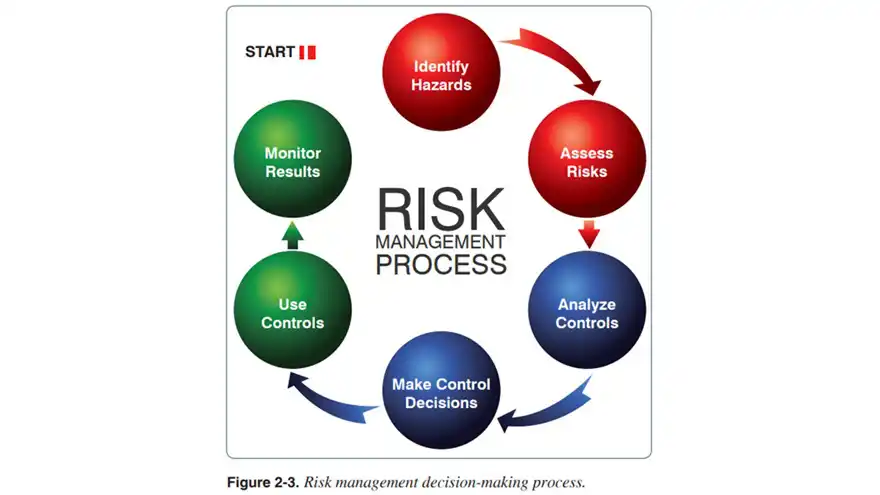
In the dynamic and high-stakes domain of aviation, risk management is not a static, one-time goal. Rather, it is a cyclical and systematic process—a continuous endeavor designed to identify, evaluate, control, and monitor safety risks at every level of operation. Far from being a task reserved solely for upper management, risk management in aviation is a collaborative responsibility, embedded in the organizational DNA of every airline, airport, and air traffic operation.
The foundation of this process lies within an effective Safety Management System (SMS)—a structured framework that governs how safety risks are managed across an organization. When executed properly, SMS not only prevents accidents but enhances predictive capabilities, enabling early detection of hazards before they escalate.
Step 1: Building Awareness of Risk
Before any hazard can be identified or reported, there must be organizational and individual awareness. Awareness is the lens through which risks are perceived and understood. It emerges through:
- Industry experience, which helps personnel recognize recurring patterns and high-risk themes.
- Environment-specific knowledge, which enables familiarity with local operational peculiarities.
- Specialized safety training, tailored to job roles and responsibilities.
- Proactive safety promotion, led by aviation safety managers to broadcast potential risks.
- Advanced risk detection capabilities, using tools to link certain conditions to specific behaviors.
- Hazard identification education, emphasizing how to recognize both visible risks and latent precursors.
True awareness equips employees not only to react to known hazards but to anticipate subtle warning signs—like gradual procedural drift or minor system deviations—that precede more severe safety threats.
Step 2: Identifying and Reporting Hazards
Once awareness is established, the next crucial phase is hazard identification and reporting. Aviation hazards typically manifest through:
- Accidents
- Incidents
- Operational anomalies
These events are often rooted in uncontrolled conditions, ranging from outdated equipment and design flaws to procedural errors and environmental factors. The role of the frontline workforce is pivotal—identifying these threats and reporting them through structured SMS data management systems.
Modern SMS data platforms allow organizations to:
- Store and retrieve reported issues
- Perform risk assessments
- Treat unacceptable risks
- Monitor corrective action effectiveness
- Generate trend reports
- Provide oversight to civil aviation authorities (CAAs)
- Share safety insights across the industry
While larger organizations benefit from purpose-built SMS software, some smaller operators rely on spreadsheets—a suboptimal but common reality due to limited budgets, lack of management support, or regulatory unawareness.
Step 3: Evaluating, Assessing, and Analyzing Risk
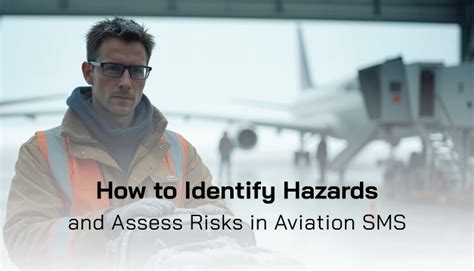
Following the reporting phase, each hazard is subjected to a risk assessment using predictive risk matrices. These tools quantify risk exposure by evaluating:
- Severity of the potential consequence
- Likelihood of occurrence
- Urgency of implementing corrective or preventive actions
For example, a 5×5 risk matrix maps severity and likelihood on two axes, producing a visual risk score. The output categorizes the issue into zones:
- Low risk – tolerable without additional treatment
- Medium risk – acceptable with mitigations
- High/Intolerable risk – requires immediate action
To maintain data consistency and reliability, it is best practice to assign risk assessment duties to a specific safety team or designated manager. When too many individuals contribute assessments, results may become inconsistent due to differences in:
- Educational backgrounds
- Professional experience
- Cultural frameworks
- Personal risk tolerance
Such inconsistencies compromise trend analysis and hinder long-term strategic planning.
Step 4: Determining the Need for Further Controls
Once a hazard is evaluated, the question becomes: Are the current controls enough? Risk managers must examine:
- Can the hazard be controlled effectively if triggered?
- Can it cause a cascade of secondary failures?
- What are the likely consequences—injury, financial loss, damage to reputation?
- Has it occurred before within the organization or elsewhere in the industry?
If the existing safeguards fall short of the Acceptable Level of Safety (ALoS), new controls must be developed. These may include:
- Updated procedures and documented policies
- Improved personal protective equipment (PPE)
- Mechanical changes like safety guards or system redesigns
- Installation of early warning detection systems
- Enhanced personnel training
The effectiveness of these actions must be weighed carefully to avoid creating new vulnerabilities elsewhere in the system.
Step 5: Implementing Risk Management Actions
The implementation of new safety controls is often where aviation SMS efforts face the greatest resistance. Human behavior, shaped by habit and routine, is naturally resistant to change—even when safety improvements are rationally sound.
Behavioral change in aviation safety involves reshaping long-standing practices. This can cause uncertainty among personnel, especially when they are asked to abandon familiar tasks they believe they perform well. To address this, implementation must be done with:
- Clear communication about the “why” behind the change
- Structured change management protocols
- Feedback channels to capture employee concerns
- System-wide impact assessments to evaluate:
- Personnel workflows
- Operational environments
- Equipment and infrastructure compatibility
In cases of significant system impact, a formal hazard analysis through change management must be performed to ensure the risk of unintended consequences is minimized.

Step 6: Monitoring and Reviewing Control Effectiveness
The final step in the aviation risk management cycle is monitoring and reviewing the results of implemented controls. This phase is vital to:
- Assess employee adaptation and compliance
- Verify whether the new controls have effectively mitigated the risk
- Document performance evidence for audits and internal reviews
If a control proves ineffective or introduces secondary problems, it may require modification or complete redesign. Regular review sessions feed valuable insight back into the awareness and training stages, strengthening the SMS loop.
Safety managers use this stage to update employees about lessons learned, share outcomes through safety promotion efforts, and recalibrate expectations.
More broadly, this stage serves as a time for organizational self-reflection, where critical questions must be asked:
- Can hazard reporting be made easier and more accessible?
- Are hazard detection efforts reaching all organizational layers?
- Are current analysis tools adequate for a predictive SMS?
- Have implemented controls consistently met safety expectations?

Why Risk Management Is More Than a Process
Risk management in aviation is not merely a linear series of tasks—it is a living ecosystem. The health of this ecosystem depends not just on technical protocols but on organizational culture, cross-departmental collaboration, and continuous improvement.
Each loop of the cycle sharpens an organization’s ability to adapt, predict, and prevent. It ensures that as technologies and environments evolve, safety evolves in lockstep—always aiming for ALARP (as low as reasonably practicable) levels of risk exposure.
By embracing this mindset, aviation organizations create safer skies—not through isolated actions, but through a resilient, self-renewing approach to managing risk.
FAQ
What is the main goal of risk management in aviation?
The primary goal of aviation risk management is to proactively identify and control safety hazards to ensure risks remain at or below an acceptable level of safety (ALoS). This is achieved through structured processes within a Safety Management System (SMS) framework.
Why is consistency in risk assessment important?
Consistency ensures that safety data remains reliable and comparable over time, which is critical for trend analysis. Inconsistent assessments can distort risk profiles, making it harder to identify patterns and deploy effective mitigation strategies.
How do aviation organizations deal with resistance to safety changes?
Organizations use change management strategies, clear communication, and training to help employees understand the necessity of new controls. Involving staff in the change process and considering the broader system impacts reduces pushback and enhances adoption.