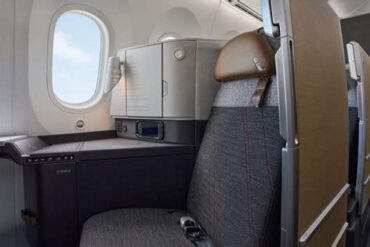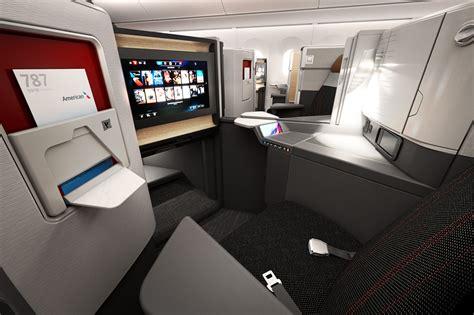
The aviation industry has long treated premium cabin seats as fixed assets, inseparably tied to the aircraft for which they were designed. Business-class products historically emerged as bespoke solutions, shaped by fuselage width, door geometry, and certification constraints that effectively locked each seat into one airframe. In this context, the unveiling of American Airlines’ Flagship Suite marks a meaningful departure from convention—one that reshapes how we think about premium cabin strategy at scale.
What distinguishes this new generation of business class is not merely its aesthetics or comfort, but its portability. Rather than anchoring its most advanced seat to a single widebody aircraft, American Airlines has deliberately engineered the Flagship Suite to operate across a diverse long-haul fleet. From the Boeing 787-9 Dreamliner to the long-range, single-aisle Airbus A321XLR, the same branded experience now travels across aircraft types that once belonged to entirely separate operational worlds.
This shift matters because airline networks are no longer built solely around aircraft capability. They are built around demand precision, revenue optimization, and customer loyalty. As routes fragment and premium-heavy, long-thin markets grow in importance, the ability to offer a consistent, high-end product without being tethered to a single platform becomes a strategic advantage rather than a design curiosity.
By choosing consistency over exclusivity, American Airlines is signaling a broader rethinking of how premium travel should scale in a modern global network.
A Strategic Break From Aircraft-Specific Cabin Design
Legacy airlines have traditionally designed flagship seats around a single aircraft type, often treating the seat as an extension of the jet itself. A new widebody arrival would typically bring a new cabin, a new brand identity, and a new set of passenger expectations. Certification complexities and supply-chain realities reinforced this model, making cross-platform seat deployment rare and expensive.
American Airlines intentionally stepped away from this paradigm. With the Flagship Suite, the carrier focused on modularity and adaptability, allowing the seat architecture to conform to different fuselage profiles without compromising its core attributes. This approach required upfront investment in engineering, certification planning, and supplier coordination, but it created a long-term payoff in fleet flexibility.
The result is a premium product that is no longer defined by aircraft silhouette, but by experience continuity. Whether a passenger boards a widebody Dreamliner or a narrowbody A321XLR, the airline aims to deliver the same spatial logic, comfort cues, and brand promise. That consistency is increasingly valuable in a market where high-yield travelers expect reliability as much as innovation.
From Concept Reveal To Fleet-Wide Vision
When American Airlines first introduced the Flagship Suite concept in 2022, the messaging hinted at something larger than a routine seat launch. The airline framed the product as a new baseline standard rather than a limited showcase, explicitly linking it to both Boeing 787-9 and Airbus A321XLR deliveries. This early positioning was critical, as it prepared the market to view the suite as a transferable asset rather than a one-off luxury experiment.
By doing so, American collapsed the traditional divide between widebody and narrowbody premium cabins. Instead of maintaining separate universes for long-haul international flights and premium transcontinental services, the airline unified them under a single flagship identity. This unification simplifies marketing, strengthens brand recall, and reduces the cognitive friction customers often experience when navigating different aircraft types within the same airline.
From a competitive standpoint, the implications are equally significant. Premium travelers often pay for predictability as much as comfort. Knowing exactly what seat, storage, and privacy features await them—regardless of aircraft—becomes a compelling reason to remain loyal.
Proof Of Concept On The Boeing 787-9
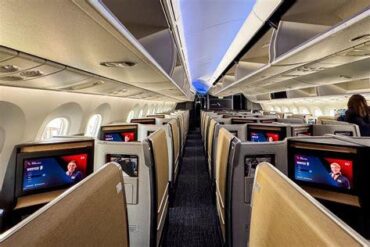
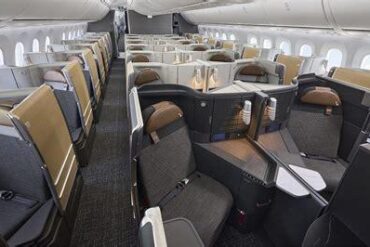
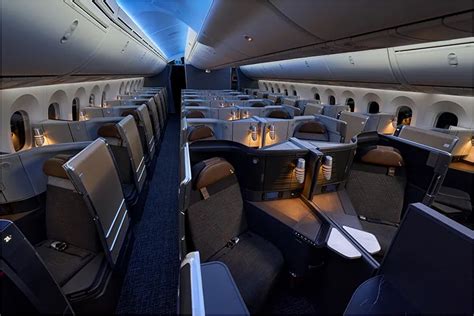
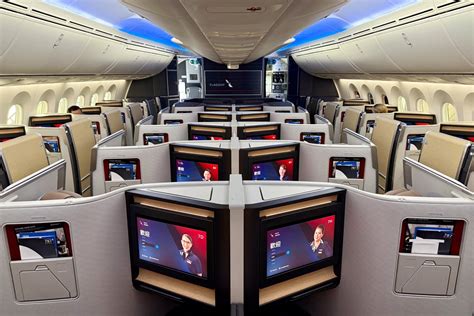
The Boeing 787-9 served as the initial proving ground for the Flagship Suite, debuting the product within a comprehensive cabin refresh that underscored American Airlines’ premium ambitions. Here, the airline showcased not only the seat itself but also the surrounding ecosystem of technology, storage, and spatial refinement that defines the experience.
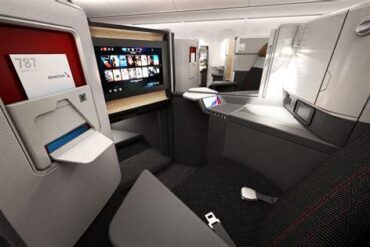
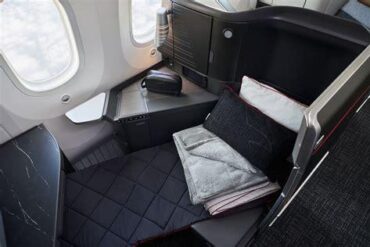
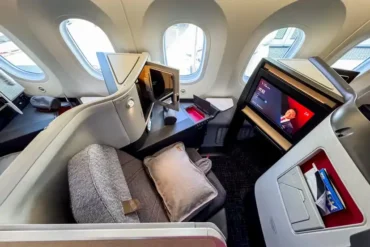
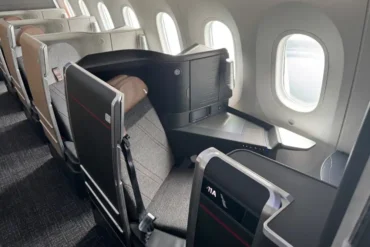
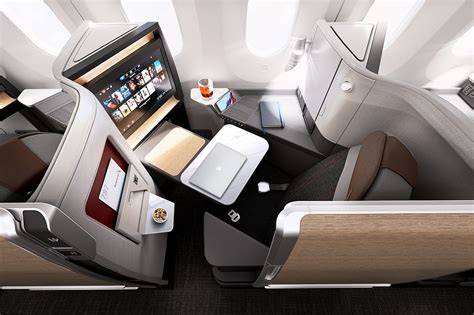
The suite features a lie-flat bed with generous pitch, carefully contoured seat width, and an emphasis on personal territory. Integrated storage solutions accommodate laptops, headphones, and personal items without clutter, while charging ports and power options reflect modern usage patterns rather than legacy assumptions. The optional chaise-style seating position further differentiates the product, catering to travelers who value flexibility during long-haul flights.
Independent reviews and customer surveys consistently highlight the seat’s comfort metrics, particularly its pitch, which some observers consider among the most competitive in the industry. More importantly, the 787-9 deployment validated the airline’s ability to operationalize the suite at scale, aligning service choreography, maintenance processes, and crew training around a new premium norm.
Extending A Widebody Experience Onto The Airbus A321XLR
The real disruption emerges when the Flagship Suite migrates from a widebody to the Airbus A321XLR, an aircraft designed to redefine long-range narrowbody operations. Capable of flying transatlantic-style missions with significantly lower trip costs, the A321XLR enables airlines to serve thinner, premium-leaning routes that cannot sustain widebody capacity.
By installing a flagship-grade business-class suite on this aircraft, American Airlines effectively exports a widebody experience into markets that previously required compromise. Passengers flying long-and-thin international routes no longer need to trade aircraft efficiency for premium comfort; they can have both.
This move reflects a sophisticated understanding of network economics. The airline can now match capacity precisely to demand while preserving high-yield revenue through a consistent premium offering. In practical terms, this means fewer empty seats, stronger margins, and an expanded set of viable routes.
Leadership Alignment And Strategic Clarity
Such a departure from industry norms requires unwavering executive support, and American Airlines’ leadership has been notably vocal in championing this strategy. The airline’s commercial leadership has repeatedly emphasized that the Flagship Suite is not simply a seat, but a revenue and loyalty engine designed to travel wherever the economics make sense.
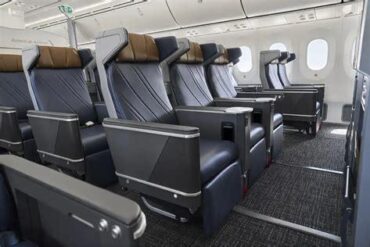
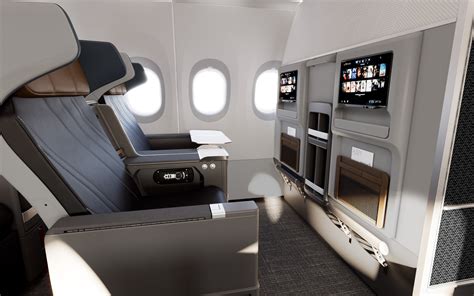
Public statements surrounding the A321XLR preview highlighted this philosophy clearly. By positioning the aircraft as a platform capable of offering business class, premium economy, and main cabin experiences at a global standard, American reinforced the idea that aircraft size no longer dictates product hierarchy. Instead, the customer experience leads, and the aircraft adapts around it.
This alignment between strategy and execution is critical. Without it, the Flagship Suite would risk becoming an isolated design success rather than a transformational tool.
Inside The Flagship Suite Experience
At its core, the Flagship Suite is designed to reconcile three competing demands: privacy, space efficiency, and consistency. The inclusion of privacy doors, personal storage, and a suite-like enclosure reflects broader industry trends, but American’s implementation emphasizes balance rather than excess.
On widebody aircraft, the suite anchors the premium cabin, supported by upgraded cabin lighting, materials, and inflight technology. On the A321XLR, the same design language appears within a narrower fuselage, adapted intelligently rather than diluted. While certain regulatory elements—such as the immediate activation of sliding doors—vary by aircraft and jurisdiction, the underlying promise remains intact.
This adaptability underscores a key insight: the Flagship Suite is not a single seat shell, but a design toolkit. It allows American Airlines to deploy a recognizable premium experience across diverse operational contexts without fragmenting its brand.
Competitive Reverberations Across The Industry
American Airlines’ approach does not exist in isolation. Competitors are responding with their own interpretations of scalable premium design. Delta Air Lines has expanded its Delta One Suite across multiple widebody families, emphasizing doors and elevated materials. United Airlines is reimagining its Polaris product through the United Elevated interior, introducing door-equipped suites and premium-heavy cabin mixes on its Boeing 787-9 fleet.
JetBlue, operating from a different scale, continues to refine its Mint Suites on the Airbus A321LR, offering a boutique experience on transatlantic routes that challenge legacy carriers in key markets.
What differentiates American’s strategy is the deliberate cross-category deployment of a single flagship product. Rather than maintaining separate premium identities for narrowbody and widebody operations, the airline is betting on unification as a competitive lever. In an environment where premium travelers increasingly compare experiences across airlines rather than aircraft types, this consistency becomes a quiet but powerful differentiator.
The Broader Premium Arms Race
Beyond hardware, airlines are investing heavily in the softer elements that surround the seat. Lounge expansions, upgraded catering, enhanced bedding, and tighter elite-benefit ecosystems all feed into the perception of value that premium travelers seek. The Flagship Suite fits neatly into this broader narrative, serving as the physical anchor around which these enhancements revolve.
As privacy becomes a baseline expectation rather than a novelty, the competitive battlefield shifts toward execution quality. Consistent service delivery, reliable product availability, and seamless integration across routes will ultimately determine which airlines capture sustained premium loyalty.
Redefining What “Flagship” Really Means
Traditionally, a flagship product implied rarity—something reserved for the largest aircraft on the longest routes. American Airlines is redefining that notion. By making the Flagship Suite transferable, the airline transforms “flagship” from a description of scale into a statement of intent.
This intent is clear: premium travelers should not have to decode aircraft types to understand what they are buying. The seat, the space, and the experience should speak for themselves, regardless of the metal flying the route.
Our Bottom Line On A Portable Premium Future
With the Flagship Suite, American Airlines has moved beyond launching a new business-class seat. It has introduced a scalable premium framework capable of spanning its long-haul fleet, from widebody workhorses to long-range narrowbody disruptors. This portability allows the airline to right-size capacity by route while preserving a unified, high-end promise.
The Airbus A321XLR deployment crystallizes the strategic value of this approach, proving that flagship comfort is no longer confined to aircraft size. The real challenge now lies in flawless execution—ensuring that availability, service standards, and customer expectations remain aligned as the product proliferates.
If successful, this strategy will fundamentally alter how passengers perceive premium travel on American Airlines. Instead of wondering which seat awaits them, they will simply book the Flagship Suite, confident that the experience transcends the aircraft itself.