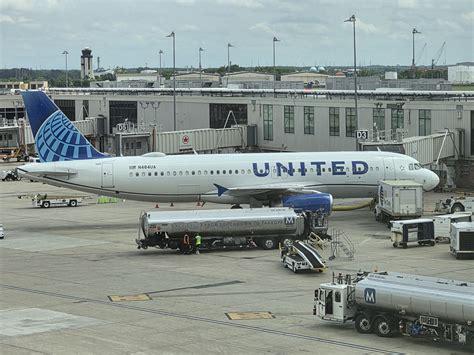
United Airlines is once again deepening its presence in Cleveland, adding two strategically important nonstop routes that are reigniting discussion about the carrier’s long-term ambitions at Cleveland Hopkins International Airport (CLE). Beginning later this year, travelers in Northeast Ohio will gain direct access to both Las Vegas and Miami, two of the country’s strongest leisure markets and destinations with year-round passenger demand.
The move marks another notable step in United’s gradual rebuilding effort in Cleveland, a city that once operated as one of the airline’s major hubs before the facility was dismantled in 2014. Although United has consistently maintained a sizable operation at CLE since the hub closure, the addition of new point-to-point routes that do not connect directly to another United hub airport is drawing significant attention across the aviation industry.
For Cleveland travelers, the expansion delivers something even more valuable than symbolism: convenient nonstop access to vacation-heavy destinations without the need for lengthy connections through Chicago, Denver, or Newark.
United Airlines Expands Cleveland Route Network With Leisure-Focused Strategy
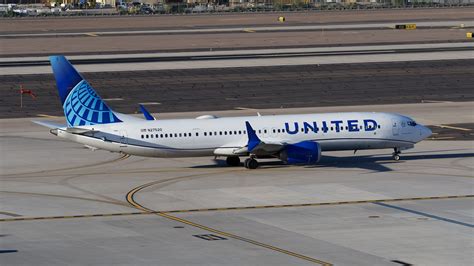
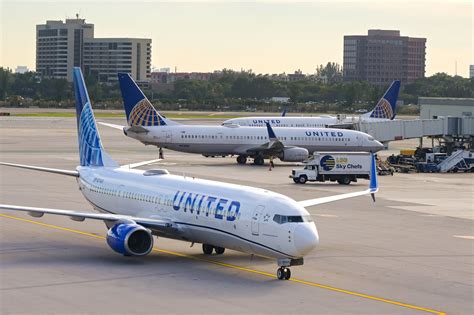
United confirmed that year-round nonstop flights between Cleveland Hopkins International Airport and Las Vegas Harry Reid International Airport (LAS) will begin on September 24. The route will operate five times weekly, excluding Tuesdays and Wednesdays, using Boeing 737-800 aircraft.
The carrier will then launch seasonal nonstop service to Miami International Airport (MIA) beginning December 3. That route will operate through April 5, also five times weekly, targeting winter sun travelers escaping Ohio’s colder months.
The timing is particularly significant. Airlines across the United States continue prioritizing profitable leisure-heavy markets, and both Miami and Las Vegas remain among the strongest-performing domestic destinations for discretionary travel demand.
United’s Managing Director of Domestic Network Planning, Mark Weithofer, emphasized Cleveland’s continuing importance within the airline’s broader network strategy, describing the new flights as part of an ongoing investment in the local market.
The expansion reflects how airlines increasingly view secondary cities like Cleveland as opportunities for targeted route growth rather than traditional fortress hubs. Instead of rebuilding massive connecting operations, carriers are focusing on high-demand nonstop markets capable of sustaining strong passenger loads year-round or seasonally.
Cleveland’s Post-Hub Recovery Continues To Gain Momentum
When United closed its Cleveland hub more than a decade ago following the merger with Continental Airlines, the decision dramatically reshaped air service across Northeast Ohio. Flight operations reportedly declined by more than 60%, and many travelers feared Cleveland would permanently lose relevance within the national airline system.
Yet Cleveland Hopkins has steadily rebuilt its position. Today, the airport handles more than 10 million annual passengers and supports roughly 130 daily departures to over 40 destinations. While those figures remain below the airport’s historic peak during the hub era, the market has shown impressive resilience.
The latest United expansion is especially notable because neither Miami nor Las Vegas functions as a traditional United hub. That distinction suggests the airline sees sufficient origin-and-destination demand in Cleveland itself rather than relying primarily on connecting traffic.
This is an important shift. Airlines typically reserve non-hub point-to-point routes for markets demonstrating stable passenger demand and strong revenue potential. In other words, United is betting directly on Cleveland travelers.
Las Vegas Flights Add Competition In A High-Demand Market
The new Cleveland-to-Las Vegas service enters an already competitive corridor currently served by Frontier Airlines and Southwest Airlines. Even so, United appears confident that demand remains strong enough to support another operator.
The outbound flight, UA765, will depart Cleveland at 10:00 AM and arrive in Las Vegas at 11:25 AM local time after a flight time of approximately four hours and twenty-five minutes. The return service, UA2235, leaves Las Vegas at 1:00 PM and lands back in Cleveland at 7:52 PM.
Las Vegas continues attracting both leisure and convention traffic at remarkable levels. Beyond casino tourism, the city has evolved into a year-round entertainment and sporting destination, boosted by major events, professional sports franchises, concerts, and large-scale conventions.
For Cleveland-area travelers, the route eliminates the inconvenience of connecting itineraries while providing schedules optimized for vacation timing.
Miami Route Targets Winter Escapes And Cruise Demand
United’s seasonal Miami service could prove equally valuable, particularly during the peak winter travel season when demand for Florida destinations surges across the Midwest and Northeast.
Flight UA715 will depart Cleveland at 7:15 AM and arrive in Miami at 10:19 AM. The return flight, UA2718, departs Miami at 1:00 PM and returns to Cleveland at 4:05 PM.
The route places United into direct competition with American Airlines and Frontier Airlines, both of which already serve the market. However, Miami’s role as one of the world’s largest cruise gateways gives the route additional strength beyond traditional tourism.
Cruise demand has surged in recent years, and nonstop access to South Florida remains highly attractive for travelers seeking smoother embarkation experiences. Miami also serves as a major gateway to Latin America and the Caribbean, offering additional connectivity opportunities.
For United, the seasonal structure of the route minimizes risk while aligning capacity with peak travel periods.
CLEvolution Modernization Supports Long-Term Growth
The expansion arrives as Cleveland Hopkins International Airport continues advancing its ambitious CLEvolution modernization initiative, a long-term redevelopment program aimed at transforming the airport experience over the next decade.
Airport leaders are investing heavily in terminal modernization, passenger facilities, operational efficiency, and overall infrastructure upgrades designed to strengthen Cleveland’s competitiveness among mid-sized US airports.
United’s new routes provide an encouraging signal that airlines are recognizing the region’s improving market conditions and infrastructure investments.
While Cleveland is unlikely to return to its former status as a full-scale United hub anytime soon, the latest route additions demonstrate that the city remains strategically relevant within the airline’s domestic network. More importantly for travelers, Northeast Ohio continues gaining the nonstop connectivity that disappeared after the hub closure years ago.
For Cleveland passengers eager for easier access to beaches, cruises, entertainment, and warm-weather escapes, United’s latest expansion represents something increasingly rare in today’s aviation landscape: meaningful growth rather than retrenchment.