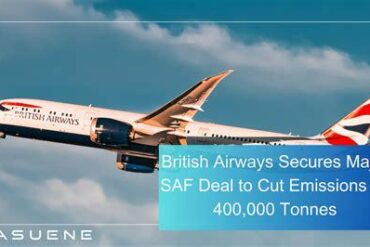
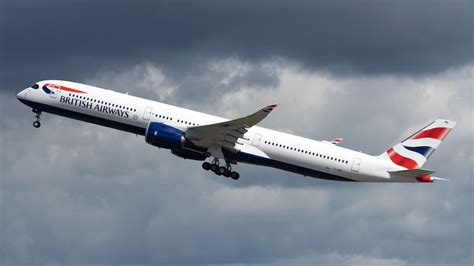
In a groundbreaking move set to redefine the future of air travel, British Airways has signed a transformative sustainable aviation fuel (SAF) supply agreement with EcoCeres, a Hong Kong-based biofuel technology innovator. This pivotal partnership represents a major milestone in British Airways’ long-term strategy to drastically cut its carbon emissions and lead the global aviation industry into a cleaner, greener era. More than just a fuel supply deal, this is a strategic alignment with global sustainability targets that underscores the airline’s relentless drive for decarbonization.
The Deal That Signals a New Era in Aviation
Announced on July 10, 2025, the agreement with EcoCeres marks the first time British Airways has signed a direct SAF supply agreement with a producer based in Asia, making it a landmark transcontinental cooperation. The fuel supplied will be manufactured from waste-based feedstocks, including agricultural by-products, and will deliver lifecycle emissions reductions of up to 80% compared to traditional jet fuel. This places British Airways firmly at the forefront of efforts to decarbonize long-haul travel, a sector that has long been resistant to dramatic environmental improvements.
EcoCeres: The Tech Innovator Behind Sustainable Jet Fuel
EcoCeres is not just a supplier; it’s a pioneer in green biofuel innovation. Known for its advanced bioconversion technology, EcoCeres transforms organic waste into renewable fuels with scalable efficiency. Its proprietary systems allow for the conversion of otherwise non-recyclable agricultural residues and waste lipids into sustainable aviation fuel and other renewable chemicals. The company operates large-scale facilities capable of producing commercial volumes of SAF that meet ASTM D7566 specifications, the gold standard for aviation-grade biofuels.
British Airways’ choice to partner with EcoCeres reveals a strategic move to diversify its SAF portfolio and integrate cutting-edge technology into its operations. This alliance grants British Airways early access to fuel streams that are not only more sustainable but also more secure in terms of long-term availability and pricing stability.
How SAF Is Reshaping British Airways’ Emissions Profile
For British Airways, SAF isn’t a PR stunt—it’s a core pillar of its net-zero by 2050 commitment. The airline has been investing in SAF since 2019 and has already completed several flights powered partially by alternative fuels. However, this deal marks a dramatic acceleration in scale and ambition. The SAF sourced from EcoCeres will be blended and used across British Airways’ global fleet, beginning with flights departing from key hubs in Asia and Europe.
The benefits are multi-layered:
- Lifecycle Carbon Reduction: Up to 80% lower CO₂ emissions per litre than conventional fuel.
- Air Quality Improvements: SAF burns cleaner, emitting fewer particulates and sulfur oxides.
- Engine Compatibility: It works seamlessly with current aircraft and fueling infrastructure, requiring no retrofit.
By incorporating SAF into regular flight operations, British Airways is not only shrinking its carbon footprint but also making substantial progress toward regulatory compliance.
Competitive Edge in a Carbon-Conscious Market
In today’s environmentally sensitive travel ecosystem, sustainability is not optional—it’s a business imperative. Travelers are increasingly demanding greener options, and corporate customers are under pressure to decarbonize their supply chains, including business travel. British Airways’ SAF deal gives it a critical competitive edge, allowing the carrier to:
- Differentiate itself in premium markets
- Meet environmental criteria in corporate travel contracts
- Respond proactively to EU and UK emissions reduction mandates
This strategic positioning reinforces British Airways’ image as a forward-thinking airline not just complying with environmental standards but setting them.
Setting a Global Benchmark in Green Aviation Leadership
British Airways’ move goes beyond operational strategy—it sets a global precedent. By sourcing SAF from an Asia-based producer like EcoCeres, the airline signals that sustainable fuel production need not be confined to traditional Western markets. This geographical diversification encourages a more globalized SAF market, capable of scaling up to meet rising demand.
The partnership also places pressure on other legacy carriers and alliances to adopt similar strategies, especially as governments intensify regulatory frameworks around airline emissions. From the U.S. SAF Grand Challenge to Europe’s Fit for 55 package, policy momentum is mounting—and British Airways is ahead of the curve.
Inside the EcoCeres Fuel Production Process
The production of SAF at EcoCeres facilities involves a multi-step process optimized for minimal environmental impact:
- Feedstock Collection: Waste biomass like inedible oils and crop residue are collected from local sources.
- Pretreatment & Conversion: Materials undergo thermal and chemical treatment to break down complex organic structures.
- Hydroprocessing: Cleaned feedstock is then processed under high pressure to create hydrotreated esters and fatty acids (HEFA), a certified SAF type.
- Blending & Certification: The SAF is blended with conventional jet fuel and certified for aviation use.
This closed-loop system ensures low emissions at every stage, from source to wingtip.
Regulatory Alignment: A Strategic Safeguard
British Airways’ SAF investment is also a preemptive move against tightening environmental regulations. By adopting SAF early and at scale, the airline is positioning itself to comply with future EU emissions trading schemes, CORSIA obligations, and the UK Government’s Jet Zero strategy.
Moreover, early adoption builds credibility with regulatory agencies, which can lead to policy influence and access to government subsidies or carbon credits. This proactive compliance further shields British Airways from the potential financial penalties and operational constraints associated with non-compliance.
A Boost to British Airways’ Environmental Brand Equity
With this SAF partnership, British Airways strengthens its brand narrative around environmental responsibility. In an era where consumer trust hinges on transparency and impact, the airline’s decision to make such a high-profile SAF commitment signals authenticity and ambition.
Passenger loyalty is increasingly influenced by climate considerations. British Airways’ SAF campaign allows the airline to communicate clear, verifiable progress toward its green goals. Expect this partnership to be featured prominently in onboard marketing, digital campaigns, and investor briefings.
Future-Proofing the Aviation Industry
This deal is a critical piece of a broader puzzle that includes:
- Fleet Modernization: British Airways continues to replace older aircraft with more fuel-efficient models like the Airbus A350 and Boeing 787.
- Operational Efficiency: Adoption of AI and data analytics for route planning to minimize fuel burn.
- Carbon Offsets: Investment in verified offset programs as a supplementary emissions mitigation tactic.
But SAF remains the most tangible, scalable, and impactful lever in achieving long-term emissions reduction.
Conclusion: A Blueprint for Decarbonized Aviation
The British Airways-EcoCeres agreement marks more than a corporate transaction—it’s a strategic blueprint for decarbonizing global aviation. By fusing innovative technology with bold corporate vision, the two companies are reshaping what’s possible for an industry under growing environmental scrutiny.
For British Airways, this isn’t just a win—it’s a declaration of leadership. For EcoCeres, it’s validation of years of R&D and sustainable engineering. For passengers, it’s the beginning of guilt-free flying. And for the planet, it’s a meaningful step toward a cleaner, more responsible air travel industry.

This historic deal will likely serve as a catalyst for global SAF adoption, influencing everything from aviation policy to airport infrastructure planning. As the aviation world races against the carbon clock, British Airways has staked its claim as a true sustainability frontrunner.